

 GMA Brandtalk
 Tracking
 Archives

'The Devil Wears Prada 2' is keeping print alive, no matter what
“A million girls would kill for this job,” and a million and one still would, even in a digital world.
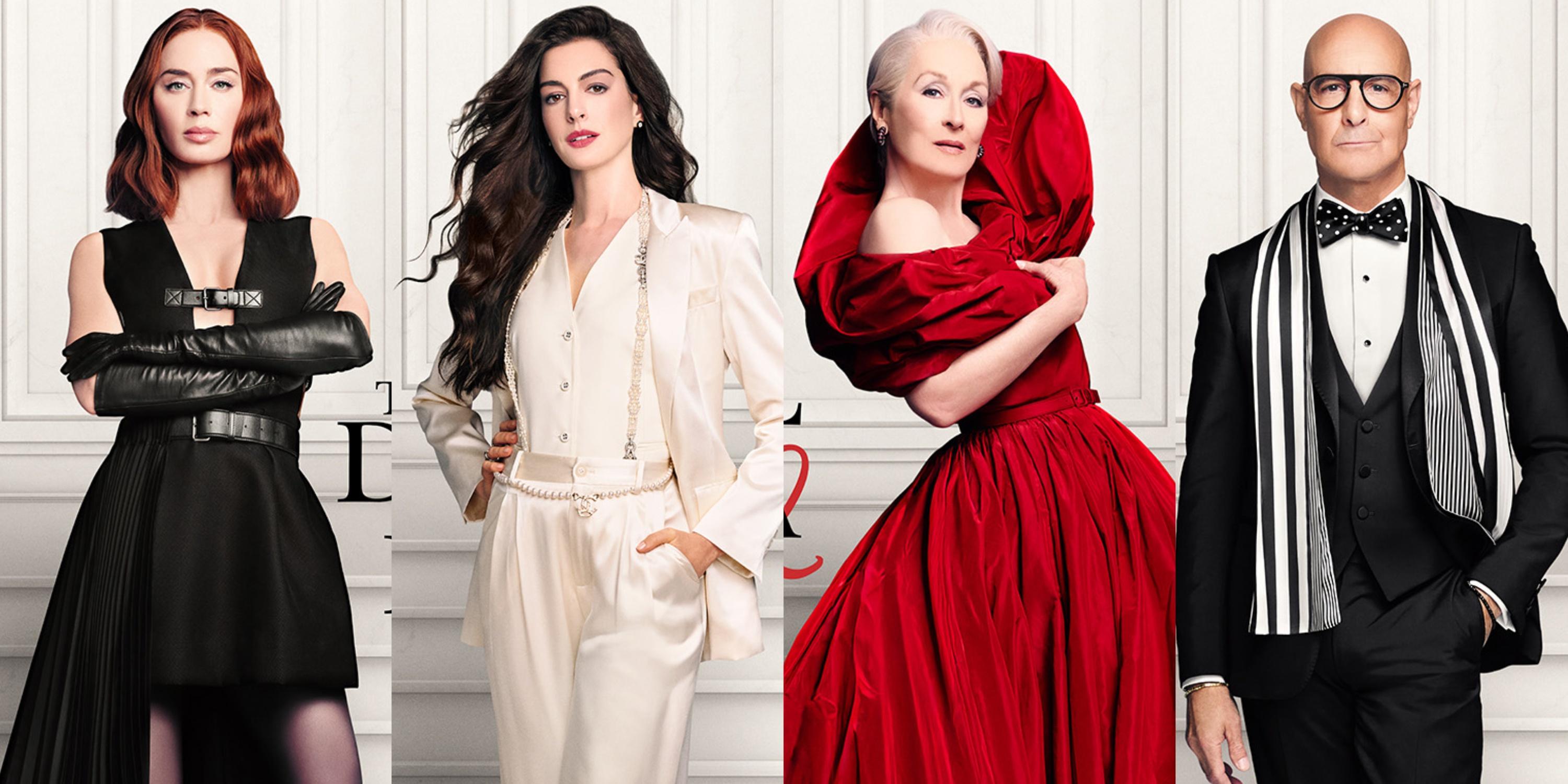
Twenty years after “The Devil Wears Prada” first hit the big screen, the iconic quartet returns: Meryl Streep, Anne Hathaway, Emily Blunt, and Stanley Tucci reprise their roles as Miranda Priestly, Andy Sachs, Emily Charlton, and Nigel Kipling, once more striding through the fashionable streets of New York City in “The Devil Wears Prada 2.”
Much has changed.
Andy is now a seasoned journalist at the New York Vanguard, and Emily has traded glossies for a marketing role at Dior. Meanwhile, Miranda and Nigel remain at the helm of Runway, still shaping and navigating through the fashion world, but not quite the same way.
Two decades older and undeniably wiser, they now face a media landscape transformed by digital disruption and a younger, more socially aware generation. But beyond time, what else has changed?
Spoiler alert: The following contains small details from the film.
Miranda is humbled by life
Miranda is a highly respected editor-in-chief whom young and established designers would seek validation from. She is scary, intimidating, and her word is law in the fashion world.
But as the digital landscape takes over, Miranda’s power is diminished, forcing her to think about numbers when it comes to producing content online, as well as appeasing Runway advertisers to invest in the magazine. She now functions in a world where influence is measured in engagement rates, clicks, and advertiser demands.
The once-mighty Miranda has also unlearned some of her old habits, such as tossing her coat and bag onto an assistant’s desk, and now carries them herself after a story exposed her for treating her assistants terribly. In the age of cancel culture, even Miranda is not immune.
Her presence in meetings has also softened. Her new first assistant, Amari (Simone Ashley), gently but firmly calls out language that veers into fat-shaming, racism, or insensitivity toward mental health. It’s a new world, and Miranda is forced to adapt, no matter how reluctant.
Andy and the reality of media layoffs
Andy is exactly where she once dreamed of being. No longer an assistant, she has built a career as an award-winning journalist, known for her investigative and human-interest stories.
But working in media, being an excellent storyteller doesn’t equate to job security. In one of the film’s most jarring moments, Andy receives an award, only for the entire New York Vanguard staff to be laid off via SMS due to budget constraints. It’s a harsh reflection of today’s industry, where even the best storytelling cannot guarantee job security.
However, Andy losing her job opens the opportunity for her to go back to Runway as a features editor. But returning to her old company is not without compromise. Andy now knows what she wants to write, but she also understands that Runway is a publication driven by glamor, where stories outside fashion rarely take priority.
But for someone living in expensive New York who needs a job, she has to say yes. She has to compromise and see what she can do from there.
Emily’s unexpected turn
Emily worships Runway, which is why her shift to retail, regardless of how luxurious the brand is, feels inexplicable. It was later revealed in the film that it was Miranda who orchestrated Dior to hire her, ultimately leading to her exit from the magazine. Was she becoming a threat that Miranda needed to remove?
Now a divorcee with two kids, Emily still radiates the same professionalism. She is poised, effortless, and loves her job.
But underneath it all, she would return to Runway in a heartbeat, if given the chance. This is why, when the opportunity comes, she takes it, even at the cost of betraying Andy and Miranda. As for what exactly unfolds after that is for you to find out.
Nigel’s long-awaited closure
Perhaps one of the most awaited questions in the sequel is whether Nigel would get his revenge on Miranda after she gave the creative director role at James Holt to Jacqueline Follet to save her own position as Runway’s editor-in-chief.
But even after two decades, Nigel remains Miranda’s ever-reliable right-hand man. There is no sign of resentment or tension in the office. It is still the same Nigel who makes things easier for Miranda, even without the validation.
But as Miranda is humbled by life, she also realizes, albeit late, how she took Nigel for granted.
Nigel is the person who taught Andy not to seek validation for every job well done, but he is also the one who needed it the most after years of dedication to Runway and Miranda. Without sparing any more details, he finally gets that closure in the sequel.
Keeping print alive
If the original film revolved around Miranda fighting to keep her position, the sequel shifts the battle to how to keep print alive.
In an era dominated by digital platforms and social media, “The Devil Wears Prada 2” centers on the struggle to preserve Runway as a physical magazine. It’s a narrative that mirrors reality, where many publications have folded or pivoted online, especially during the pandemic.
Rather than surrender to that inevitability, the film leans into telling a story about resistance, reinvention, and the enduring magic and fantasy of print while also adapting to the times.
More than anything, the sequel is a love letter: to glossy pages, to the joy of perusing magazines, and to the dreamers who still believe in them.
If the first film was about chasing the dream, the sequel is about fighting to keep it alive.
A lifestyle journalist’s POV
For many viewers, “The Devil Wears Prada 2” is entertainment; a nostalgic continuation of a beloved story. But for lifestyle journalists, it hits close to home.
The persistence, the hunger, the quiet determination — these all mirror the reality of writers still chasing the byline, still pushing to tell stories that are often dismissed as less urgent than hard news, yet are just as vital in shaping how we live, feel, and see the world.
Without them, the world would feel a little less human, a lot less fun.
For some, the sequel answers a long-standing clamor from fans. But for those of us in lifestyle journalism, it does something more: it reignites a fire that can dim under deadlines and the daily grind, but never fully disappears.
“A million girls would kill for this job,” and I was one of them.
“The Devil Wears Prada 2” is now showing in Philippine cinemas nationwide. —CDC, GMA News

