

 GMA Brandtalk
 Tracking
 Archives

KMJS: Indigenous communities, Tarlac residents fear losing homes, livelihoods to planned AI hub Pax Silica
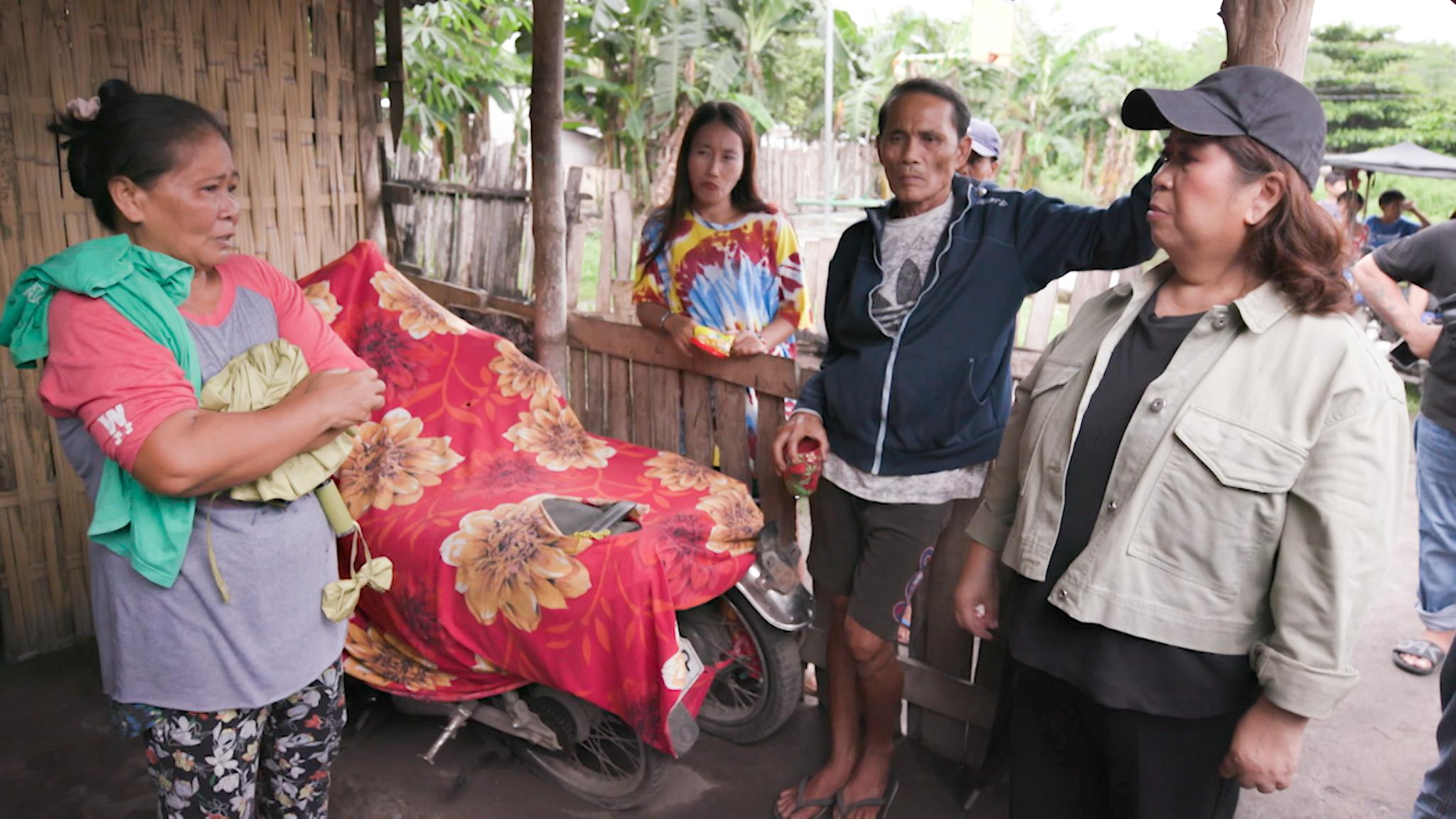
A proposed artificial intelligence (AI) hub, dubbed Pax Silica, in Tarlac has ignited debate over whether technological progress should come at the expense of communities and the environment.
While the Philippine government has promoted the project as a major economic opportunity, indigenous peoples, farmers, and residents of Capas, Tarlac fear it could cost them their homes, livelihoods, and access to natural resources.
According to Sunday’s episode of “Kapuso Mo, Jessica Soho,” around 40 data centers are currently operating in the Philippines, including facilities in Davao, Quezon City and Angeles City, Pampanga.
It's still relatively few, compared to China which already has hundreds of data centers and the United States, which has thousands of them.
In fact, some parts of the United States, including New York, have begun opposing new data center developments due to concerns that these facilities consume enormous amounts of water needed to cool computers and prevent overheating.
At the same time, U.S. President Donald Trump has pushed to prevent China from overtaking the country in artificial intelligence.
As part of this effort, the United States formed Pax Silica, a coalition of partner countries that includes the Philippines.
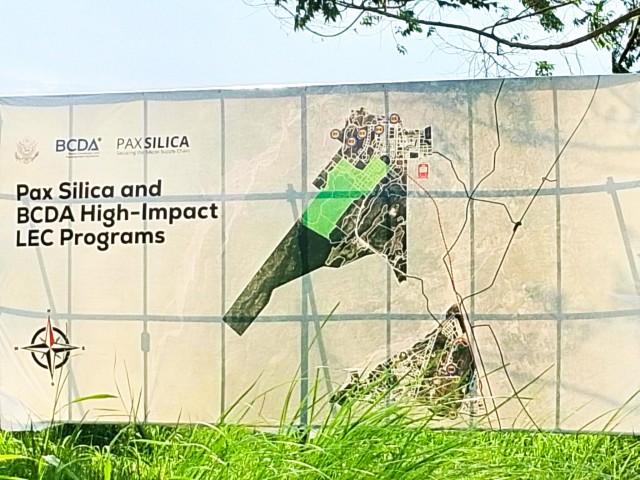
Under the initiative, a 1,600-hectare portion of New Clark City in Capas, Tarlac is slated to become the Pax Silica hub. The project is set to house data centers, chip manufacturing facilities, and mineral processing plants to support AI development.
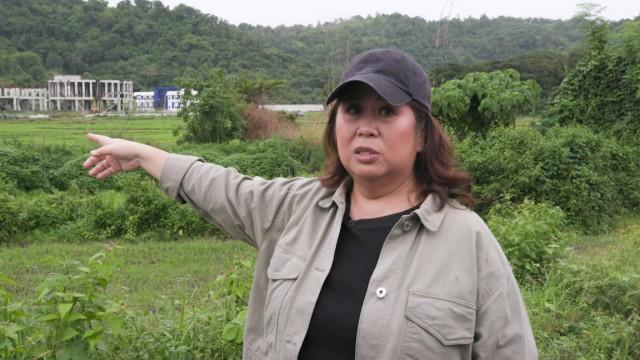
Through this coalition, the Philippines will become part of the global AI supply chain, not only as a source of raw materials but also as a manufacturing hub.
According to Joshua Bingcang, President and CEO of the Bases Conversion and Development Authority (BCDA), the project could generate billions in investment and hundreds of thousands of jobs.
"Forty to 70 billion dollars [ang puwedeng kitain], so ang nakikita nating employment to be generated ay mga 130,000 to 290,000 jobs, high-quality jobs.” he said in his July 23 statement.
[“We can earn $40 to 70 billion, so we can see it generating 130,000 to 290,000 jobs– high-quality jobs.”]
Environmental concerns
The BCDA also said that environmental concerns will be addressed through “sustainable” practices.
“Magkakaroon tayo ng sustainable water management, ang target namin diyan ay surface water harvesting,” Bingcang said.
[“There will be sustainable water management. We are targeting surface water harvesting.”]
But environmental advocates question whether the Philippines’ water supply can really support the project.
Because of this, Professor Giovanni Tapang, a spokesperson for Advocates of Science and Technology for the People (AGHAM), warned about the scale of the project's resource demands.
"Isang building na itatayo nila doon ay gumagamit ng tubig na katumbas ng 1,100 na mga household sa isang araw,” he said. “Wala pa rito ‘yung gagamitin nila sa mineral processing."
[“They are going to build one building that will use up water that's equivalent to the water consumption of 1,100 households in one day. That's not counting the water they will need for mineral processing.”]
Tapang questioned BCDA's proposed solution of rainwater harvesting, saying that it won’t be enough especially during the El Niño season.
"Sabi ng BCDA ay magre-rainwater harvesting na lang daw sila. Okay ‘yun kung tuloy-tuloy ‘yung ulan,” he said. “Pero in fact, kakapusin pa rin sila.”
[“BCDA said they will use rainwater harvesting. That's okay if there is continuous rain. But in fact, they will have water shortage.”]
“Ibig sabihin, kung tagtuyot, kagaya nitong parating na El Niño, saan sila kukuha ng tubig?” he added. “Kukuha sila doon sa mga katabing bayan na kailangan din ng tubig dahil tagtuyot. So, agawan ito ng resources."
[“During dry season, like this upcoming El Niño, where will they get water? They will probably get in nearby towns, which will also need water during dry season. There will be a fight for resources.”]
On land ownership
The BCDA denied allegations that farmers and indigenous communities living within the vicinity of the planned AI hub would be displaced.
"Ang proyekto pong ito, unang-una ay nakatitulo sa BCDA so it's a public land,” Bingcang said. “Wala pong ancestral domain title doon."
[“This project, first and foremost is on public land. There are no ancestral domain titles there.”]
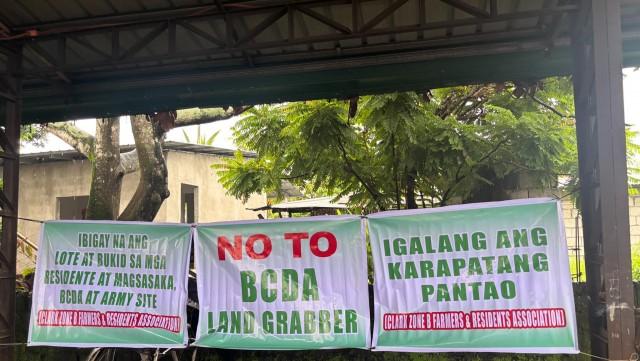
However, residents of Barangay Sta. Lucia in Capas say they are deeply concerned about the project since they weren’t consulted before receiving the one-month eviction notice from BCDA in May.
"Apektado po ang Santa Lucia, hindi namin alam, walang public consultation dito,” said barangay captain Cesario David Bautista, Jr.
[“Santa Luicia is affected. We didn't know. There is no public consultation.”]
He also argued that while the land may be classified as a military reservation, communities have lived there for decades.
"Hindi nila dapat gipitin ang mga katutubo,” he said.
[“They should not put the Indigenous Peoples under pressure.”]
“Sabi po nila abandoned area lahat ito, walang nakatira,” he added. “Pero, mayroon kaming komunidad, mayroon kaming eskwela, simbahan, lahat mayroon kami rito."
[“They said this is abandoned land, but we have a community here. We have a school, a church, everything.”]
The residents also aired their fears about losing their livelihoods, which are mainly farming and agriculture related.
"Kung maaari huwag nilang sirain kasi we contribute to the food security ng ating bansa at ‘yan din ay livelihood ng mga mamamayan at mga taong nandito,” the president of the Sta. Lucia Clark Zone Farmers and Residents Association appealed.
[“If possible, they shouldn't ruin the land because we contribute to our country's food security. We are also talking about the livelihoods of the citizens living here.”]
(If possible, they shouldn't ruin the land because we contribute to our country's food security. We are also talking about the livelihoods of the citizens living here.)
Some farmers said BCDA had offered to buy their land for only P30 per square meter, or approximately P300,000 per hectare.
"Napamahal na sa amin itong lupa namin; hangga’t kaya namin, hindi namin puwedeng itaboy ito,” farmer Joey Ventura said. "Ngayon, kung gusto talaga nila yung lupa ko, bayaran nila sa tamang presyo,” he added.
[“We love our land. For as long as we can, we wouldn't let others ruin our land. Now, if they really wanted it, they should pay us the correct amount.”]
In Sitio Binyayan, Barangay O'Donnell, indigenous Aeta families worry they may also lose their ancestral homes.
"Ayaw po namin ‘yun [Pax Silica] kasi dito na po talaga nakatira ‘yung mga katutubo,” Josie Yamson said.
“Natatakot po kami, baka po makuha ‘yung lugar namin, wala na kami titirahan,” she added.
[“We don't want it here. There are Indigenous Peoples living here. We are frightened they will just get our land. Where will we go from there?”]
Danilo Ramos, chairperson of the Kilusang Magbubukid ng Pilipinas (KMP), argued that farmers have occupied the land long before BCDA or the planned AI hub, which makes them the rightful owners of their land.
"Bago pa dumating ang mga Amerikano sa Clark, at ’yang BCDA at ‘yang Pax Silica, matagal nang naninirahan sa lugar na yan ang mga magsasaka,” he said. "Ang unang may karapatan ay ang magsasaka."
[“The farmers have long lived here, even before the Americans arrived in Clark, before the BCDA and Pax Silica.”]
While acknowledging that some jobs may be created through Pax Silica, Danilo questioned who would mostly benefit from it.
"Puwedeng magkatrabaho sa ilan, pero paano kami, ang pamilya ng magsasaka na mawawalan ng trabaho at ng lupa?” he said.
[“Sure, some people might get jobs, but how about us? Farmers and their families will lose their job and their land.”]
"Ang pangako ng gobyerno, libu-libong trabaho ang malilikha,” he added. “Paano ang magsasaka? Paano ‘yung kabuhayan ng magsasaka na ang buhay namin ay lupa?"
[“The government promises thousands and thousands of jobs, but what about the farmers? Our livelihood depends on the land.”]
Meanwhile, economist and professor Cielo Magno said the Philippine government must clearly define the country's role in the Pax Silica coalition and determine whether its promised benefits will truly materialize.
"We're talking of access to our natural resources,” she said. “How can we maximize this for the interest of the Filipino?”
She argued that the country should negotiate from a position of strength.
"Pag tiningnan mo ‘yung gobyerno, parang tayo ’yung habol nang habol,” she said. “Eh dapat ang nakikita natin dito, tayo ‘yung may produkto, tayo ‘yung kailangan, tayo ‘yung may malawak na lupain."
[“When you look at the government, it appears we keep trying to catch up. But in reality, what we should realize is that we have the product. We have the resources. They are the ones who need us.”]
Cielo also stressed that while foreign investors may gain access to the country's natural resources, Filipinos could ultimately bear the environmental costs of it.
"Pagpasok sa atin, binigyan natin ng libreng access sa natural resources natin, pero lahat ng negative effects ng operasyon natin, tayo rin pala ang mag-i-internalize or maapektuhan,” she said.
[“Say we allow them in and give them free access to our natural resources. But all the negative effects of the operation — it will be on us to internalize. We will be the ones who will get affected.”] — LA, GMA News

