

 GMA Brandtalk
 Tracking
 Archives

Life is the prize for winning ‘The Scorpio Races’
There’s an inevitability that permeates the world of The Scorpio Races, the new young adult book by Maggie Stiefvater. It’s like a tide that the main characters are attempting to swim against—an unseen antagonist in a fictional world that feels all too real. “It’s the first of November so today, someone will die.” In the island of Thisby, life revolves around the annual titular Races, where men ride wild, bloodthirsty capaill uisce (water horses that were based on Celtic myths) across the beach and hope that they’re not one of the people who will die that day before reaching the finish line. No, this isn’t like your usual day at the Sta. Ana race track. 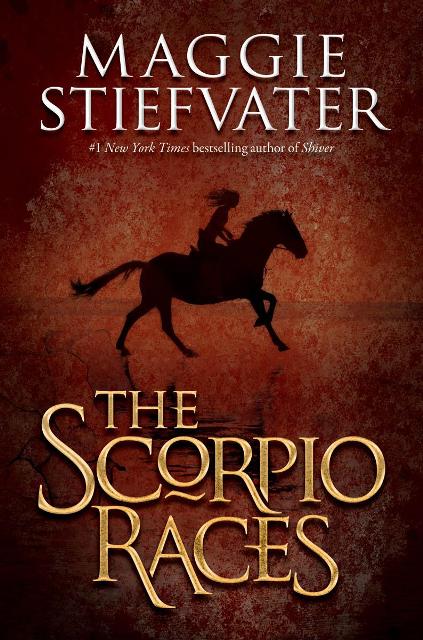 The Race is the backdrop for the story of Sean Kendrick—the returning Race champion—a quiet young man who has a way with horses, and Kate “Puck” Connelly, who enters the competition when fate leaves her no choice. If that sounds like a set-up for the inevitable teen romance, well, it is. Stiefvater’s claim to fame, after all, is a paranormal romance trilogy—The Wolves of Mercy Falls, also known as the books that are printed in colored ink—which earned her a spot in the New York Times bestselling series list. But The Scorpio Races is not just about love; more than anything, it’s a story of courage and survival in a harsh world. The romance is a flame that burns slowly just under the surface for most of the book. I will admit to being a sucker for sweeping, epic love stories, but I like how Stiefvater wrote this one–at once both deliberate and spontaneous. There are no conventional declarations of love, only this: “I will not be your weakness, Sean Kendrick,” to which he replies, “It’s late for that, Puck.” There’s no conventional courtship to speak of; there’s only a desperate kind of awareness, from the moment they met, that they both must survive the Race even if only one of them can possibly win. It’s not sappy, but it’s no less sweet than the November cakes that Kate loves so much. It feels very organic to the story, and true to the characters and their circumstances. The Scorpio Races sees Stiefvater’s return to the multiple first person character points of view she employed in The Wolves of Mercy Falls. It’s a narrative device that I personally have trouble dealing with, because it doesn’t reflect how real people talk or write when they’re telling their story. It was also uncomfortable being inside the heads of the characters from Mercy Falls because they were too emo. Stiefvater makes better use of the device in this book, though. She seems more conscious of the narrative, and the voices are less prone to third-person omniscience. Sean and Kate are also more likable. They have every right to be Drama King and Queen, considering what their lives are like, but they aren’t so it’s easy to empathize with and root for them. On the downside, there’s a lot of stream-of-consciousness filler in the text. These sections do nothing to move the plot or the characters forward. They do solidify the characterizations more and tangentially contribute to the creation of the tale’s fictional world, but leaving them out would’ve made for a tighter story. I love the world that Stiefvater built for The Scorpio Races. Her prose paints a vivid picture of the stark beauty of the island, and the blood and violence of the Races. Thisby is itself a character in the story, one that feels almost mythical—like the water horses that make their way to its shores—yet the gritty reality of life on it is also somewhat familiar. The inhabitants–who, I kid you not, tend to call each other by their full names–make a decent living during Race season, when tourists flock to the island. There are those who love Thisby enough to continue living there no matter what happens, but there are those whose spirits break beneath the strains of hardship that they decide to leave for what they believe is a better life in the Mainland. And I suppose the permanent danger of staring Death in the face and finding out it looks like a bloodthirsty horse can only be detrimental to one’s sanity. The aspect of migration in the story resonates with me because I see it happening time and again here in the Philippines: on a similar scale, in tourist hotspots where people try to bend nature to their will even to the point of their mutual destruction; in the provinces, where life can be hard enough that people succumb to the lure of the dazzling mirage that is Manila; and on a larger scale, when people migrate or leave to work in other countries, often to tragic consequences. In this light, Filipino readers will likely empathize with Kate, who joins the Races to try to persuade her disillusioned older brother not to leave and to win enough money to buy back her parents’ house. She braves both the perils of the tourist economy so that she and her brothers will have enough to eat, and gender discrimination in a sport that has never suffered women as participants. Her struggles are familiar, her courage and perseverance admirable. Sean is a little more distant as a character compared to Kate, but only because Stiefvater effectively portrayed him as someone who has one foot in the sea and one on land. His personality is defined by his reputation in the Races and his life in the stables, where he trains capaill uisce and thoroughbred horses for a wealthy businessman. This isn’t to say he’s entirely unreachable, as his bid to buy off the horse he’s been racing for years from his employer is once again familiar. In the context of Philippine society, his plight is no different from farmers who toil for decades on land that they do not own. Perhaps I may have read too much into a young adult book. But as fantasy novelist Brandon Sanderson said, “The purpose of a storyteller is not to tell you how to think, but to give you questions to think upon.” There’s certainly more to this book than just a boy and a girl and the deadly contest that they have to survive and win. It’s a well-executed drama with subtle hints of fantasy, a fresh and original story that distinguishes itself from the usual young adult fare. The Scorpio Races has been gaining critical acclaim since its publication last October, making it to several Notable Books of the Year lists, like the New York Times’ and Publisher’s Weekly’s. It’s inevitable, of course, that it will catch Hollywood’s attention. The Scorpio Races will make its way to the big screen in a few years’ time courtesy of Warner Bros., which recently acquired the film rights to the book. - YA, GMA News

