

 GMA Brandtalk
 Tracking
 Archives

ADVERTISEMENT
Filtered By: Lifestyle
Lifestyle
The second coming of crafts
+
Make this your preferred source to get more updates from this publisher on Google.
Not since the '70s has crafts been seen as something remotely hip. Because of technology, people have found other ways to occupy their time, trading in crochet needles and vats of Elmer's glue for iPads and netbooks. That plus the brand name fever that has taken over consumers caused arts and crafts to be buried in a papier-mâché box along with boy bands, Tamagotchi, and other fads that have long passed.
Lately though, it seems that crafts have slowly been rediscovering their place in the brand-obsessed world that has ignored them for so long.
Crafts fairs both online and on-street have been flourishing all over the world. The Renegade Craft Fair, for example, has expanded to several more venues across the US and even in London since it started in 2003. The crafts website Etsy has also gained a massive following, and is now known to be the Ebay for craft seekers.
It wasn't long before Filipinos caught on to the DIY resurrection. The online marketplace thrives with homegrown businesses selling handmade goods, and a couple of crafts fairs have surfaced across Metro Manila.
One such fair was the Brown Bag Vintage and Crafts Market, which had its second run last December 9 at the Filipinas Heritage Library in Makati City.
The Brown Bag Market started in November 2010, and is one of the few local venues that allow artists and artisans to sell their wares, and buyers to discover handmade, one-of-a-kind items. This year’s fair was in perfect timing with the holiday season, and stood out among its congested superbazaar counterparts.
Unlike the typical holiday bazaar, this flea market had no export overruns or popular brand names — only a quirky collection of curios that included hand-drawn stickers, jewelry (more glamorous incarnations of the bottle cap necklace art projects of our childhood), felt cloth pouches, wallets made of old tarps, bags made of old coffee sacks, painted sneakers, organic soaps and beauty products, and even clothes.
The offerings were so attractive that even as the rain poured in torrents and the power supply fluctuated, a lot of people still flocked to the fair and made their rounds of the booths.
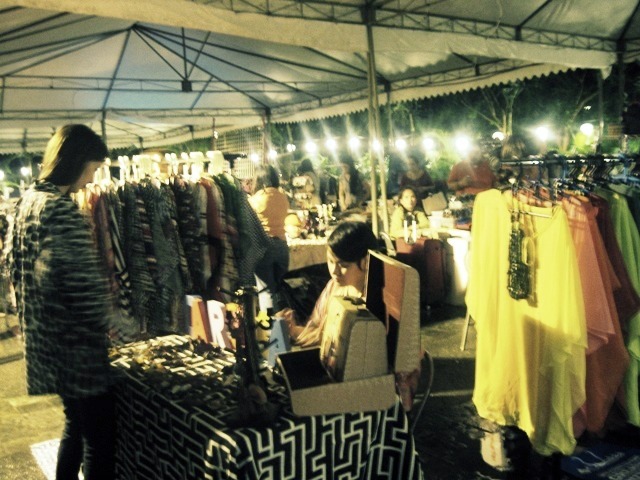
Buyers and concessionaires braved the bad weather in the name of crafts.
Aside from hosting a unique set of concessionaires, the fair also held craft workshops for those who were interested not only in buying crafts products, but making them as well. The workshops covered felt craft, creative gift wrapping, jewelry making, and paper cutting.
The workshops could have done with more participants, but perhaps the weather affected the attendance. At any rate, the response to the products showed that even while people may not be ready to Do It Themselves and make a hobby of crafts, they more than welcomed the byproducts of other people's hobbies.
“It was one of my bored-with-my-life phases and I was looking for something crafts-y to do," said Jona Cham of how she found the hobby that eventually became her bag business, Nunanuna. "Feeling ko kasi I haven't done anything creative in a long time and I wanted to work with my hands," she added.
After her husband gave her the idea of making bags out of used coffee and flour sacks, she did some research, created a bunch, and was soon getting orders from interested buyers.
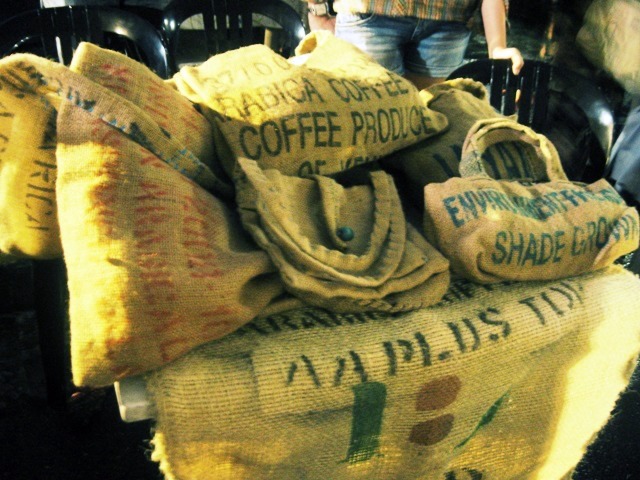
Coffee sack bags from Nunanuna
In fact, the hobby-turned-business pattern applied to a lot of the concessionaires.
Lorrie Battung of the famous Pink Teacup Shoppe shared, “My girls and I really love to make stuff. So we started out our business as a homeschool project. The condition was, we would not purchase any materials. Everything would come from the home."
Little did she know that their little project would actually turn a profit. "We researched...and then because we were able to sell online, they said, ‘Mom, let’s just do it full time.’ So it’s not a project anymore. Business na namin," she continued.
Evidently, crafts are a lucrative business, and part of the appeal could be in the fact that these handmade goodies are certainly one-of-kind. Because they're made by individuals or a small team of people as opposed to being produced by a factory, only a few items are made at a time, and not all of them are exactly the same.
“I think people are slowly starting to get tired of mainstream products and buying something that [they] know 6,000 other people also own,” said Cham.
"A lot of people want their stuff to be very unique, to be something that they can really say na, ‘Ah wala akong kaparehas dito,’" added Beam Mariano of the felt cloth phenomenon Artwine.
"With these handmade products, I can easily change the design to fit what they want,” she shared.
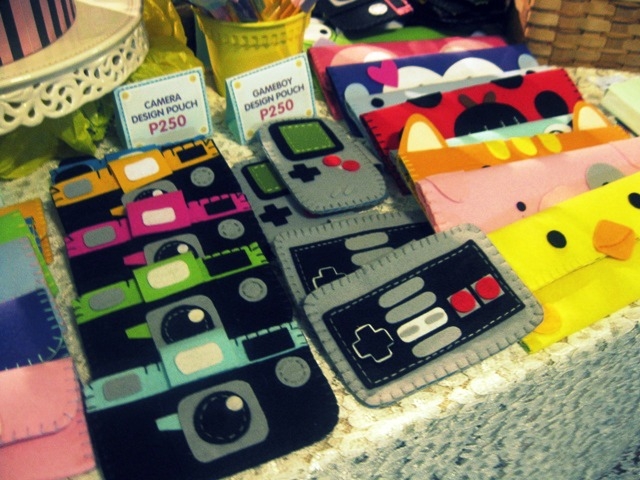
Felt cloth beauties from Artwine
Also, with the upsurge of environmental awareness, people are becoming more conscious of how the environment is affected by the things they buy. And since recycling products is at the very heart of crafting, crafted goods fit right in.
"Everything finds a second life," said Battung, sharing how she and her daughters recycled everything from old notebooks and sheet music, to old clothes. "It's nice because you don't want to throw stuff right away."
"People are becoming more aware of recycling and upcycling. May plus din ‘yun kung bumili ka ng produkto tapos feeling mo may contribution ka sa pag-conserve kay Mother Earth,” Cham added.
As the allure of mass products is wearing off and more and more people are experiencing an environmental awakening, it truly is the perfect time for crafts to re-enter the scene. And while a lot of people aren't yet ready to break out the scissors and glitter glue, crafts have definitely come back–and it looks like it's here to stay. –KG, GMA News

