We use cookies to ensure you get the best browsing experience. By continued use, you agree to our privacy policy and accept our use of such cookies. For further information, click FIND OUT MORE.
Make this your preferred source to get more updates from this publisher on Google.
The sprawl of the city. Its ebb and flow and the human drama that unfolds within and folds again like origami. This is the imagery in the music that Toe plays. They’re an instrumental band from Japan that’s become one of the contemporary stalwarts of post-rock. It contains technology and romance, delight and sorrow, and the urbanity of our lives. In many ways it is very Tokyo. In many ways it’s the raison d’etre for why they make math rock the cornerstone of their sound. The Five Six Seven Tour almost didn’t make it to Philippine shores. Before this, local promoters and the organizer Terno Recordings, along with Toe’s members, asked for an online show of support to assure organizers that it would sell at least as many tickets for the cost of a tidy profit if the band were brought over. The clamor exceeded the number required and so here they were, in the flesh, the humid night that’s March 20 in the NBC Tent at the Fort. We’re playing host to the spirit of new sentimentality. Finally, some taste of new blood in the ambient music gestalt that critics and naysayers have claimed was trudging to its grave since the early 2000s. If this was its remains, then such a carcass was not ready for the afterlife yet.
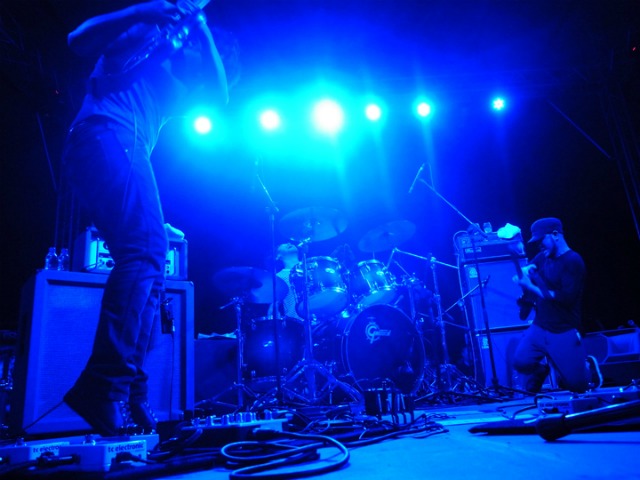
The band contains technology and romance, delight and sorrow, and the urbanity of our lives. Photo courtesy of Terno Recordings
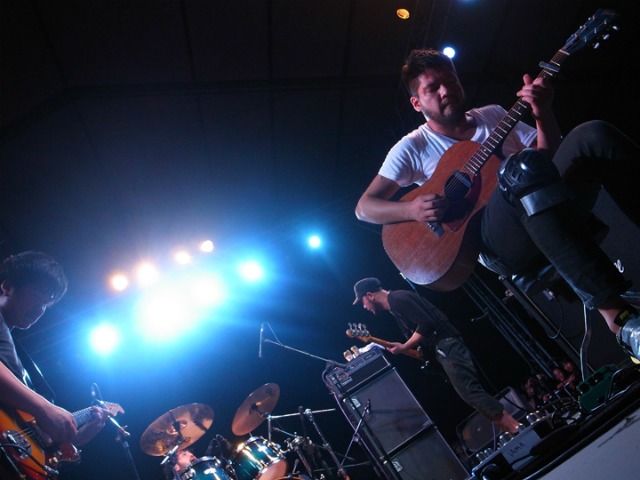
Formed in 2000, in the wake of artists under the umbrella of the noughties wave of post-rock like Explosions in the Sky, Godspeed You! Black Emperor and Red Sparrowes, Toe are Yamazaki Hirokazu (guitars), Kashikura Takashi (drums), Mino Takaaki (guitars), and Yamane Satoshi (bass). Without a singer, with the instruments as focus and an often circular setup to their stage (where the audience can gather around them), their music is full of subtlety and comes at you in waves. It’s clever and playful and insistent. Like listening to alchemical energy conjured into something articulate and grand in a foreign language. A puzzle. Something to be meditated on. Without lyrics and unless you’ve listened to the songs over and over, there’s nothing for your mind to latch onto in recall, so the experience is always new. Plus, a lot of the band’s songs are titled in Japanese so it wouldn’t really matter. I discovered Toe with the LP "The Book About My Vague Plot on a Vague Anxiety", which remains my favorite to this day, but there’s much to be said about the evolution of the band’s sound in their most recent album, 2009’s "For Long Tomorrow". There are additional textures there in the addition of steel and classical acoustic guitars, rhodes piano, vibraphones and even a bit of synth.
Toe's music is clever and playful and insistent. Photo courtesy of Terno Recordings
Back at the NBC Tent, the local post-rock bands Sleepwalk Circus and Encounters With a Yeti warmed up the crowd at a separate, more traditional elevated stage. The guitarists crowding around their kilometric pedal boards―a staple in instrumental bands that, critics have joked, are the new power chords. Opening with “Mice” and playing straight into “Dance” in quick succession, Toe let us bask in songs created as message and soundtrack. The drummer and the beat as centerpiece cannot be missed. Kashikura’s like a cartoon character, the Animal of the Muppets with a blur of arms and a furious stroke. Nothing extenuate there, just a sheer display of prowess. Only the kind of precision that’s come out of practicing these songs dozens of times and a dedication to playing together produces this masterful use of odd time signatures and segues from soft to loud and louder still. Take the song “Ordinary Days,” that’s off their new LP (created after the 2011 Japan earthquake to inspire the citizens to recovery). It’s powered by the heart of a train ride, starting out with a frolic of a riff and carousing along the way as the speed and the people in close proximity whether they’re on their cellphones, playing with their tablets, or reading manga becomes a tableau of miracle. Daily life IS the miracle. Goes the message that is attached to the downloadable, for purchase version, of the song for earthquake relief funds: “We, who live in the urban areas of Tokyo and Kanagawa, were also hit with the earthquake, but fortunately for us, life is close to ordinary, being able to wake up in the morning, ride the trains, and go back to our homes. There is nothing special; these are our regular, ordinary days. But we can't imagine the hardships of not being able to lead a normal life. Because we scramble every month just to get by ourselves, it's hard for us to make a large financial contribution. So, we've decided to make music instead.” That Tuesday night, there's only the joy of Yamazaki’s Jaguar axe, the creamy, midrange clean tone of its P9 pickups, the drive of Kashikura’s sticks on metal and pigskin. There’s math rock here, a dash of ambient textures, some noodling on synths to produce electronic daubs, the jagged riffing common to garage rock and the kind of non-traditional beats that send neurons firing in thoughtful contemplation; the intellectual equivalent of a superb persuasion. All very acute and very fast. Thirteen songs and three more for the encore count as an extraordinary gig. A modest Japanese bow from each of them at the end and we applaud in gratitude. —KG, GMA NewsKarl R. De Mesa has been a journalist for the past 14 years. He is also the author of the horror books “Damaged People” and “News of the Shaman,” available in print and international e-book formats. His collected non-fiction is forthcoming very soon in “Report from the Abyss.” He plays guitar for the post-beat, drone metal band Gonzo Army. When stumped, he lets a stud-collared Snoopy push him around and call him names because it's better than having a polar bear do it. The views expressed in this article are solely his own.


 GMA Brandtalk
 Tracking
 Archives