

 GMA Brandtalk
 Tracking
 Archives

ADVERTISEMENT
Filtered By: Lifestyle
Lifestyle
Alexis Tioseco and Nika Bohinc remembered in their own words
+
Make this your preferred source to get more updates from this publisher on Google.
On September 1, 2009, Alexis Tioseco, 28, and Nika Bohinc, 29, were murdered at the home they shared as partners in Quezon City. Their case remains unsolved. Today marks the third anniversary of their deaths. Alexis and Nika were prolific writers on behalf of cinema. Alexis championed Philippine independent filmmakers and created Criticine, one of the most vital publications for Southeast Asian film. Nika was the youngest, first-ever woman editor of Slovenia’s oldest film magazine, Ekran, and aimed to open the publication’s borders to global cinema. 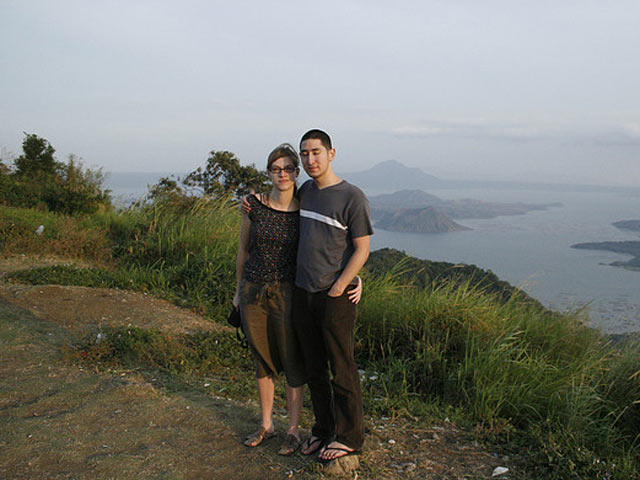 The following passages are selections from their work. Nika Bohinc’s words are translated from the Slovene by Maja Lovrenov. Today, independent, indie, or any of its many synonyms has become a hot buzzword in the Philippines. Young filmmakers, students, festivals, even commercial studios are beginning to use it, defiling the purity that was once associated with it. . . . The new Philippine filmmaker does not fear experimentation but embraces it, knowing that film, or perhaps better put, cinema is still something . . . becoming. While above ground the death of Philippine Cinema (or the industry) is proclaimed, in the deep underground lie the real artists, replenishing the soil with seeds of a new cinema. -- Alexis Tioseco, “Revolutions Happen Like Refrains in a Song*,” Criticine, 2006 The ‘independence’ of an independent film does not mean only the acquisition of funds from the private sector, it also carries the charge of intellectual independence, freedom, creativity and criticalness to the environment in which it is made. In Slovenia, such a production, when it happens, is a cause for celebration. And perhaps this other, intellectual and creative frustration is a much bigger tragedy of Slovenian cinema than the tragic and frustrating complications in the operation of the Film Fund and state money supposedly vanishing into thin air. I wonder whether the ruin of the institutional system could lead to the emergence of independent production. Only time will tell what the consequences the institutional crisis will bring. -- Nika Bohinc, “Alternative,” Ekran, 2007 I wish we had more film lovers and less bureaucrats in important positions in the field of cinema. I wish we focused our attention more on audience education, development and literacy, than on dumbing down films to pander to them. -- Alexis Tioseco, “Wishful Thinking for Philippine Cinema,” Philippines Free Press, 2008 The situation is complicated and the circle vicious: are there no films because there is no audience, or is there no audience because there are no films? There obviously are films, but it would seem not the kind the audience would take as their own. Does the problem lie in the preferences and the interests of the audience or the decisions of the distributors and programmers about which films to buy? -- Nika Bohinc, “Dialogue,” Ekran, 2008 Having a festival where a prime consideration for a film’s acceptance or rejection is its ‘commercial viability,’ is utterly ridiculous. Without getting into the argument over the selection committee’s mystical methodology for determining a work’s ‘commercial viability’ (based simply on the reading of a cast list, plot, or even script) it is safe to say that this should not even be of concern to the festival organizers. Choosing the best possible films should be their main concern, as making the best possible films should be the concern of the filmmakers. The audience is there—the responsibility in a festival such as this does not lie in showing them what we believe they want to see, but simply showing the absolute best of what we have to offer. The Metro Manila Festival is a good idea for a way to support the local film industry. But without a drastic overhaul in regard to its implementation, it will remain simply an idea. Alexis Tioseco, “Reinvigorating Philippine Cinema: The Possibilities of the Metro Manila Film Festival,” IndieFilipino.com, 2004 What is currently at least as important as the process of searching for the most ideal and legitimate perspective possible is especially—I write subjectively, which, despite the striving to capture the totality and penetrate into the depth, holds for everything that human beings create—is the focus of the gaze. What I have in mind is not the focus that, for the sake of its existence, denies and ousts all the other gazes, but the focus that establishes its firmness within itself, but also in relation to the multitude of gazes outside it: with its curiosity and the wish for enrichment, a better understanding of the film image and the real world. In the end, we cannot do without a pinch of sensitivity, rebelliousness and imagination, the magic potion which makes even the gravest and the most closed situations appear in a new perspective which is their complete opposite. Nika Bohinc, “Focus,” Ekran, 2009 The brand of social realism espoused by the better films of Lino Brocka (Manila in the Claws of Neon, 1975; Insiang, 1976; Orapronobis, 1989), has become the dominant form of socially conscious filmmaking in the Philippines over the past four decades. This form of filmmaking was important for its time: when the government had control of the media, to tackle social issues directly through cinema meant to lift a blindfold. But as the means of communication become more difficult to suppress, society no longer attempts to hide its corruption and moral bankruptcy the way it once did. Faced with a population inundated daily with the misery of reality—from television, newspapers and neighbors, to what one sees on the streets on one’s daily commute—the challenge of a socially committed artist is to make their viewer feel, with a renewed intensity, what surrounds them. Two valid propositions for today’s filmmaker: to encourage a greater understanding of what is by examining in detail its context (as in the work of Lav Diaz) or to encourage thoughts of what can be by appealing to the imagination (as in the work Raya Martin). As Chris Marker said not so long ago, “Rarely has reality needed so much to be imagined.” -- Alexis Tioseco, “Raya Martin,” CinemaScope, 2009 Can enthusiasm wear out? With individuals, it can; in society never. There will always be new generations with new energy, which will—regardless of the (non)professional nature of the given conditions—create new film spaces, ideas, cinemas, festivals, societies, schools, film texts and magazines. Regardless of the iron fist that divides and conquers and carelessly destroys what it has not itself built. -- Nika Bohinc, “Professionalism the Cinema Way,” Ekran, 2008 Many filmmakers, especially filmmakers in the Philippines, have a problem with the word critic. We have little to no culture of healthy polemics in the country, as any attempt to consider fault is taken as a personal attack. Rare are those that are able to deal with it properly. One particular filmmaker took objection to the idea of a publication that I was to edit using the title ‘Criticine:’ he had a problem with the word critic being included. A nasty term, I suppose he thought. The first impulse of any good film critic, and to this I think you would agree, must be of love. To be moved enough to want to share their affection for a particular work or to relate their experience so that others may be curious. This is why criticism, teaching, and curating or programming, in an ideal sense, must all go hand in hand. -- Alexis Tioseco, “The Letter I Would Love to Read to You In Person,” Rogue, 2008 Hands always remind me of August Rodin, especially the statue La Cathedrale, next to which Valeria Bruni Tadeschi sits in Rodin’s museum in Paris in the film Un Couple Parfait (2005, Nobuhiro Suwa). In the sculptor’s body of work, these two hands, which in a slight, barely perceptible touch rise towards the sky and in the space created between them protect something very fragile, are considered a tribute to Gothic church architecture and art. The sculpture gives rise to reflections on the solitude of human existence and the human need, desire for contact that remains unfulfilled. Rodin’s sculptures feature hands as autonomous settings of life; in his body of work, we find people embracing without arms as well as independent, petit hands that live without the body, walk, sleep, awake, rise into fists and crimes . . . With a hand, we can take hold, we can protect, we can caress or strike, we can create. And we can also wave goodbye. -- Nika Bohinc, “Professionalism the Cinema Way,” Ekran, 2008
Alexis Tioseco and Nika Bohinc at Lake Taal in 2007.

