

 GMA Brandtalk
 Tracking
 Archives

ADVERTISEMENT
Filtered By: Lifestyle
Lifestyle
The magic of books: imagined stories, real life lessons
+
Make this your preferred source to get more updates from this publisher on Google.
Bookworms are well acquainted with the magic of reading. They fall in love with the way stories can bring them all over the world, and beyond, without having to leave the chair. The way characters become so familiar they begin to feel like friends. The way the story goes beyond the page and continues even after "the end."
Often, people discover reading at a young age. Beginning with colorful children's books, readers learn to appreciate stories and eventually, create their own. But beyond inspiring readers to become writers, books can actually help children to become better people.
"Even more important than a paper narrative, it enables a child's imagination to want to write a dynamic life narrative as well. It can inspire them to become someone. It inspires values in a certain way," children's book author Robert Magnuson said during the talk "Imagine Something Big: When Kids Dream Big" at the Read Lit District, the Philippine International Literary Festival held from Nov. 14 to 16.
According to Magnuson, a good book can suggest many paths to a child, at a time when limited experience allows them to see only one. This sort of inspiration was Magnuson's final step in enabling a child's imagination.
Fueling a child’s imagination
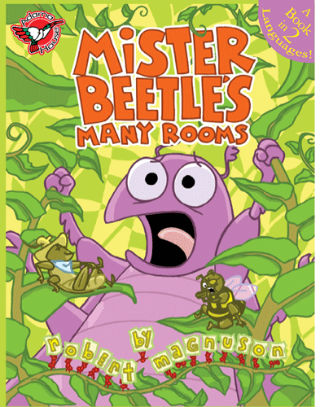
Children's book author Robert Magnuson said fun books can make kids fall in love with reading. Photo from the Adarna House website
Inspired by the Disney character Special Agent Oso, Magnuson outlined three special steps to explain how reading enables a child's imagination.
The first step, Magnuson said, is invitation. Magnuson recalled how he grew up surrounded by books, from picture books to encyclopedias.
"I couldn't understand the words but because there were pictures, it could at least give me a vague idea of what's going on," said Magnuson, whose older brothers would tell him what the story was about.
"This made me fall in love with books before I could even read them," he said.
He advised parents that it's important to introduce reading through a fun book. "If it's not fun, it's going to be a struggle for the child," he said.
After invitation, the next step is investment.
Magnuson explained that imagination doesn't work in a vacuum. "If it doesn't ask the reader to invest any part of himself into it, then that's as far as the book will go," he said.
He recalled how as a seven-year-old, he was obsessed with Spider-Man. When his dad told him they were going to New York, catching a glimpse of Spider-Man was all he could think about.
"Spider-Man did not show up. I didn't hate him, but it did teach me something about literature and good stories and I learned that through imagination, one could express real people and ideas through characters that are not necessarily real," he said, adding that in order to create characters that are real for the child, authors must know what their audience can relate to.
He said that the magic begins when a child's investment is complete and the book ceases to exist. "When the imagination of the reader is running concurrent with the imagination of the author, the story becomes alive. At the end, when the story is over, the reader can choose to continue the narrative beyond the book," he said.
A wider worldview
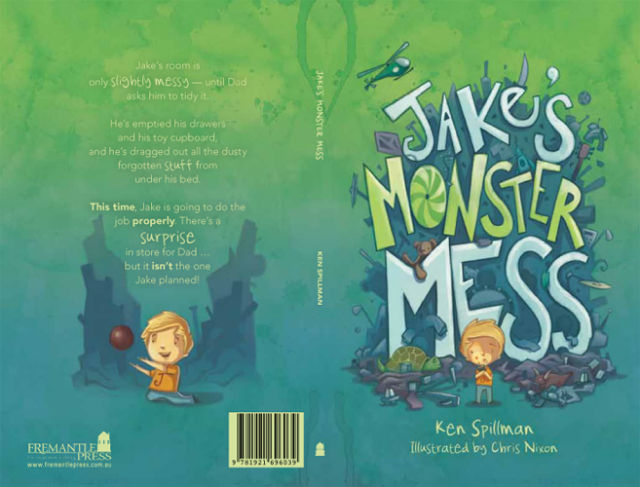
Ken Spillman's Jake has adventures using his imagination. Photo from Ken Spillman's website
Meanwhile, Australian writer Ken Spillman shared that nurturing a child's imagination builds resilience, and even individual quality of life. "Our global future rests on the quality of our collective imagination," said Spillman, whose main character in his children's series, “Jake”, has many adventures using the power of his imagination.
Spillman said it is the adults' responsibility to enable young people to "click 'okay' and then to open access to the WWW — the worldwide Weltanschauung (German for worldview)."
He noted that reading fiction improves relationship competency, as reading can create self-understanding. "Any novel adds to the reader's store of experience of how people feel, think, behave and react. Such experience is the currency of human interaction and understanding of self. Fiction offers a way into that world," he said.
Spillman also said that reading and exposure to stories in all their forms helps children develop a wider understanding of the world, as well as decision-making skills. He explained that when children read, they are exposed to a pattern of conflict resolution.
"We need to remind ourselves that when writers and storytellers make up stories, they become exemplars of problem-solving using the imagination. The more stories the children absorb, the more they absorb the model," he said.
Spillman said that reading teaches children to experience more richly aspects of their own world. Reading, he said, is not just about literacy. "It's about people literacy. Through stories children develop a greater capacity for empathy. Through stories they develop a capacity to read and know others in their own lives," he said. –KG, GMA News

