GMA Brandtalk
 Tracking
 Archives

Literary icon declares Pinay writers "tough-minded, clear-eyed"
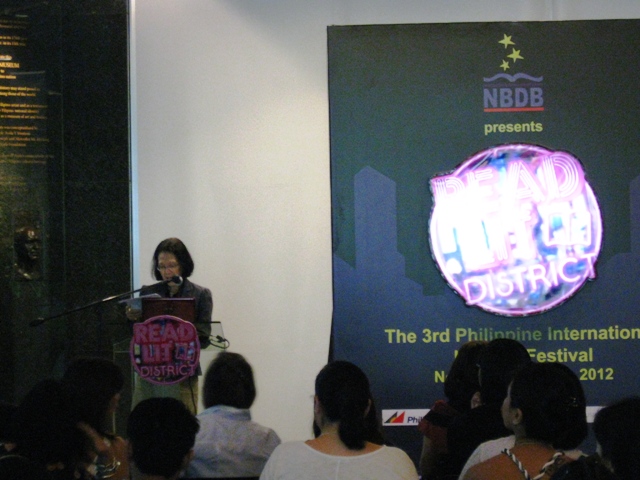
Here in the Philippines, women writers very often break the mold, so said critic and professor Cristina Pantoja-Hidalgo. This is in stark contrast to some writers, many of them women, who ride to stardom, via poorly-written fantasies dubbed as novels. It can thus be easy to overlook the fact that some of the greatest, and most groundbreaking writers in literary history, are female. In her keynote address at the Philippine International Literary Festival (PILF) earlier this November, Hidalgo discussed her dissertation on Filipina writers and the memoir in which she studied the personal narratives of 10 women writers. “Contrary to familiar stereotypes, I found out that religion did not look large in these women's works, nor were they sentimental creatures. These women were clear-eyed and tough-minded,” said Hidalgo, who is a multi-awardd fictionist, as well as a pioneer of the creative non-fiction (CNF) genre. Hidalgo said that the writers she studied wrote about the usual subjects in unusual ways, noting that they do not glorify men in their works as many women writers are wont to do. “They spoke of marriage as a trap, of widowhood as release, of underwear as confining, of education as deceiving, of love as fleeting, of childbirth as frightening. Of immigration as demeaning, of war as a brutal, barbarous, absurd exercise, and of men as often petty and pompous or unreliable and arrogant, but sometimes also, brave, and strong, and true,” she explained. “These women took note of society's hypocrisy and injustices but they also recognized and affirmed what is beautiful, noble, and good,” she added. Hidalgo then discussed the memoirs of two Filipina writers in particular: poet Merlie Alunan's “The Last Gesture,” which was published in the latest Likhaan journal, and journalist Jenny Ortuoste's Palanca Award winning essay “The Turn from Home: Memories of Sta. Ana Park.” “I take these two memoirs as signposts,” Hidlago shared. “They mark the latest fads taken by Filipinas since the '70s, when the first of the autobiographical narratives that I studied for my dissertation were written.” “What they revealed is the distance that these women writers have traveled, but not the change of direction,” she explained. Hidalgo noted qualities in the narratives that aligned with certain conventions in non-fiction writing by women. For instance, in Alunan's memoir, she stops writing about her husband after she shares about the birth of her third child.