We use cookies to ensure you get the best browsing experience. By continued use, you agree to our privacy policy and accept our use of such cookies. For further information, click FIND OUT MORE.
Make this your preferred source to get more updates from this publisher on Google.
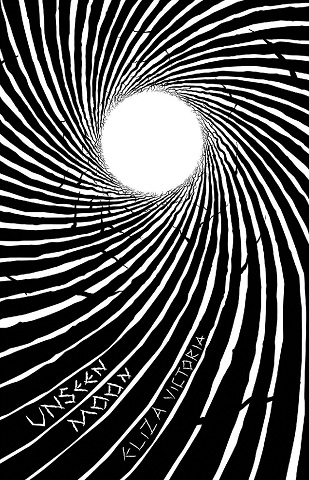
Following last year’s magic and fantasy-inspired A Bottle of Storm Clouds, Palanca Award-winning writer Eliza Victoria's new anthology Unseen Moon features five tales that explore darker themes with a touch of fantasy against the backdrop of familiar places and events that sound like they came straight out of news reports or the spooky stories you’ve heard but do not want to believe.
Spooky, surreal: Unseen Moon by Eliza Victoria.
There's always something about Victoria's short stories that make my little brain cells applaud (or so I imagine): sometimes it’s the pure whimsy of her fantasy worlds; sometimes it’s the ingenuity of the plots and twists. For this anthology, it's the audacity with which she writes about difficult issues like suicide, murder, and incest, as well as her ability to capture a person's deepest hopes and fears and put them into words. "Needle Rain" In this story, Victoria delves into the minds and hearts of four longtime friends as they become involved in an accidental killing of one of their own—a suspense-filled look at how each of the characters unravel as fear and guilt take their toll. What I find particularly compelling is how this story feels just a little unreal—its chilling sequence of events heightened by one character’s eerie dreams and visions—and yet everything begins with a perfectly normal get-together to work on a school project. It makes one question what you would do if it happened to you and your friends one dark and stormy night. "The Ghosts of Sinagtala" This is one of the creepiest stories I’ve ever read. Siblings Ben and Emma visit Sinagtala, the old mansion they have inherited from their grandparents. It walks the line between the haunted house shenanigans that we’ve come to expect from "Shake, Rattle, and Roll" and the downright frightening paranormal manifestations showcased in "A Haunting." This is standard horror fare, really, but Victoria crafts it skillfully, intertwining the past and the present, reality and hallucinations, in a very cinematic writing style that wreaks havoc on the characters' minds and fuels the readers’ imaginations. If you're a scaredy-cat like me, this is not recommended reading for when you’re alone in the house at night. "Summer Evening" Fraternal twins Amarilis and Carlos are left in the care of a babysitter one night when their older brother has to go away on one of his (illegal) jobs. Their house is later forcibly entered by two men with very bad intentions. In my mind, I refer to this as the story with The Terrible Twins, and the one that I had the coldest emotional reaction to. It delivers on the promised suspense, but I couldn't feel anything for the characters because I couldn’t be certain where all their malice was coming from. "December" Serial rapist Gabriel is caught in the act by a young orphan girl named December whose main concern after witnessing the crime is not to flee or report to the authorities, but the fact that the victim is not well and truly dead. And so she finishes the deed. Gabriel and December strike up an unlikely friendship after that incident—something that the adults surrounding the girl (you can include me, too) become suspicious of. As it turns out, this relationship is probably the most innocent situation the reader will see both characters involved in. The crimes described here are just as grisly as in the other stories, but the edge is tempered by Victoria’s almost criminology-level dissection of Gabriel and December’s psyches and their budding relationship. As with "Needle Rain," their actions are no more justifiable, but getting into the characters’ motivations at least helps one to come to terms with the surrealism of the situation. "The Viewless Dark" This is the most compelling story in this anthology, and the one that embodies the dark surrealism implied by the anthology's title. College student Anthony finds his best friend Flo dead in the university library following a series of bizarre happenings on campus which began with the apparent suicide of a graduating Philosophy student. Here, Victoria seamlessly blends both man-made horrors and the kind that no one can fully explain, with an exciting whodunit. As the story unfolds from Anthony’s memories and as the suspense builds, I likewise saw the characterizations solidify along the way until I felt like we know the characters enough to predict what they are going to do. But of course, there is always a twist. All of the stories feature young people committing or being involved in some very dark deeds. It is difficult to believe that young people are capable of the level of vengeance and violence, as well as despair and hopelessness that I read here. Then again, maybe that’s the cold, sharp point of this anthology. We have seen some of these stories in newspaper headlines—they can happen—although we rarely see into the minds of those involved. But if we knew why they did it or if some are victims in their own right, are there instances when their crimes are justifiable, or would that not make any difference? Curiously, there is a marked absence of active parents in these people’s lives, and only in the stories where there are at least caring pseudo-parents did I feel that the characters have redeeming qualities. Perhaps if these people had guidance and love—like a bright moon that lights the way at night—hope would have been easier for them to see. — BM, GMA NewsThis review is based on a copy of the anthology provided by Eliza Victoria. Meann Ortiz is an engineer, freelance writer, and blogger. You can read more of her thoughts about books at The Girl Who Read and Other Stories. The opinions expressed in this review are solely her own.


 GMA Brandtalk
 Tracking
 Archives