

 GMA Brandtalk
 Tracking
 Archives

ADVERTISEMENT
Filtered By: Lifestyle
Lifestyle
It’s up to us to use the freedom EDSA gave us, says veteran journalist Lingao
+
Make this your preferred source to get more updates from this publisher on Google.
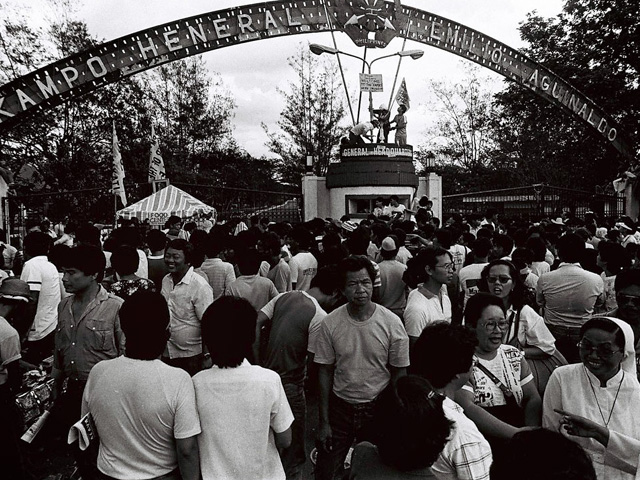
On Feb. 23, 1986, thousands of people responded to the call of the late Jaime Cardinal Sin to support the rebel soldiers under Defense Minister Juan Ponce Enrile and PC Gen. Fidel Ramos, who were holed up inside camps Aguinaldo and Crame. Joe Galvez
Many young people barely know the importance of the EDSA Revolution—the movement that brought down the dictatorship of President Ferdinand Marcos in 1986—but veteran journalist Ed Lingao thinks it's partly due to their elders' negligence to hold up what the movement really meant.
"'Di naman puwedeng patalsikin mo ang isang tao tapos bahala na kayo diyan. I will go back to 'hindi ako magbabayad ng buwis'... hindi puwedeng ganun," said Lingao on "News To Go" Tuesday.
Lingao said the people who were there have a responsibility to keep the revolution's spirit alive. Instead of saying EDSA never changed things, he says, EDSA-age adults must re-evaluate their choices and use the freedom of choice the revolution gave them.
"EDSA was there to give you the freedom to make choices. It was there to give you institutional democracy. Binigyan ka ng demokrasya, anong gagawin mo sa demokrasya? Nasa sa iyo na 'yon. Hindi problema ng EDSA kung ano ang choices mo after EDSA," said Lingao, who is currently the Philippine Center for Investigative Journalism's multimedia director.
"We're stuck with, 'EDSA was four days in February.' No; it should be every day, for the rest of your life."
On the 28th anniversary of the revolution, he said that EDSA was not, and should not be seen as, just about removing someone from power.
"It's about changing the way you look at politics, leadership, [and] your role. In the end, EDSA is People Power, not Cory Power, not Marcos Power. It's People Power," said Lingao.
Unified in fear
"'Di naman puwedeng patalsikin mo ang isang tao tapos bahala na kayo diyan. I will go back to 'hindi ako magbabayad ng buwis'... hindi puwedeng ganun," said Lingao on "News To Go" Tuesday.
Lingao said the people who were there have a responsibility to keep the revolution's spirit alive. Instead of saying EDSA never changed things, he says, EDSA-age adults must re-evaluate their choices and use the freedom of choice the revolution gave them.
"EDSA was there to give you the freedom to make choices. It was there to give you institutional democracy. Binigyan ka ng demokrasya, anong gagawin mo sa demokrasya? Nasa sa iyo na 'yon. Hindi problema ng EDSA kung ano ang choices mo after EDSA," said Lingao, who is currently the Philippine Center for Investigative Journalism's multimedia director.
"We're stuck with, 'EDSA was four days in February.' No; it should be every day, for the rest of your life."
On the 28th anniversary of the revolution, he said that EDSA was not, and should not be seen as, just about removing someone from power.
"It's about changing the way you look at politics, leadership, [and] your role. In the end, EDSA is People Power, not Cory Power, not Marcos Power. It's People Power," said Lingao.
Unified in fear
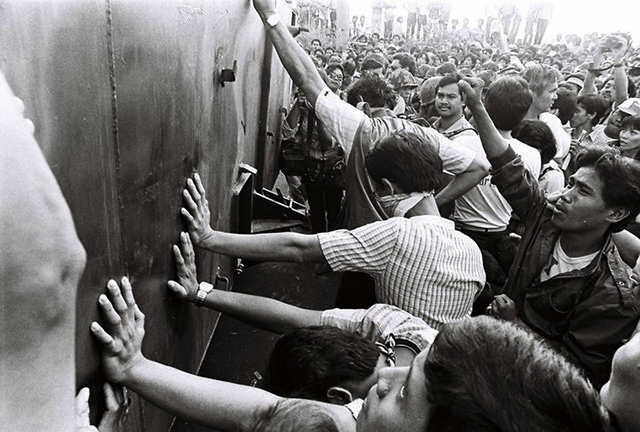
Thousands of people gathered on Ortigas Avenue near the corner of EDSA on February 25, 1986, to block tanks and a battalion of Marines loyal to President Ferdinand Marcos. The incident came to be known as the bloodless EDSA People Power Revolution. Joe Galvez
Lingao, a college student at the time, was part of a living wall around Camp Aguinaldo that blocked the tanks that rolled up when the military tried to retake the base. There was fear among the protestors, but with freedom at stake, they found the courage to stand their ground—and they did it together.
"Masuwerte pa nga kami kasi nagkasundo lahat, although informally: 'Let's make a stand dito.' Isang grupo kayo, 'di katulad nung bago mangyari yung EDSA, isa-isa yung mga taong dinadampot, isa-isa nawawala," he said.
EDSA for the new generation
Young people who were not born yet when the revolution took place might not realize the magnitude of the change it brought to the country, bringing back rights that were denied to Filipinos not too long ago, including freedom of speech, freedom of the press, and freedom of assembly.
"Mahirap kasing maintindihan ng mga taong hindi dumaan sa panahon kung saan hindi ka maaaring magsalita ng basta," said Lingao. "Madaling magreklamo ngayon, hindi ka puwedeng mag-reklamo dati. Ngayon, madaling iwaldas ang boto, dati pangangalagaan mo kasi bihira ang eleksyon."
"Those were the choices that people today hindi na nila kailangang problemahin," he added.
"Hindi mo talaga maaarok, maatim, kung ano ang takot dati."
So how can young people learn to relate to EDSA?
"Siguro tingnan lang ninyo yung inyong mga Facebook posts, tingnan ninyo yung inyong mga boto, at i-appreciate ninyo na kaya niyong gawin ang mga iyon, hindi gaya ng dati," said Lingao.
"Kung gusto ninyong magreklamo, magreklamo kayo, pero sabihin ninyo sa inyong mga sarili, 'Buti nakakapag-reklamo ako'." — Re Takumi/BM, GMA News
"Masuwerte pa nga kami kasi nagkasundo lahat, although informally: 'Let's make a stand dito.' Isang grupo kayo, 'di katulad nung bago mangyari yung EDSA, isa-isa yung mga taong dinadampot, isa-isa nawawala," he said.
EDSA for the new generation
Young people who were not born yet when the revolution took place might not realize the magnitude of the change it brought to the country, bringing back rights that were denied to Filipinos not too long ago, including freedom of speech, freedom of the press, and freedom of assembly.
"Mahirap kasing maintindihan ng mga taong hindi dumaan sa panahon kung saan hindi ka maaaring magsalita ng basta," said Lingao. "Madaling magreklamo ngayon, hindi ka puwedeng mag-reklamo dati. Ngayon, madaling iwaldas ang boto, dati pangangalagaan mo kasi bihira ang eleksyon."
"Those were the choices that people today hindi na nila kailangang problemahin," he added.
"Hindi mo talaga maaarok, maatim, kung ano ang takot dati."
So how can young people learn to relate to EDSA?
"Siguro tingnan lang ninyo yung inyong mga Facebook posts, tingnan ninyo yung inyong mga boto, at i-appreciate ninyo na kaya niyong gawin ang mga iyon, hindi gaya ng dati," said Lingao.
"Kung gusto ninyong magreklamo, magreklamo kayo, pero sabihin ninyo sa inyong mga sarili, 'Buti nakakapag-reklamo ako'." — Re Takumi/BM, GMA News

