

 GMA Brandtalk
 Tracking
 Archives

ADVERTISEMENT
Filtered By: Lifestyle
Lifestyle
Movie review: There and back again, one last time with ‘The Hobbit: The Battle of the Five Armies’
Every journey, regardless of how long it is or where it leads to, has an end. Sometimes, though, it’s better to keep goodbyes short and pleasant.
The third installment in Peter Jackson’s “The Hobbit” film trilogy, based on the bestselling novel by J.R.R. Tolkien, has finally marched into cinemas. “The Hobbit: The Battle of the Five Armies” is the final piece of the puzzle that reveals whether stretching the source material across three full-length features was truly necessary—or if it was merely an unabashed attempt to grab as much ticket money as possible from fans and moviegoers.
“The Battle of the Five Armies” follows, for the last time, the exploits of Bilbo Baggins (Martin Freeman), Thorin Oakenshield (Richard Artimage), and the rest of the merry Company of Dwarves. Picking up after the events of “The Desolation of Smaug,” the adventuring party has succeeded in taking back their homeland from the fearsome dragon Smaug (Benedict Cumberbatch), starting a chain of events that causes conflict within the Company and ignites a war involving the Elves, the Dwarves, the people of Lake-town, and Sauron’s army of brutal, merciless Orcs.
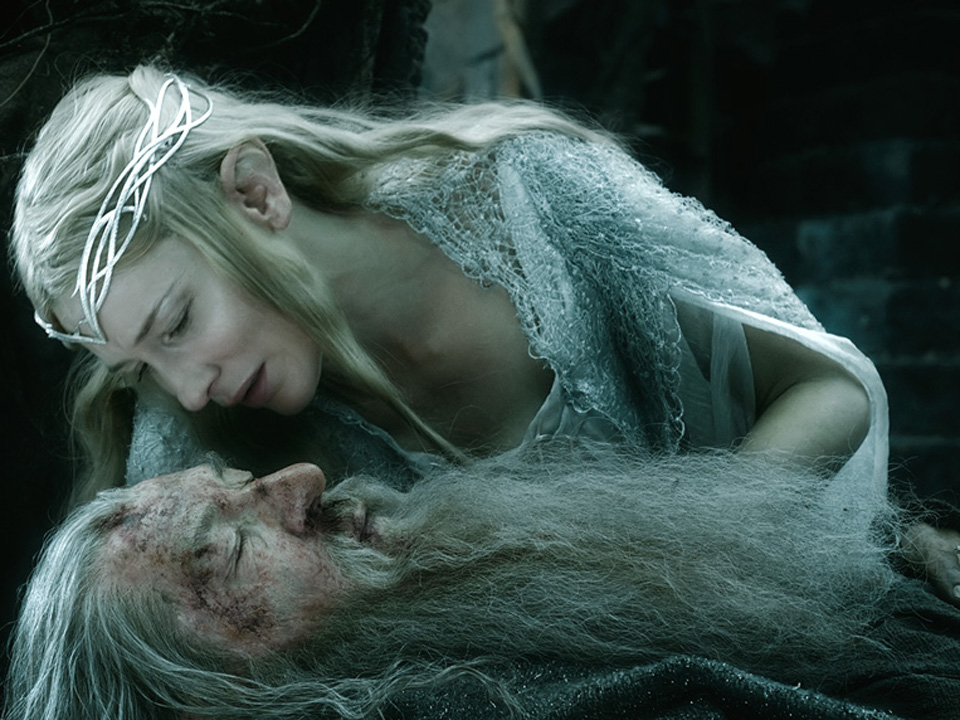
Ian McKellen as Gandalf the Grey and Cate Blanchett as Galadriel.All photos from Warner Bros. Pictures
The film wastes no time in taking us right to the heart of the action, opening with Smaug wrathfully raining firestorms and draconian fury upon Lake-town. From there, the audience is taken through a 144-minute adventure full of action, character development, and nods to the fandom, built around the central lesson that obsession over material wealth is the root of greed, conflict, and evil.
However, there’s something about the film that I can’t quite put my finger on that keeps it from fully reaching the epic sense of grandeur that it is striving towards—and nearly comes close to—achieving. I have a feeling, though, that it’s more because of a collection of small shortcomings than a gaping hole in quality.
The battle scenes, while beautifully rendered in 3D, seemed a bit boring and dragging at times. Jackson appears to have a penchant for extended fight sequences, and it becomes much more obvious here in a film that, at its core, is a heavily padded third of a 300-ish-page prequel novel.

Martin Freeman as Bilbo Baggins.
Now, effective character development is certainly a plus in these types of films. The operative word here, of course, is “effective.” What we end up getting in “The Battle of the Five Armies” is a bunch of loose plot threads that are hastily resolved, too many sequences focusing on unimportant characters (such as Ryan Gage’s Alfrid), unnecessarily stretched-out sequences and hallucinations that do nothing to move the story forward or more smoothly, and references and winks to the “Lord of the Rings”-loving crowd that serve no other purpose than to make fans giggle excitedly in their seats.
The inclusion of Legolas (Orlando Bloom), in particular, is a curious example. It’s a departure from the book—which was written before he was even created—but one that admittedly does make sense (given that he would have been alive during the events of “The Hobbit”). Still, while I understand that Jackson opted to bring him into the mix to strengthen the ties between this trilogy and the LotR films, Legolas really brings nothing new or significant to the table (aside from showcasing acrobatic abilities and fighting skills we’ve seen before and a rather weak and forced setup for his involvement in the events of LotR). Besides, one would think that, as far as connecting the two trilogies is concerned, the fact that two generations of Baggins star in the films would have sufficed.
Which brings me to another point: Freeman’s performance as Bilbo is hardly felt in this picture. Perhaps it’s because of the amount of time Jackson spends building up other characters just for the audience to have some semblance of an emotional connection with them when they’re roughed up and killed off, or perhaps it’s because the film’s very setting—the battlefield—is one where a portly hobbit would reasonably be of little help or use. I just can’t help but feel that Bilbo could have had a stronger presence here (or, at the very least, could have drawn me to him the same way he did when I read “The Hobbit” many years ago).
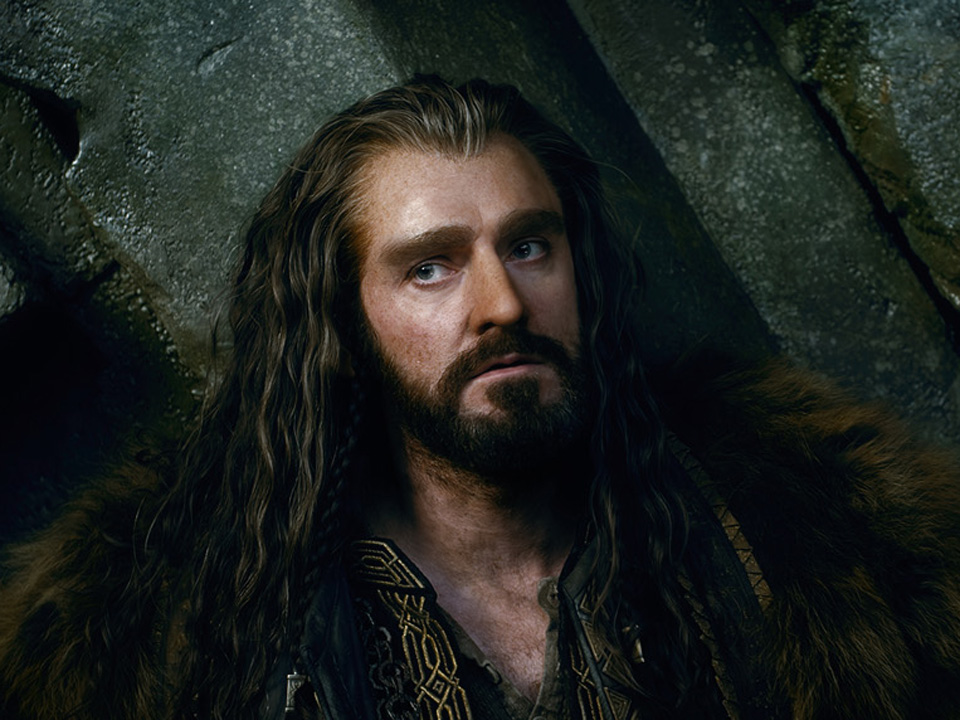
Richard Armitage as Thorin Oakenshield.
Ultimately, “The Battle of the Five Armies” is an entertaining way to spend two hours, with its computer-generated visuals, fight scenes, and fleshed-out characters. Sadly, it also lacks the sort of punch that makes such adventures the stuff of legends.
Is it a film worth seeing? Yes, by all means, as long as you lower your expectations and like extended battle scenes. While dear old Bilbo ends up reminiscing about his extraordinary sojourn-from-the-ordinary for the remainder of his existence, audiences will look back to 2014 and remember “The Battle of the Five Armies” as nothing more than the beguiling yet bloated conclusion to a rather drawn-out tale from Middle-earth's history.
If this is Jackson’s goodbye to the Tolkienverse, then so be it—after all, we’ve already gone there and back again two films more than we should have. — VC, GMA News

