

 GMA Brandtalk
 Tracking
 Archives

Pride Month: From Stonewall to the Philippines, why Pride remains a protest
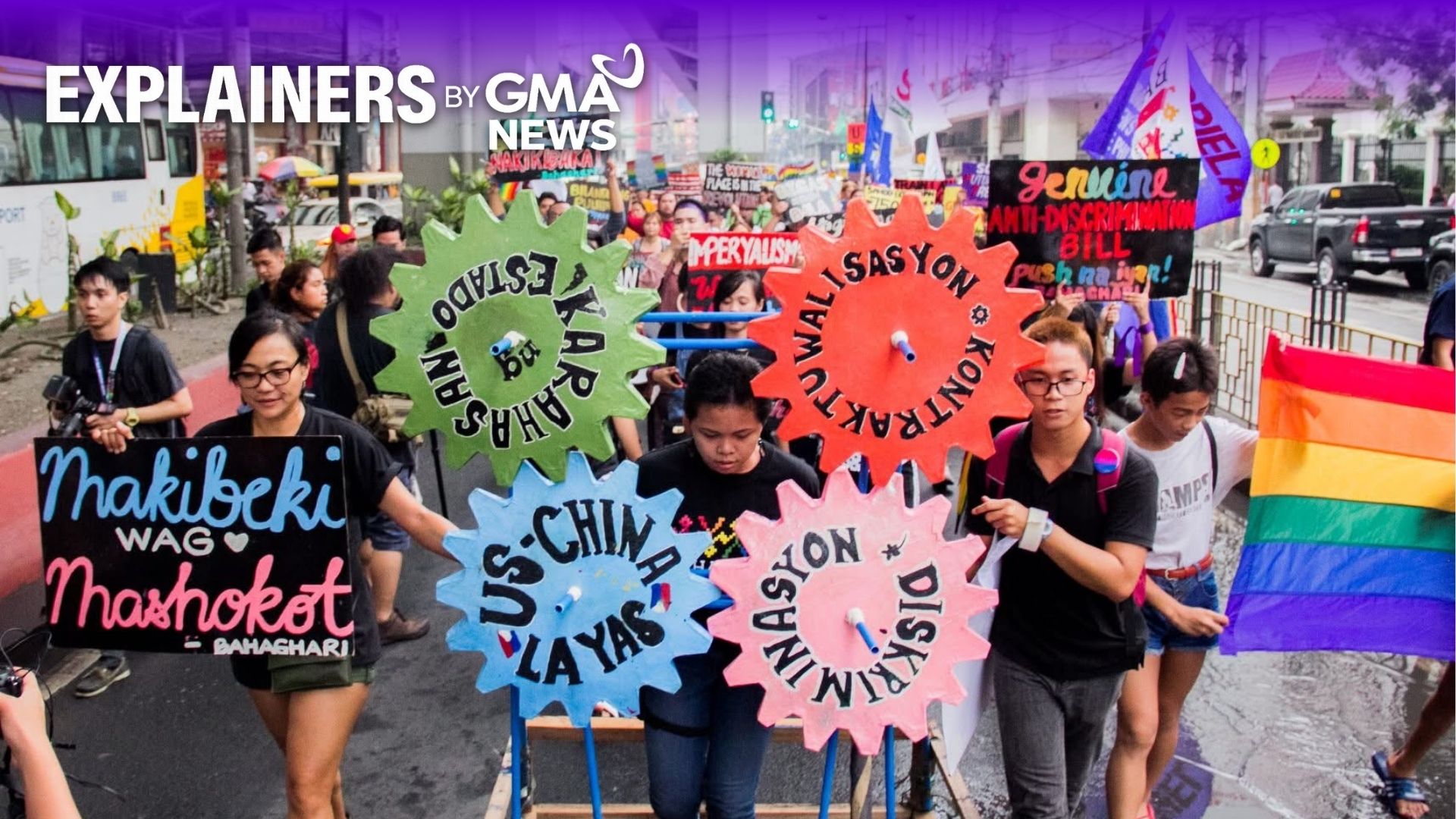
Pride today may be seen by some as only a celebration, but its essence runs much deeper.
Held every June, Pride Month provides a space for members of the LGBT+ community to celebrate their identities and advocate for their rights.
It is also a protest against the discrimination, abuse, and injustices the community continues to face.
GMA News Online spoke with Pride PH national convenor and filmmaker Rodina Singh about the history of Pride and why it remains a protest.
Origins of Pride
On June 28, 1969, the Stonewall Riots erupted in New York City after authorities raided Stonewall Inn, a gay bar. In response, members of the local LGBT+ community fought back against years of discrimination, harassment, and abuse.
Rather than dispersing after the raid, patrons and supporters remained at the scene as tensions escalated into days of demonstrations and clashes.
"Ang unang-unang pinagmulan daw ng Pride ay isang riot," Singh said, adding that Stonewall became the catalyst for Pride celebrations around the world.
The uprising helped spark the formation of LGBT+ organizations, expand safe spaces for queer communities, and inspire Pride events across the globe.
However, Singh said she does not believe Stonewall was necessarily the first act of resistance by the queer community, noting that earlier struggles may have gone undocumented.
"Maybe [Stonewall] started a thought to so many people, kaya kinikilala at ni-re-recognize natin siya na 'yun ang pinagmulan natin," she said.
"We refuse to believe na noong 1969 lang nagkaroon ng mga baklang lumaban at gumamit ng dahas. Baka 'yung iba sa kanila ay napatay sa engkuwentro kaya hindi nila naikuwento."
Pride in the Philippines
The roots of the Pride movement in the Philippines can be traced back to 1993.
That year, members of the Lesbian Collective joined the International Women's Day rally, where they advocated for queer rights.
"Sila 'yung first to see in a political movement," Singh said. "Naging movement siya kasi ibig sabihin, dapat nasundan 'yun. Kaya natin siya kino-consider."
Also in 1993, UP Babaylan was established as the country's first LGBT+ student organization. The group later participated in the University of the Philippines Lantern Parade.
In June 1994, the Progressive Organization of Gays in the Philippines and the Metropolitan Community Church marked the 25th anniversary of Stonewall through a Pride march. The event coincided with a protest against the value-added tax (VAT), which they also joined.
"For some time, 'yun 'yung kine-claim na first Pride March in Asia," Singh said.
In 1996, the three organizations, together with ReachOut Foundation and other LGBT+ groups, marched in what became the first Metro Manila Pride March.
Two years later, Task Force Pride was launched. The network of LGBT+ organizers coordinated Pride marches and related activities before eventually opening its membership to individuals.
Over the years, organizations such as Metro Manila Pride, Quezon City Pride Council, and Pride PH were established to organize Pride marches, discussions, and other community events.
"Pride PH currently is a coalition of organizations na kino-convene namin every year," Singh said.
Singh added that Pride PH aims to broaden the language and reach of Pride. She said co-founder Mela Habijan connected with Quezon City Mayor Joy Belmonte, who partnered with the organization, helping establish Quezon City as the home of the annual march.
"'Yung Pride, hindi na 'to intimate na tayo-tayo lang, mga queers lang. Mas OK na nakakakita tayo ng mga straight na pumupunta," Singh said.
"Ang framing ng Pride PH is a declaration. Madami kami," she added.
Pride advocates in the Philippines have also pushed for concrete gains for the LGBT+ community. These include the Right to Care Card in Quezon City, Cavite, and San Juan City, which allows LGBT+ couples to make certain medical decisions for their partners. Quezon City has also launched a transgender healthcare program.
Despite these gains, advocates continue to push for the passage of the Sexual Orientation, Gender Identity and Expression (SOGIE) Equality Bill, which seeks to prohibit acts of discrimination or violence against an individual's sexual orientation, gender identity, or gender expression. The measure has been filed repeatedly in Congress but has yet to be enacted into law.
Pride is a protest
For Singh, Pride remains a protest because simply living openly and authentically can be an act of resistance.
"At the end of it all, in a world that isn't created for you, in a world that wants you dead, in a world that isn't built for people like us, to be able to live your life freely and happily is your biggest act of defiance. Our existence becomes defiance," she said.
Singh added that participation itself is an important part of the movement, regardless of a person's level of involvement or understanding of its history.
"At the end of it all, your presence there is 'yun 'yung kailangan, not your intent," Singh said.
"The numbers are the requirement. Kailangan nandun ka. Hindi mo kailangan naintindihan lahat 'to. Hindi mo kailangan kilala lahat ng org, hindi mo kami kailangan kilala. Ang kailangan ay kung nasan 'to, dun ako. Kung sino iboboto nito, dun ako. Kung ano pinapaniwalaan nito, dun ako," Singh said.
"Kaya 'pag galit ang isa sa atin, galit tayong lahat. Collectively, may movement tayo, at 'yun 'yung pinaka malaki nating panakot. Nangangagat tayo, ayaw ng mga pulitiko niyan," she added.
Singh also said that at its core, Pride is about asking a simple question: "Bakit bawal?"
"On a personal level, it's always finding ways, you don't settle for less. Ang pinaka personal at pinaka mababaw dapat na esensya ng Pride, ay sa pagtatanong na bakit bawal sa mga bagay na puwede naman," she said.
"Bakit bawal ko siya maging jowa? Bakit bawal ko siyang halikan?" she said. "It's always a question of bawal. At maybe, 'yan lang din ang tanong ng mga bakla sa labas ng Stonewall Inn by then. Bakit kami bawal magtipon-tipon dito?"
"Kailangan ilaban ang bawal." —MGP, GMA News

