

 GMA Brandtalk
 Tracking
 Archives

ADVERTISEMENT
Filtered By: Lifestyle
Lifestyle
Love rice? Go brown for a fitter, happier you
+
Make this your preferred source to get more updates from this publisher on Google.
There’s nothing like a bowl of rice each meal to warm your grumbling belly.
We’re a rice-loving nation. Eating without our favorite staple is simply incomprehensible, and for most of us, white rice is still the predominant fixture in our dining rooms.
Yet, with the rising trend of health-conscious eating nowadays, nutritionists, health buffs and dieters alike have all been raving about brown rice.
“Mas nakakabusog ang brown rice. So it’s good for dieting, since you eat less rice,” said Myles Tordesillas, a TV producer who shifted to brown for health reasons.
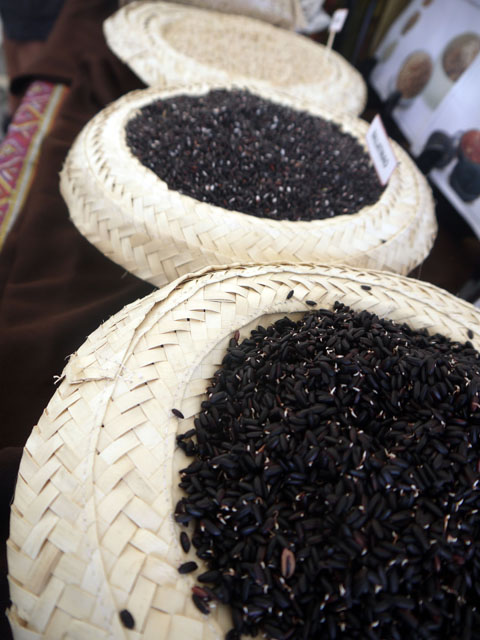
All rice can be brown rice. The only difference is in the milling process.
“Brown rice is categorized as whole grain. And although it has the same value as white rice, it is more nutritious,” said Ara Jungco, a nutritionist for NUIU.
Brown rice is known to be filling and healthy. Essentially, brown rice is any type of rice that is “unpolished” or “unrefined”. The bran, or “darak”, which contains several nutrients, is not removed, making it much healthier than white, polished rice.
The bran is rich in proteins, thiamine, calcium, magnesium, fiber, and potassium. It is also a healthy staple for those suffering from diabetes as it has a low glycemic rating, which helps reduce insulin spikes.
Despite all these health benefits, most Filipinos have been slow to embrace the brown-rice eating habit.
“'Yung iba, alam mo reason nila why they don’t eat brown rice? Kasi daw hindi puti. They still want their rice white, “ said Roxanne Barcelo, one of the hosts during the Brown Rice Campaign Lunch and Launch at Bonifacio High Street last November 17.
The event featured a brown rice exhibit, and free diet consultation, attended by brown rice advocates like Tado Jimenez, Bayang Barrios, Tuesday Vargas, Jerico Placido, Top Junk, Stephanie Zubiri.
The event, co-organized by Dakila Philippine Collective for Modern Heroism and OXFAM, was held to promote the brown rice eating lifestyle to Filipinos. The launch coincided with the re-launch of the Morning Mercato Centrale beside Serendra and Bonifacio High Street.
“What we’re trying to do here is to promote the idea, sell the lifestyle to shift to brown rice. Alam mo naman tayong mga Pilipino, anything na puti, mahilig din tayong bumili ng pampaputi. Sa rice ganoon din preference natin. So we need to change the preference from white to brown,” said PHILRICE Executive Director Dr. Eufemio Rasco, Jr.
Brown is cheaper than white
Besides the color, people perceive brown rice as more expensive than white.
“Based sa research namin, the only thing that’s stopping people is the price.” said Mike Aguilar, Dakila’s Membership Director.
But according to Dr. Eufemio Rasco, this should not be the case.
“Hindi dapat mahal, kasi mas madaling i-mill ang brown rice. Sa ngayon, mas mahal. Kaunti 'yung supply kasi kaunti din ang demand. So what we want is to break the vicious cycle,” he said.
Brown rice also carries with it a past stigma as the “poor man’s rice”. It has a grainy, fibrous texture, which surprises some eaters who are already used to the fine taste of white rice.
“It’s an acquired taste. It’s like the concept of wine and cheese. And you know, 100 years back, we all had brown rice. It’s just the advent of industrialization, advent of better use of these milling machines, that we all started eating white rice,” said OXFAM Country Director Snehal Soneji.
Besides the numerous health benefits, shifting from white to brown will benefit our country in the long run. It’s a lifestyle that can eventually make our country self-sufficient in terms of rice.
“The milling rice recovery of brown rice is about 10 percent higher than white rice,” Dr. Rasco said. “That means, 10 percent additional rice volume can be achieved.”
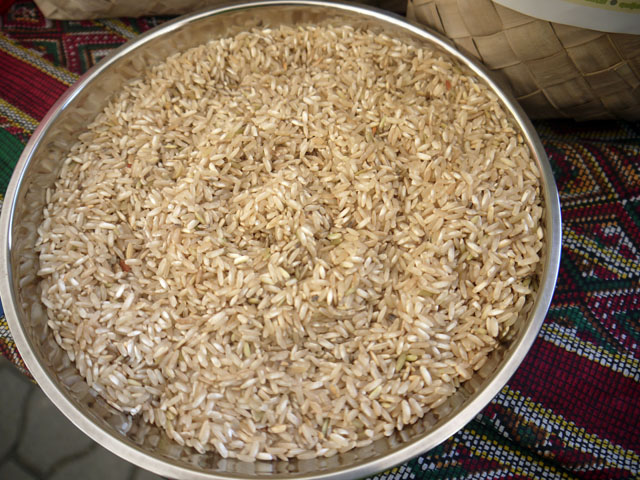
Essentially, brown rice is any type of rice that is “unpolished” or “unrefined.”
Helping small farmers
For small farmers from the provinces, brown rice production is beneficial to them as well.
Ernesto Quijano is an organic farmer from Dumaguete City, who participated in the launch and brought his brown rice and sold it in the Morning Mercato Centrale for only P50 per kilo.
“Malaki ang tulong sa aming mga farmers. Mas maliit ang input, mas maliit ang gastos so mas malaki ang ganansya,” Quijano shared.
Together with other 70 farmers in Dumaguete, they harvest two tons of rice per month from 50 hectares of land.
They then sell brown rice directly to hotels, restaurants and convenience stores. “Malaki ang patong kapag sa supermarkets” Quijano said, when asked why they prefer direct-selling.
For farmer Lydia Tuliao from Cabanatuan City, she realized the benefits of organic farming and brown rice when his husband fell ill to Parkinson’s disease six years ago.
“White rice eater kasi siya tapos fertilized pa 'yung rice,” Tuliao said.
Unlike her husband, Lydia is strong at 66 years old. She has always been a brown-rice eater, so she concluded brown rice is really healthy.
“Nakita ko 'yung sustansya…gusto ko ipamana sa mga anak ko ang pagkain nito kaya ako na mismo nag-advocate sa mga anak ko,” Tuliao, one of the women organic farmer members of PKKK or Pambansang Koalisyon ng mga Kababaihan sa Kanayunan, said.
It is the “good food” that will prove not only beneficial to our health, but the growth of the country as well.
“Brown rice has something for everyone,” Rasco added, emphasizing that brown rice is not a difficult lifestyle to embrace. “For the consumers, for the farmers, for the government and even for the environment. Less energy consumption kasi less polishing.” –KDM/KG, GMA News

