

 GMA Brandtalk
 Tracking
 Archives

ADVERTISEMENT
Filtered By: Lifestyle
Lifestyle
Meeting the wagashi masters of Sakai City
+
Make this your preferred source to get more updates from this publisher on Google.
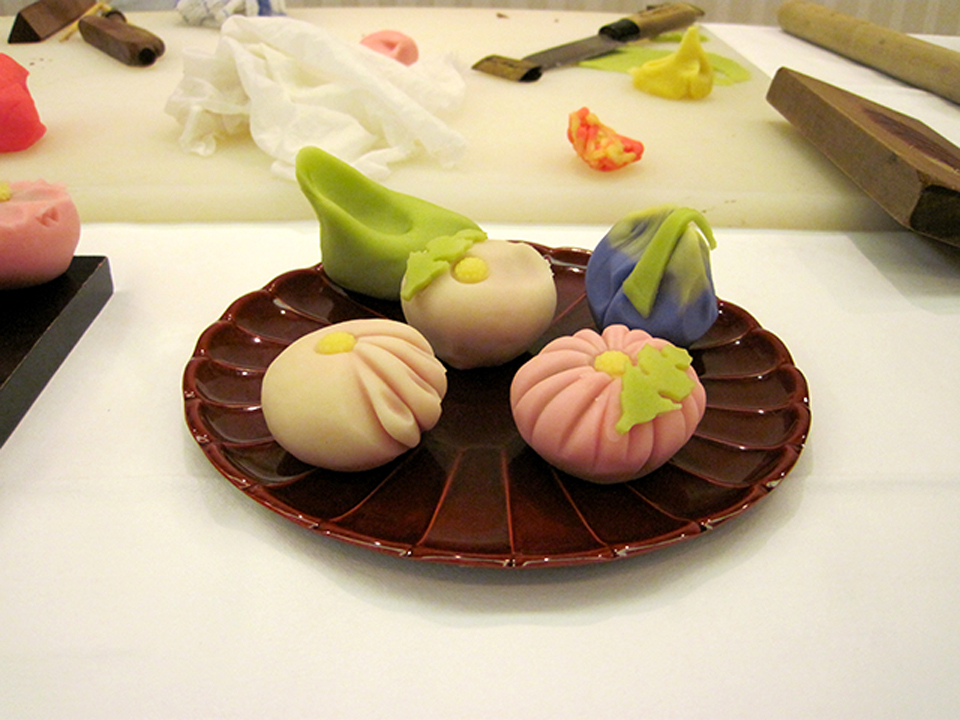
Japanese confection wagashi is one of the few desserts in the world that reflects the seasonal changes.
SAKAI CITY, Japan – One of our first assignments in the Sakai-ASEAN week 2014 was our introduction to the world of wagashi, or the traditional Japanese confectionery.
Wagashi, with its sweet taste, is usually paired with Japanese green tea to create a balance with its bitter flavor.
During this outing, we were lucky enough to meet not just one, but the two Wagashi masters in the whole of Osaka prefecture residing in Sakai City.
Sakai's first sensei
Sakai's first sensei
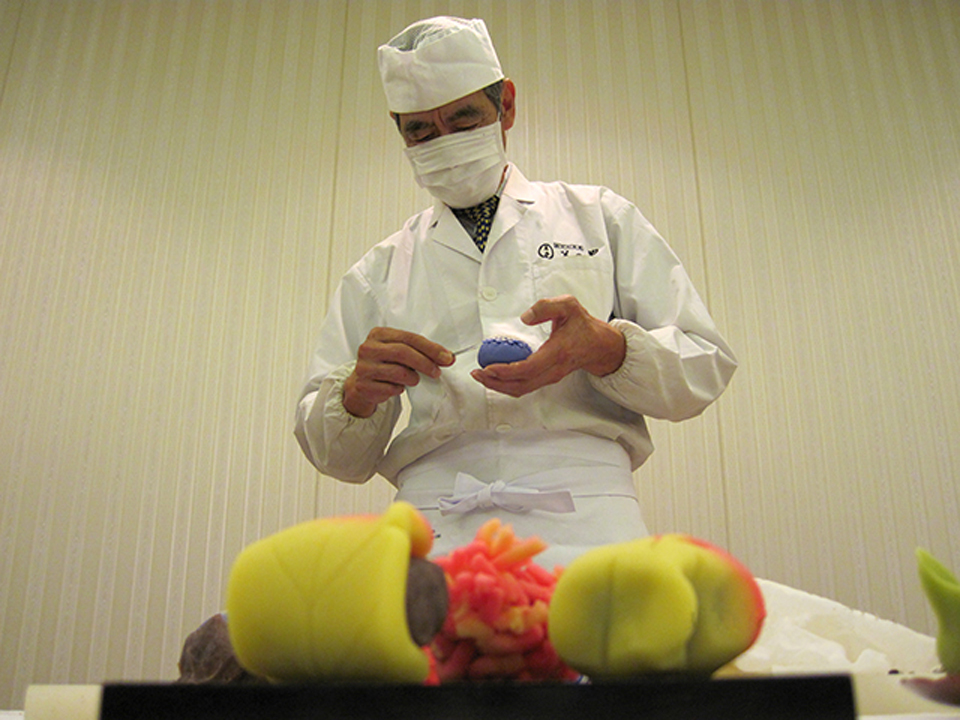
Kazuo Takada demonstrates how to create raw, handmade wagashi.
First up was Kazuo Takada, 67 years old and with 45 years of wagashi-making experience under his belt.
For Takada, who is an Oju Hosho or someone who was awarded an Emperor's Yellow Ribbon Medal (he got his back in 2012), creating wagashi will always be a part of his life.
“You can learn basic wagashi-making in about five years. But afterwards, it is an endless process,” he said.
According to Takada, wagashi is the only confectionary in the world that makes you feel the seasons, since each piece is made to reflect a specific season.
Takada then demonstrated his process while explaining its four types, namely: raw, baked, cooked and steamed.
Most wagashi is made from various kinds of soy beans and undergo a process that makes them clay-like and gives them color.
After the clay-like texture is achieved, Takada expertly molds each piece with his bare hands while using some basic tools to create artistic designs depicting the seasons.
Since it was autumn, he said he mostly uses Tebo beans along with sugar and rice powder as the main ingredients for his wagashi in this season.
He added that each wagashi costs somewhere around $4.00 or more (P179.74), depending on the amount of time, preparation, and scalpel-applied details that go into to making it.
And although Takada strictly follows the traditional way of making wagashi, he said that young wagashi makers have a more modern way of creating their wagashi, which may not necessarily reflect the seasons.
But he believes the tradition of wagashi will never die down as long as there are people who appreciate it and its deep-rooted place in Japanese culture.
Sakai's second sensei
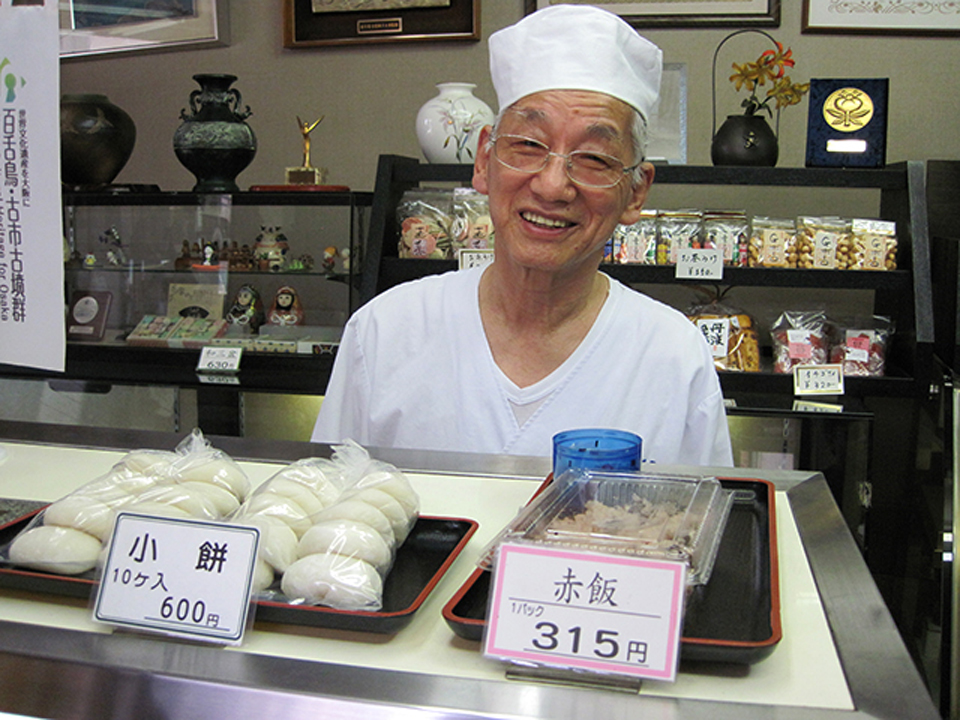
Naohiko Okada smiles for the camera next to his goods.
After meeting Takada, we then proceeded to the Okayoshi wagashi shop, which is owned and run by wagashi master Naohiko Okada's family.
80-year-old Okada has been creating wagashi for 65 years. He spent the first 15 years working for a store in Osaka. Afterward, he set up shop in Sakai City, where he continued the art of wagashi-making.
“I never got bored in my 65 years of making wagashi since I enjoy doing it and I like sweets,” Okada said.
For his skill and untiring efforts in creating and promoting wagashi, he received the top grade specialist sweet production certification from Sakai City.
He fondly recalled serving special wagashi to the emperor during his younger days.
Okada also demonstrated his expertise in wagashi-making while explaning that the traditional confectionary was a good match with Japanese tea ceremony. Like Takada, he molds each wagashi piece with his bare hands from a lump of clay-like material.
He said most wagashi are made from soy beans, red beans, and white beans—which are good for health and prevent stomach aches.
Okada proceeded to add other ingredients to his wagashi such as yam, chestnuts, and Japanese pear fruits.
According to him, the unique point of his wagashi was that it had no additives and were all made from natural hand-picked ingredients.
He has been manufacturing wagashi for 50 years now, with the help of his wife and two sons. They usually sell wagashi at 250 Yen and can produce up to 1,500 pieces daily during peak season.
For Okada, who has been making the traditional confectionery for more than half of his life, creating wagashi will always be an art form that he and millions of Japanese will continue enjoying. — VC, GMA News
The media tour for the 2014 Sakai-ASEAN Week from October 7 to 13, 2014 was organized by its Executive Committee and sponsored by the city government of Sakai in cooperation with several private groups.

