

 GMA Brandtalk
 Tracking
 Archives

ADVERTISEMENT
Filtered By: Lifestyle
Lifestyle
From chocoholics to connoisseurs: How we can rediscover ‘real’ chocolate
+
Make this your preferred source to get more updates from this publisher on Google.

It's complicated: There's a lot more to chocolate than candy bars. From left to right: chocolate, cocoa powder and cocoa butter.
In 2014, the Philippines produced only around five thousand metric tons of cocoa out of the global total of over four million MT, the International Cocoa Organization reports.
Discovering 'real' chocolate
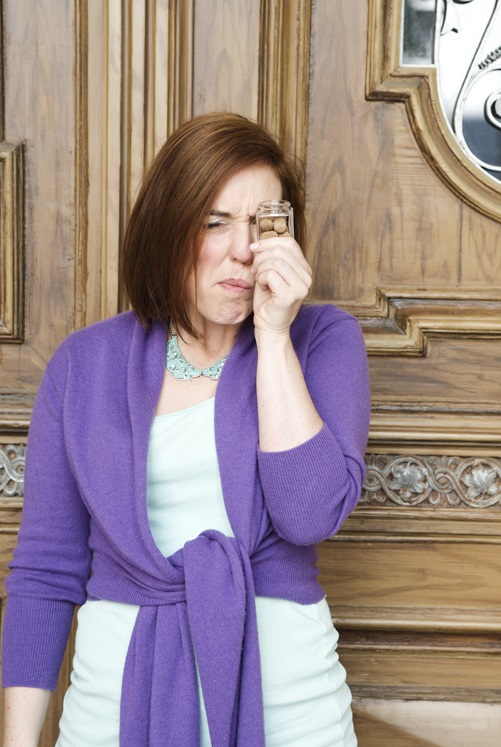
Lyss Bärtl of Blyss. Photo from Blyss
Many Filipinos would be quick to call themselves chocolate lovers. But as Bärtl noted, the common answer to why they love chocolate is telling. "Sometimes I ask people, 'Do you love chocolate? Tell me how you love chocolate,' and they say, 'Yes, I eat a lot.' That's [like] a person who drinks wine and says 'I drink a lot of wine'—but we send those people to Alcoholics Anonymous," she said at a forum on chocolate held by the Center for Culinary Arts on February 16.
The forum was attended by key players in the cocoa industry, including "Cacao: Bean to Bar" co-author Jophine Ramos, who explained that as with coffee, Filipinos have become estranged from real chocolate, preferring instant mixes and candy bars “because we have a sweet tooth. But now we have to recover the Philippine tradition, the love for real chocolate, and we start with tablea, no milk, just a little brown sugar,” she said.
Acknowledging that the Philippines does not produce enough cacao, Ramos says it is more important to recover what cacao is for Filipinos. “Actually, cacao is part of our tradition and everyone will agree with that. About 80 percent of households, especially the farming households, have at least two to three trees in the backyard,” she noted. Despite this abundance, many farmers do not know what to do with their cacao trees, a problem that the Cocoa Foundation of the Philippines aims to address with its ongoing training series.
Pure chocolate
Bärtl said that while most consumers are used to eating chocolate in the usual candy bar form, where its flavor is drowned by milk and sugar, pure chocolate is exciting with its variety of flavors, from nutty to sour.
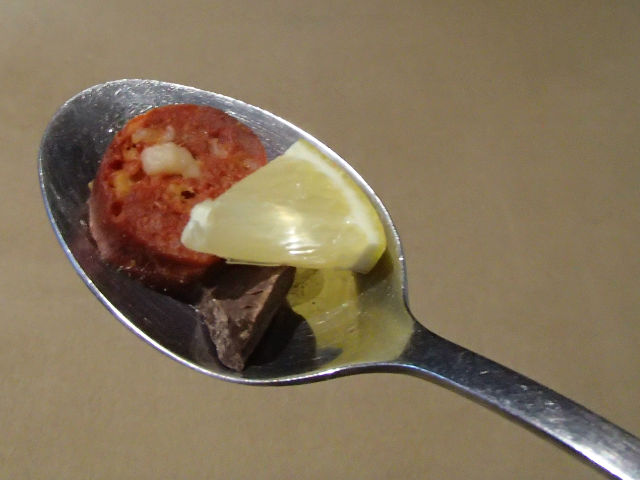
Try pairing chocolate with cheese or meat. Here, a chunk of Malagos chocolate is combined with chorizo and slice of lemon.
"Why are we running around these three beans, when there's so much more? Diversity is the exciting part of growing and selling," said Bärtl, who stressed that unusual pairings such as chocolate with cheese and meat can bring out cacao's flavor.
Some foreign chocolate makers have already discovered Philippine cacao, which has a more sour profile. Missouri–based Shawn Askinosie, who like Bärtl supports the farmers who take care of his beans, uses Trinitario beans for his Davao 77% Dark Chocolate Bar and 62% Dark Milk Chocolate + Fleur de Sel Bar. Filipinos, however, are accustomed to buying imported chocolate bars, in the same way that Ecuador prefers beans from Africa over their own Arriba Nacionale.
Part of the problem is that farmers don't like to grow heirloom genetic varieties as much. "It's a lot of work, it's really hard, it's going to die, it's very sensitive. It's like a really sensitive little princess," said Bärtl. "And we can either agree that this is worth our time and effort. or we can just use the big growing varieties."
Bärtl compared cacao to grapes grown for wine. "Have you ever met a winemaker that says it's too much work to take care of his vines? They celebrate the amount of work."
Piquing the public's interest
According to Bärtl, chocolate makers should label their products interestingly, and classify their chocolates by vintage and terroir—the georgraphical and climate characteristics of the area the cacao is grown—instead of the usual "dark" or "milk", because it is important for the public to learn the cacao growers' language to bring the cacao bean to the level it deserves.
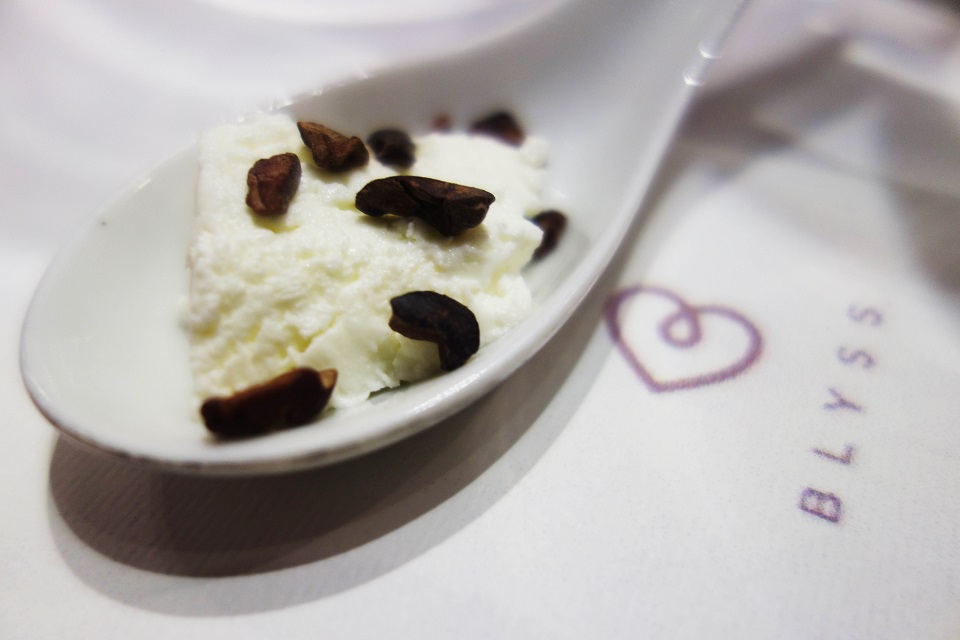
Cacao nibs dot a bit of Malagos cheese. Blyss
"On one side, we're not taking care of ourselves, and on the other side, we're keeping our consumers dumb. The more dumb we keep our consumers, the less...creativity and honor for our work there will be."
Bärtl discussed connoisseurship as a business model, showing how businesses can celebrate aficionados to increase their product's value. "We want our product bought a lot at a premium price," she said, adding that connoisseurs are not experts, but they are highly trained and discerning. "Let's not assume they know everything. Let's celebrate their interest."
Bean talk
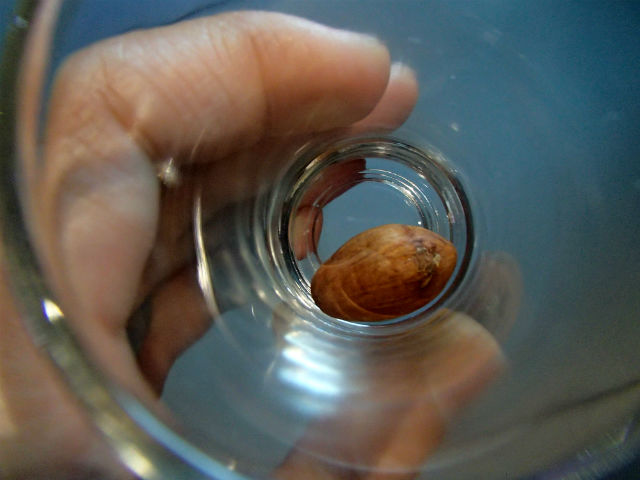
Ecuador's Arriba Nacionale is so pure, it's delicious on its own.
For CCA's part, Manila Chancellor Dr. Veritas Luna said there is a need to train chefs about chocolate, since they are the ones talking to the customers. “If they don't know your product, your ingredient, then what use is it if we have these hectares of cacao?” said Luna, who proposed creating a cacao network.
"It's a long, long way to go, and that's why we have to start now." — BM, GMA News

