

 GMA Brandtalk
 Tracking
 Archives

In defense of tinola: Why the humble soup remains a Filipino classic
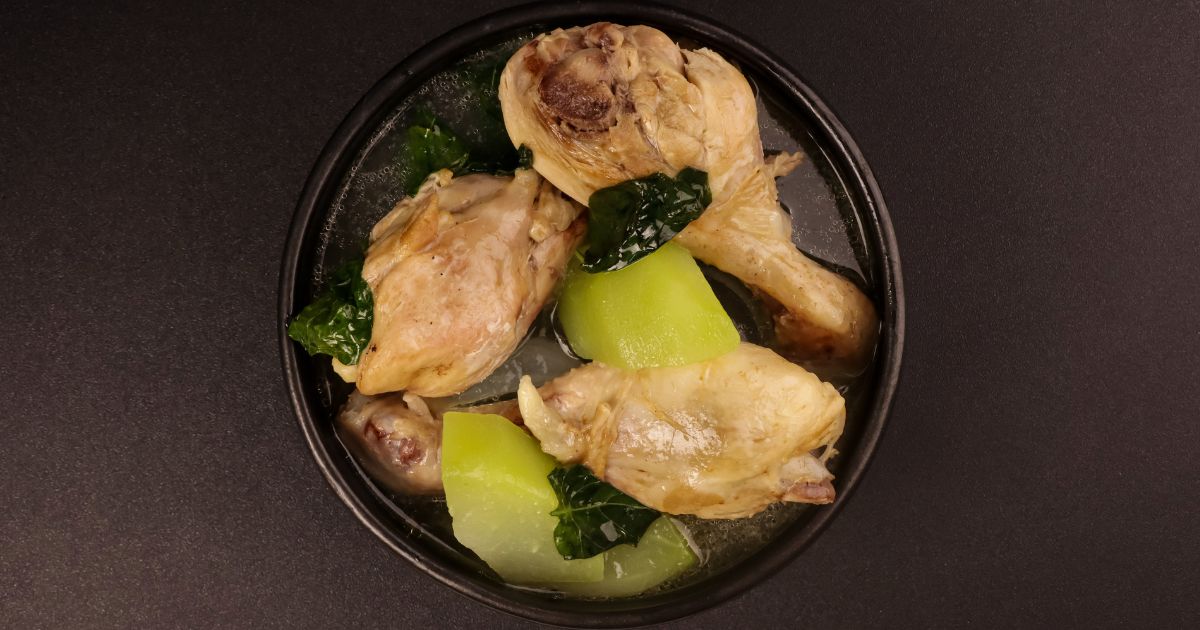
If you're chronically online, you’ve probably seen hot takes on Filipino food that come up every once in a while. And one dish that often attracts a variety of opinions is tinola: a chicken soup with a light clear broth and ingredients like papaya, sayote, and dahon ng sili.
On X (formerly Twitter), some have said it's a bland dish and tastes like water. Or that it's no match for classic favorites adobo and sinigang. Others debate whether or not it should be cooked with sayote or papaya.
But beyond the noise of online debates, tinola reveals itself as more than a simple soup. It carries with it layers of Filipino flavor, technique, history, and identity.
More than just boiled chicken
Christopher Guado Carangian, a chef and food historian, said the name tinola comes from the method of cooking.
"Tinola comes from the words tola, tinuwa, tua. Salitang mga Pilipino. Matandang salita ng Pilipino malay na ang ibig sabihin mo ay pakuluan," he told GMA News Online.
But tinola is not defined by boiling alone. It's defined by what happens before and during that simmer.
In professional kitchens, the process begins with aromatics: ginger, garlic, and onion sautéed until fragrant. Chicken is added and lightly browned, triggering what chefs call the Maillard reaction, a chemical process that deepens flavor.
Only then is water introduced.
"It's about layering," Carangian said. "If you skip that, then yes, matabang talaga (it will taste bland)."
Food historian Ruston Banal echoed his sentiments, saying that ginger plays an important role in making tinola.
"Luya is a neutralizing ingredient. It adds to that tangy flavor. Like when you are sipping the soup or drinking the broth,malaking factor kasi ‘yung effect ng luya. So, hindi puwedeng tanggalin ang luya. Napaka importante ng luya sa tinola," he explained.
"Para sa akin, hindi siya tinola ‘pag wala siyang luya. Ano lang siya, nilagang manok," Banal said.
Meanwhile, fish sauce or patis acts as a flavor catalyst.
"Patis creates that spark, it pulls out the umami from the chicken," he said.
Simply put: tinola isn't bland by nature. It only becomes bland when cooked incorrectly.
Tinola in history
Tinola's roots run deep in Philippine history.
Carangian said that the dish frequently appears in accounts of revolutionaries and Katipuneros not because it was their favorite, but because it was the only dish that is easy to cook.
"Actually, hindi naman siya talaga paborito ng mga bayani. Hindi rin siya paborito ng mga rebolusyonaryo at Katipunero. Nagkataon lang na isa siya sa pinakamasarap na lutuin na hindi na kailangan ng napaka habang pamamaraan ng paguto," he said.
Tinola required minimal tools, minimal ingredients, and produced something nourishing, perfect for people hiding in the mountains or moving between camps.
In Jose Rizal's Noli "Me Tangere," tinola appears in one of the most memorable scenes involving Padre Damaso, when he got angry after he was served with the neck of the chicken instead of a meatier portion.
But the controversy in that scene wasn't about the dish itself, it was about social status.
According to Carangian, Padre Damaso is offended not because tinola is inferior, but because he's served a less "prestigious" part of the chicken.
"Nagalit si Padre Damaso kasi ‘yung napunta sa kanya, part yun na nagbibigay ng... Pinapakita na mababang klaseng tao. Kaya dapat special na part ang binigay sa kanya," Carangian said.
In Filipino dining culture at the time, specific cuts like the breast or thigh signified respect. Being given the wrong piece was an insult.
Papaya or sayote?
Papaya or sayote? It's all a matter of preference.
Historically, papaya came first. Banal said that it can be traced back to tinola's roots to earlier forms that evolved depending on available ingredients—sometimes even using potatoes in 19th-century versions documented in Spain.
But beyond history, there's science.
Green papaya, especially when slightly ripe (manibalang), contains natural sugars that subtly sweeten the broth. Sayote, on the other hand, is milder, adding texture more than flavor.
"If you want a more elevated taste," Carangian said, "papaya gives that extra dimension."
Native or broiler chicken?
Another common question that arises when cooking tinola: does the type of chicken matter?
Yes, but it still depends on the cooking technique and method.
Native chicken is often praised for its richer flavor. But Carangian said that cooking technique still matters more.
"Kahit native chicken man ‘yan, at mali ‘yung ratio ng water mo, dun sa aromatics mo, 'yung protein mo, hindi lalabas ‘yung umami ng manok. Kasi malinamnam ng manok," he said.
"Kaya, yes, factor ‘yun, pero hindi yung big factor. Ang big factor when it comes to pagluluto ng tinola, dapat malaman natin ‘yung tamang aromatics, ‘yung tamang protein, doon sa ratio ng tubig na ilalagay natin," Carangian said.
Regional variations and interpretations
While tinola has no single place of origin, it has been adapted across the Philippines.
Variants range from Mindanao's darker tiola itum to lesser-known versions like bamboo-cooked onok nelok. Another is chicken binakol, a Visayan counterpart that reimagines tinola's base.
According to Marlon Melgar, an executive chef in Mesa Modern Filipino Restaurant, tinola and binakol differ on their preparation.
"Tinola is built on water and ginger, focusing on clarity and restraint. Binakol, on the other hand, uses coconut water as its base, often paired with aromatics like lemongrass and sometimes cooked traditionally in bamboo. The preparation naturally creates a more layered and fragrant dish," he told GMA News Online.
When it comes to taste, tinola is clean, savory, and ginger-forward which can be light and soothing while binakol is more rounded.
"The coconut water introduces a natural sweetness and subtle nuttiness that blends with the chicken, creating a broth that feels richer without being heavy. The added aromatics give it more dimension, making each sip more rounded and lingering," Melgar said.
While both are considered comfort food, Melgar said that tinola stands out for its precision, clarity, and comfort in its purest, most refined form, while binakol distinguishes itself through depth, offering a richer kind of comfort shaped by coconut and layered aromatics.
A staple at Filipino homes
Despite debates about tinola, the dish remains to be a staple in every Filipino home due to its accessibility.
"Hindi mawawala ang tinola sa pamilyang Pilipino at kulinaryang Pilipino. Bakit? Dahil hindi mo kailangan ng maraming ingredients na sa likod bahay lang," Carangian said.
It's also a dish that evokes nostalgia and soothes those who eat it.
"It's a memory food," Banal said. "Something your grandparents cooked, something you remember when life was simple."
"It delivers exactly what people look for in comfort food: it's easy to prepare, nourishing, and familiar, said Melgar. "It's the dish many turn to for everyday meals or moments that call for something reassuring." —MGP, GMA News

