

 GMA Brandtalk
 Tracking
 Archives

Leptospirosis cases overwhelm hospitals amid widespread flooding
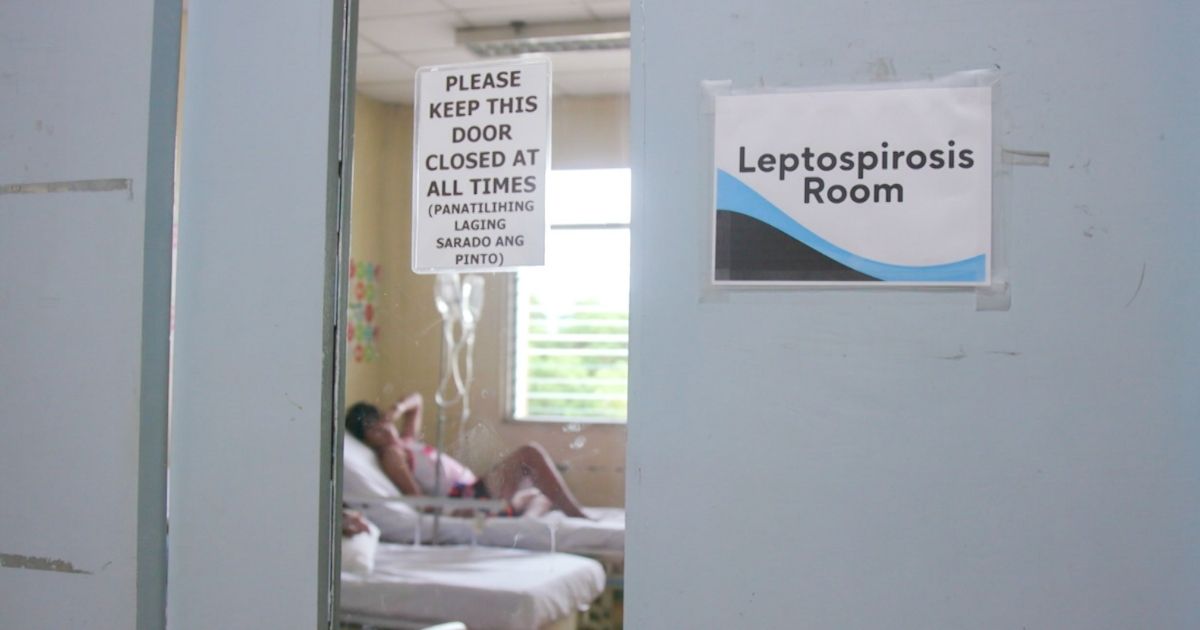
More than 4,000 leptospirosis cases have been recorded in the Philippines this year, with hundreds of cases added in just two weeks amid widespread flooding in several areas.
Leptospirosis is a bacterial infection commonly linked to exposure to water or soil contaminated with the urine of infected animals, particularly rats. It can enter the body through cuts or openings in the skin, as well as through the eyes, nose, or mouth.
According to the report of “Kapuso Mo, Jessica Soho,” The Department of Health (DOH) has confirmed a leptospirosis surge as hospitals deal with a rise in patients following weeks of heavy rains and flooding.
San Lazaro Hospital overwhelmed by patients
San Lazaro Hospital in Manila has seen a sharp increase in leptospirosis patients, with its emergency room operating at 300% to 500% of its bed capacity.
Jessica Soho personally visited the hospital and talked to some doctors and patients.
The hospital set up a tent outside the emergency room to help screen and classify patients based on the severity of their symptoms.
Assistant Chief Nurse Myla said the tent is needed because the emergency room can no longer accommodate all patients.
“Kasi po overflowing po sa ER. So wala po silang hihigaan. So nag-prepare po kami ng tent,” she said.
[“Because the emergency room is overflowing with patients, there are no available beds for them. Consequently, we have set up tents to accommodate them.”]
Medical personnel have also been pulled from other duties to help address the surge.
San Lazaro Medical Chief Dr. David Suplico said the hospital has received help from nearby hospitals, including Jose Reyes Memorial Medical Center and Jose Fabella Memorial Hospital.
He said around one-third of Metro Manila's leptospirosis cases are being treated at San Lazaro.
The hospital currently has around 155 admitted leptospirosis patients, while three of its four floors are being used as wards for the disease. A pediatric ward has also been used to accommodate adult patients.
Severe cases linked to kidney, liver and lung complications
Doctors said leptospirosis can become severe when it affects vital organs, including the kidneys, liver, heart, and respiratory system.
One patient, 24-year-old Marilyn, had difficulty urinating and eventually needed dialysis. She had waded through floodwaters while doing laundry and had a skin condition that may have created an opening for bacteria to enter.
Not all patients had directly waded through floodwater.
One patient said she may have been exposed while cleaning her flooded home, while another suspected she was infected after going to a market despite having a wound on her foot.
Dr. Suplico explained that a visible wound is not always necessary for infection.
“Ang skin natin is our natural barrier. But we also have the mucosal membrane that is from our eyes, nose, and mouth, na puwede doon pumasok,” he said.
[“Our skin is our natural barrier. But we also have mucosal membranes in our eyes, nose, and mouth, where bacteria or viruses can enter.”]
He also pointed out that motorcycle riders may develop blisters on their feet that can serve as openings in the skin.
More than 200 deaths recorded
DOH data from January 4 to August 22 showed more than 4,000 leptospirosis cases nationwide, 37% lower than the more than 6,000 cases recorded during the same period last year.
Despite the lower year-to-date figure, health officials and doctors are concerned about the rapid increase in cases in recent weeks.
Suplico said the recent surge appeared to be developing faster than previous years.
“Noon kasi two weeks, may mga three weeks last year, tinitignan namin ‘yung data. Ngayon within a week, makikita na namin nagse-severe na. Even younger people, ha? Hindi ito mga matatanda, these are 25, 26, 29.”
[“In previous years, looking at our data, it was two weeks, or even three weeks last year. Now, within a week, we see them progressing to severe. Even younger people—these aren't elderly patients, these are 25, 26, 29-year-olds.”]
According to Dr. Suplico, the incubation period also appears to be shorter, which he said could indicate greater exposure or more organisms entering the body.
DOH data showed more than 200 deaths linked to leptospirosis this year.
Dr. Suplico said San Lazaro had recorded nine leptospirosis deaths, involving patients aged 22 to 59.
He stressed the importance of early treatment, including antibiotics and supportive care.
Families deal with severe illness
Among the patients at San Lazaro was 57-year-old Eva, who developed breathing difficulties after wading through floodwater that reached her knees inside their home in Caloocan.
Her daughter Krisha said Eva initially tested negative for leptospirosis and was discharged. After returning home, however, she lost consciousness and was brought to several hospitals before eventually being admitted to San Lazaro.
Krisha said doctors later found that her mother had acute kidney injury and heart complications.
Another family lost tricycle driver Joel, who continued working despite flooding in Tondo on August 19.
His daughters said Joel had to push his tricycle through floodwater after it stopped moving. He later developed fever, body pain, and difficulty breathing.
Joel reportedly sought doxycycline at a health center after suspecting that he had leptospirosis, but his daughters said the facility was closed when he went there.
Joel was later brought to a hospital, where he was diagnosed with severe leptospirosis and kidney complications. He was scheduled for dialysis but died before his session.
Children also among patients
San Lazaro had 31 pediatric leptospirosis patients at the time of the report.
Doctors said children can also contract the disease even without directly swimming or wading in floodwater.
One child, Edison, reportedly developed leptospirosis after playing in rainwater, despite his family saying there was no flooding in their area.
“Kasi kahit po walang baha kung mayroon pong tubig na talsik, puwede ‘yan tumama sa mata o sa bibig, puwede pa rin ho magkaroon ng leptospirosis,” doctor said.
[“Even without floodwaters, if contaminated water splashes into your eyes or mouth, you can still contract leptospirosis.”]
Another child, seven-year-old Sebastian, tested positive after swimming in floodwater and experiencing four days of fever and red eyes.
Doctors said mortality among children with leptospirosis is generally lower, but severe symptoms can still occur.
Hospitals prepare for continued cases
San Lazaro has six dialysis chairs, which are already operating 24 hours a day, according to Dr. Suplico.
When the hospital can no longer accommodate patients needing dialysis, Dr. Suplico said they coordinate with other DOH hospitals through an operating center.
The DOH also said it has been coordinating with other hospitals and local government units to help manage the increase in cases.
“So, kami po ay nag-coordinate din sa iba pang mga hospitals. Apart from DOH po, may pag-usap na tayo ng LGU Hospital. Puwede naman pong sumangguni muna du’n sa kanilang mga rural unit at ‘yung pong mga hospital na malapit sa kanila,” DOH Secretary Edwin Mercado said.
[“We're also coordinating with other hospitals. Aside from DOH facilities, we're already speaking with LGU hospitals. People can consult their local rural health units or nearest hospitals first.”]
Flood-hit communities remain at risk
The risk continues in communities where floodwater has yet to recede.
In Macabebe, Pampanga, three leptospirosis cases were recorded in August. One of them was Angelo, who said he waded through chest-deep floodwater while fishing without boots.
After returning home, he developed joint pain, fever, and shortness of breath before testing positive for leptospirosis.
Residents in Barangay Caduang Tete and neighboring Saplan David remain surrounded by floodwater. Some residents use boats for transportation and livelihood, while others stay on the second floors of evacuation centers to avoid the water.
Face-to-face classes in the area have also been suspended for nearly a month, with students shifting to modular learning.
One student said the continued flooding has made it difficult to study and called for better flood control.
“Sana masolusyonan po ang baha at magka-flood control. Kapag po wala, nahihirapan po, nahihirapan po kami mag-aral kasi po, hindi po namin masyado naiintindihan ang binibigay po nilang activities.”
[“I hope they fix the flooding and put up proper flood control. Without it, we really struggle with school because we can't fully understand the self-learning activities they give us.”]
Calls for flood control, accountability
Public health reform advocate Dr. Tony Leachon has linked the health risks from flooding to concerns over flood control and governance. He used the term “kleptos-pirosis,” combining “kleptomaniac” and leptospirosis, to describe the issue.
Patients and their families also raised concerns about flood control projects and the use of public funds.
Meanwhile, doctors continue to advise people exposed to floodwater to seek medical attention, especially if symptoms develop.
He also urged people not to ignore mild symptoms.
“Alam mo, minsan tinitiis nila ang konting trangkaso. Pumunta kayo kaagad sa ospital. Kasi pang mild to moderate lang ang leptospirosis, maagapan kayo namin.”
[“People often endure what seems like a minor flu. Please go to the hospital immediately. If leptospirosis is still in its mild to moderate stage, we can treat it early.”]
For medical emergencies or immediate assistance regarding leptospirosis, you can call the National Emergency Hotline: 911. # —JCB, GMA News

