

 GMA Brandtalk
 Tracking
 Archives

Pediatric stroke: 3 stories of children who survived the condition
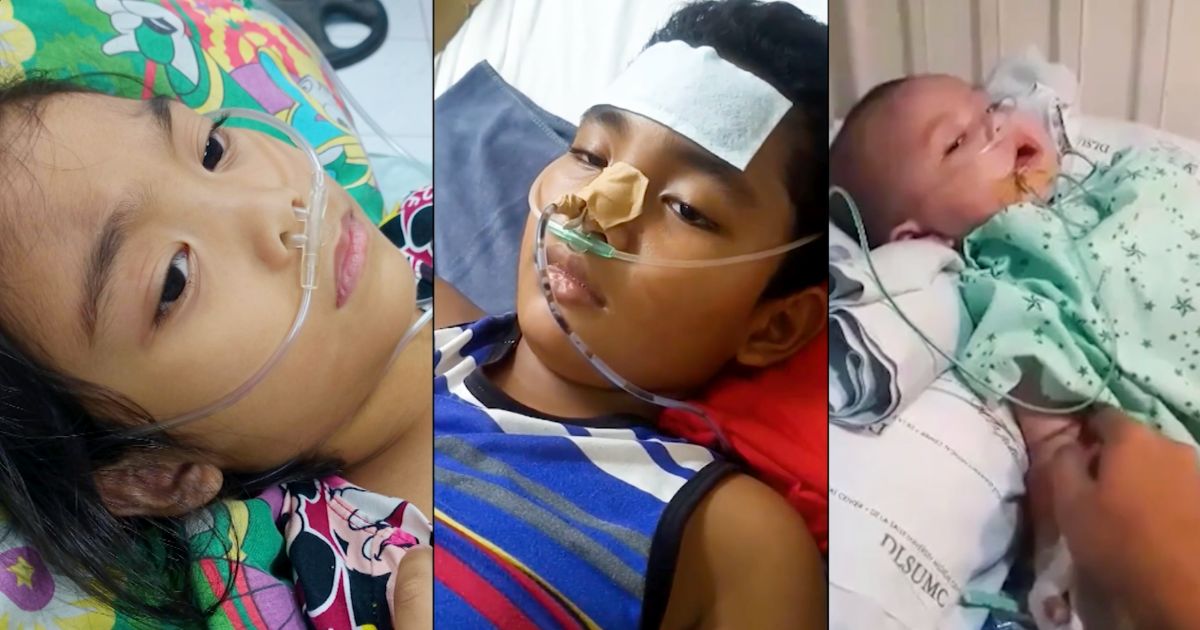
Stroke is commonly associated with adults, but children can also experience the condition, with some cases happening as early as infancy.
The cases of three children featured on "Kapuso Mo, Jessica Soho" show how pediatric stroke can affect movement, speech, learning, and other abilities depending on which part of the brain is damaged and how severe the stroke is.
Andrew's stroke came after a high fever
Ten-year-old Andrew from Cagayan Valley was rushed to a hospital after developing a high fever on the night of October 7.
"Hindi ko alam na may stroke na bata. Akala ko mga matatanda lang po," his mother Zenaida said.
["I didn't know kids could have strokes. I thought it only happened to older people."]
As his condition worsened, Andrew had difficulty speaking and could no longer open his mouth. He also had difficulty urinating and eventually needed a catheter.
He was later referred to a bigger hospital in Cagayan after doctors could not immediately determine the cause of his condition.
An MRI eventually showed that Andrew had suffered a pediatric stroke.
One of the possibilities being considered by doctors was an infection or inflammation of the membrane covering the brain and spinal cord. In some cases, this can affect blood vessels in the brain and increase the risk of stroke.
Andrew stayed in the hospital for four weeks and after being discharged, he continued to have difficulty moving and speaking and needed medication, follow-up consultations, and rehabilitation.
However, financial difficulties made regular therapy difficult for his family. Zenaida said, "Sa pamasahe lang po, hirap na po kami."
["We can barely even afford the commute."]
Andrew gradually regained some of his abilities. By November, he could sit up, and by December, he could take steps. His speech also returned after about three months.
He was allowed to continue his studies through modular learning. Andrew, who enjoys drawing, said he hopes to recover so he can pursue his dream of becoming an architect and help his parents.
Jyn Leighy had an ischemic stroke
Jyn Leighy was six years old when she experienced a stroke. Now 10, she continues to deal with some of its effects, including trembling in her hands and difficulty using her right leg and hand.
Her mother, Ludilyn, said Jyn Leighy initially developed a fever and later complained of a severe headache.
"Si Jyn Leighy kasi nilagnat pa siya ng madaling araw. Maya-maya biglang iba na 'yung pakiramdam niya. Sumasakit na daw po 'yung ulo niya," she said.
["Jyn Leighy had a fever early in the morning that day. Shortly after, she reported feeling unwell and complained of an onset of a headache."]
Jyn Leighy eventually had difficulty walking and was carried to the hospital. A CT scan showed that she had suffered an ischemic stroke caused by a blood clot in the left side of her brain, affecting the right side of her body.
Ludilyn transferred her daughter to the National Children's Hospital in Quezon City, where she stayed for nearly a month. She said Jyn Leighy underwent regular follow-up consultations after her discharge.
"Palagi pong mayroon siyang follow up check up. So from Zambales, bibiyahe po kami ulit ng QC. Balik-balik po kami every two weeks hanggang naging one month. Tapos every two months," Ludilyn said.
["She always has a follow-up checkup. So from Zambales, we would travel to Quezon City again. We made the trip back and forth every two weeks, which then became monthly, and then every two months."]
Rehabilitation helped improve Jyn Leighy's condition. She was able to access free rehabilitation services in their town twice a week and eventually learned to walk independently after around seven months.
She also learned to write with her left hand because of the difficulty using her right hand.
"Hindi ko naman po naiisip na may sakit po ako, kahit iba po ako sa kanila," Jyn Leighy said.
["I don't really consider myself sick, even though I know I'm different from the other kids."]
Sadie suffered a brain hemorrhage as a baby
Six-month-old Sadie was being treated for amoebiasis when she suddenly began having what her parents later learned were seizures.
Her family immediately brought her to a hospital. A CT scan showed that she had suffered a brain hemorrhage, or bleeding in the brain.
Doctors were able to treat her and save her from the critical condition.
Now five years old, Sadie continues to undergo therapy because she developed difficulties with speech following the stroke.
Her parents said even small improvements have become important milestones for their daughter.
"Konting ano po, 'yung natutunan po siyang– 'yung simpleng high-five lang. Sobrang parang achievement na sa amin 'yun," her mother Kim said.
["Just the little things she learned, even a simple high-five, that already felt like such a big achievement for our family."]
Sadie also communicates with her parents in her own ways. Her father Alvin said one of her favorite games is hide-and-seek.
"Paborito niya 'yung hide and seek. Bibilang siya ng 1 to 10 tapos magtatago ako. Kahit hindi niya mabanggit 'yung 1 to 10, talagang alam niya kung kailan 'yung mag-i-stop na 10 na," he said.
["Her favorite game is hide and seek. She'll count from 1 to 10, and I'll go hide. Even if she can't pronounce the numbers 1 through 10, she genuinely knows when she's reached 10 and it's time to stop."]
Sadie continues to receive physical and oral feeding therapy to help improve her motor and other skills.
Physical therapist Kathleen explained that one goal of therapy is to help children become more independent in the future, including learning movements such as sitting and standing.
"Ang goal po ng session is magkaroon sila ng independence sa future nila. Which is 'yun, sa standing and somehow 'yung transition which is 'yung sitting and then going to stand. And then from the floor, going to sitting," she said.
["The goal of the session is to help them become independent in the future. We're focusing on standing and transitional movements—like going from sitting to standing, and moving from the floor into a seated position."]
She added that therapists do not necessarily expect children to have the same stability as people without the condition, noting that the goal may be independence with an assistive device or, if possible, without one.
Early action and aftercare are important
Doctors explained that parents should watch for signs of stroke in children and seek immediate medical attention when these occur. They also stressed the importance of aftercare and rehabilitation in improving a child's quality of life.
Pediatric stroke can have lasting effects on a child's movement, speech, learning, and other functions. The impact depends on the area of the brain affected and the severity of the stroke.
While stroke is less commonly associated with children, the cases featured in the report show that it can happen at different ages, including infancy.
For children showing possible signs of stroke, doctors advise seeking medical attention immediately, as timely treatment can affect recovery and long-term outcomes. —JCB, GMA News

