

 GMA Brandtalk
 Tracking
 Archives

ADVERTISEMENT
Filtered By: Lifestyle
Lifestyle
WHO urges Pinoys: Elect candidates who will work for ‘healthy, resilient cities’
+
Make this your preferred source to get more updates from this publisher on Google.
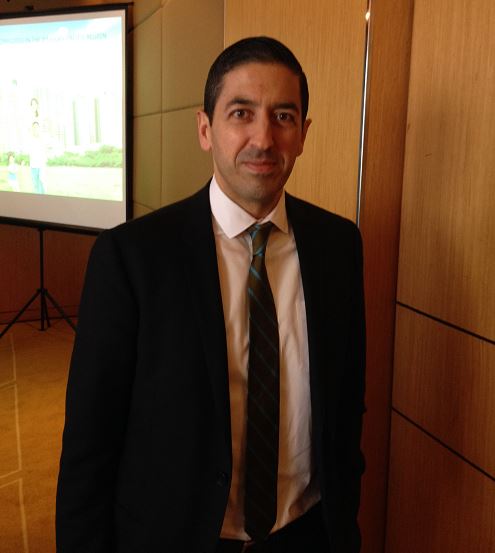
Speaking at the forum was Dr. Sandro Galea, dean of Boston University’s School of Public Health and an expert on the health impact of mass trauma.
The experts, participating in the World Health Organization (WHO) technical consultation on urban health in the Western Pacific region, said investing political and financial capital to transform urban areas in the region into “healthy, resilient cities” is an important governance platform. It is a wise investment, too, they added.
“Cities [in the Western Pacific region] are now faced with increasingly complex challenges from climate change, globalization of trade, changing lifestyles, and overpopulation. Without effective governance, cities will struggle to provide even the most basic services. They will become places where inequality, poverty and poor health are rampant,” said Dr. Shin Young-soo, regional director for the WHO Western Pacific region (WPRO).
“Good health is good politics. The world is changing and cities can be engines for growth, health, and resilience,” Shin said. “The vision of healthy and resilient cities is achievable because mayors and city officials are committed to the health of their constituents.”
Health means greater productivity
In a media forum on the sidelines of the regional consultation, Dr. Sandro Galea, an epidemiologist and a physician trained in emergency medicine, said “health is probably one of the universal values that people all over the world care about equally.”
Galea, a expert on the health impact of mass trauma—from the 9/11 attacks to Hurricane Katrina tomilitary combat in Iraq and Afghanistan—said “healthier cities” lead to healthier and more productive residents, better economies, and lower social and financial costs from taking care of disadvantaged segments of the urban populations, such as substance abusers.
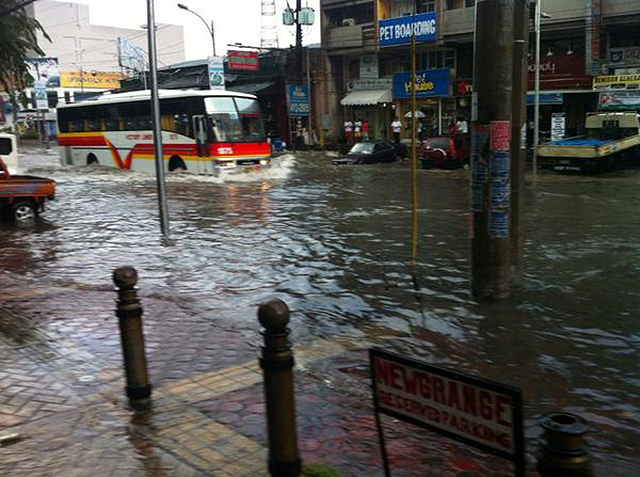
A passenger bus makes its way through the flooded Timog Avenue in Quezon City following an afternoon thunderstorm on October 7, 2014. Michael Fajatin
“I think investing in healthy cities is a good form of short-term and long-term investment. Healthy cities are a good short-term and long-term investments,” he added.
Galea, dean of Boston University’s School of Public Health, has published nine books and more than 500 articles in scientific journals, many focused on trauma and mental health. He has visited remote areas in the Philippines.
Growing number of urban dwellers
In the Western Pacific region, half of the combined population already live and work in cities. And the number is expected to rise further.
Slums, unplanned urbanization, inadequate access to health care services, and unhealthy living conditions are among the aftermath of the tremendous influx of people into cities.
The WHO, citing 2009 figures, estimated that more than 212.5 million people live in slums in Cambodia, China, Laos, Mongolia, the Philippines and Vietnam. The organization said it has no reliable count of slum-dwellers for the whole of the region.
Several of the health risks facing slum dwellers in urban areas include lack of safe potable drinking water, improper sanitation, unsafe food, increased exposure to violence and exploitation, and social isolation.
Galea said that at present more than one-half of the world’s population live cities, and that by 2050, the number would spiral into two-thirds.
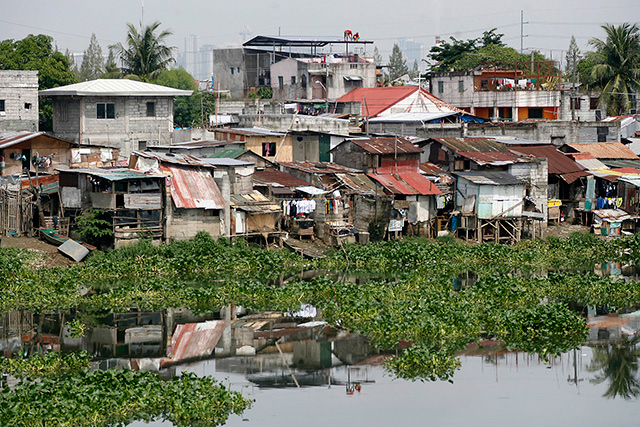
A shanty community is seen along the water lily-filled Manggahan floodway in Taytay, Rizal in this photo taked in June 2013. Asti Flores
He added that key facets of city-living that can be improved to better the health of urban residents globally are:
- The physical environments of cities - the quality of the buildings and infrastructures, quality of parks, and total built-in environment;
- the social environment - social networking and culture in a city that make people healthier; and
- the formal provision of health care and public health services.
Between 1970 and 2014, the WHO said that floods and storms are the most frequently occurring natural disasters in the Western Pacific region, affecting and displacing approximately 3.35 billion people.
“To make cities healthy and resilient, national and local governments must invest in building up a city’s resources and capacity. This involves working closely with other sectors such as housing, transportation, energy, and education, and to integrate health in the design of urban environments,” the WHO said in a separate statement.
Pollution
Indoor and outdoor air pollution in the Western Pacific region causes an estimated 2.88 million (41 percent) of the total deaths globally. The WHO said the figure is “a disproportionately high burden” for region.
Only 12 percent of people living in 1,600 cities in 91 countries breathe air that complies with WHO guidelines.
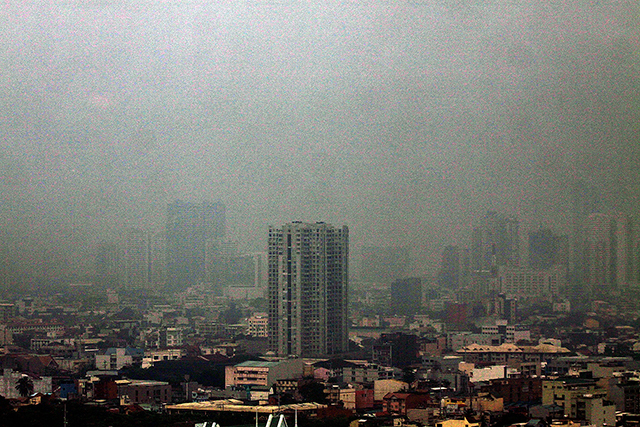
Thick smog stemming from pollution blocks sunlight at the Makati City skyline on September 26, 2014. Danny Pata
Road traffic injuries are the second leading cause of deaths among the group aged 5–14 in the Western Pacific region. This translates to about 900 deaths daily, according to WHO estimates.
Dr. Susan Mercado, director for non-communicable diseases and health through the life-course at the WPRO, said cities will become “game-changers” soon and that policy-makers “must have clear visions for cities in order to create more healthy, more resilient cities.”
Natural disasters
“The WHO updated framework on healthy, resilient cities in the Western Pacific region calls on cities to anticipate, mitigate and adapt to current and emerging threats to urban health. These include threats from climate change as evidenced by cyclones and typhoons of unprecedented speed and force causing widespread destruction,” Mercado told reporters.
On the other hand, Galea warned that the inability to marshal political willpower to prepare cities against the onslaughts of disasters and traumas will lead to more Kathmandus—referring to the situation in the Nepalese capital after an earthquake rocked the country on Saturday.
“We did know that there will be disasters and trauma happening in cities. We know that the number of disasters and people affected are increasing in the past 30 years. We have more and more people living in cities and that more and more of our cities are being built near coastal areas which are at high risk,” Galea said.
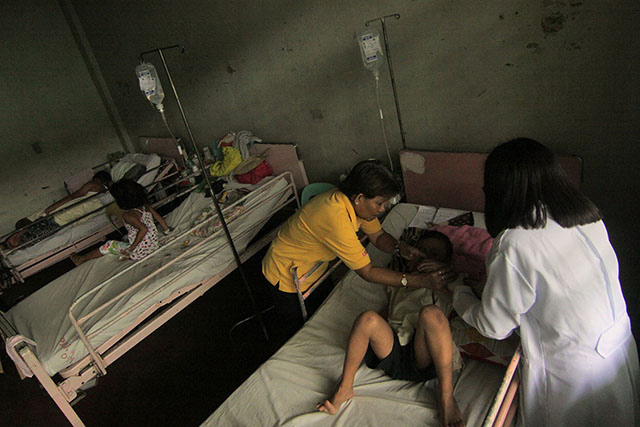
Children recuperating from dengue fever await daily monitoring of their condition at San Lazaro Hospital in Sta. Cruz, Manila on June 19, 2013. Danny Pata
“There are lots of examples of large-scale natural disasters where only few people died. And there are lots of examples of large-scale natural disasters where lots and lots of people died. The difference is how prepared we are,” Galea said.
In the agenda of ‘healthy cities,” Galea said that it is “critical” to invest in preparing cities to help them mitigate the potential shocks of disasters and traumas.
“It is a difficult thing to do in the political sense. It is difficult to invest politically when we do not know when an event will happen, a month or several months from now. But it is part of building healthy, resilient cities, to prepare cities for external shocks,” Galea said.
“What happened in Kathmandu is a very sad reminder of the necessity that cities must prepare for external shocks.” — BM, GMA News

