

 GMA Brandtalk
 Tracking
 Archives

At start of National Kidney Month, doctors urge annual urinalysis
On the registry of the National Kidney and Transplant Institute's Renal Disease Control Program (NKTI-Redcop) are 23,364 Filipinos undergoing regular dialysis—just a fraction of the renal patients in this country who need the procedure to survive.
According to Redcop program manager Dr. Susan Losaria-Jorge, a renal patient who needs dialysis three times a week has to spend at least P20,000 a month to receive the least expensive sessions made available to indigent patients. Patients who do not qualify for the socialized medical subsidy shell out at least P70,000 a month for the treatment.
PhilHealth only extends 45 free dialysis sessions a year, or just 15 weeks of dialysis. After the free sessions, indigent patients are refused if they don't pay for the succeeding sessions. Many have to discontinue the treatment—and die while waiting for a transplant.
Dialysis—which performs the processes done by healthy kidneys, such as removing waste products and excess fluid from the blood of patients with kidney failure—does not cure; it only extends life until the patient gets a successful kidney transplant, which usually costs from P700,000 to P3 million.
"It's sad to turn down renal patients because they have no money," says Dr. Luis Limchiu, training coordinator at the NKTI's Department of Nephrology. His biggest dream, he says, is for Filipinos who need it to receive free dialysis to the end, just like in first-world countries.
Prevention better than the cure
June is National Kidney Month, with the theme "batong inaalagaan, habangbuhay nating kayamanan." The NKTI and its doctors are urging Filipinos to take steps in order to avoid needing dialysis in the first place. Lifestyle changes and the early detection and management of renal diseases can save you from kidney failure and expensive dialysis and kidney transplants in the future.
Urinalysis. Dr. Losaria-Jorge advises getting an annual urinalysis to monitor the kidneys and detect renal disease early. According to the US National Kidney Foundation, a urinalysis is a simple test—and all you need to do is pee into a cup to provide a sample. The urine test, said the NKF, "can help find conditions that may need treatment, including infections or kidney problems. It can also help find serious diseases in the early stages, like chronic kidney disease, diabetes, or liver disease."
Lifestyle changes. Renal failure is the usual complication of hypertension and diabetes. Making the following changes to your lifestyle can help you avoid all of these diseases:
- Get regular exercise
- Increase hydration
- Decrease your salt intake
- Stop smoking
- Stop drinking alcohol
- Avoid herbal supplements that may cause kidney problems
Manage blood pressure and sugar levels. Highblood and diabetic patients must make sure blood pressure and sugar levels are managed to avoid renal failure.
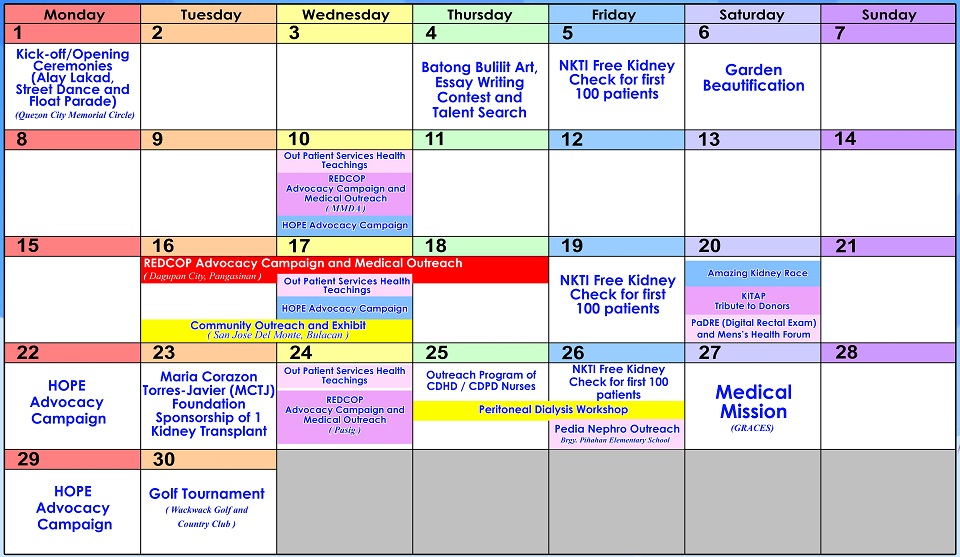
The NKTI has a slew of events scheduled for National Kidney Month:
— BM, GMA News

