

 GMA Brandtalk
 Tracking
 Archives

Leg pain, slow-healing wounds could mean peripheral arterial disease, says PHA
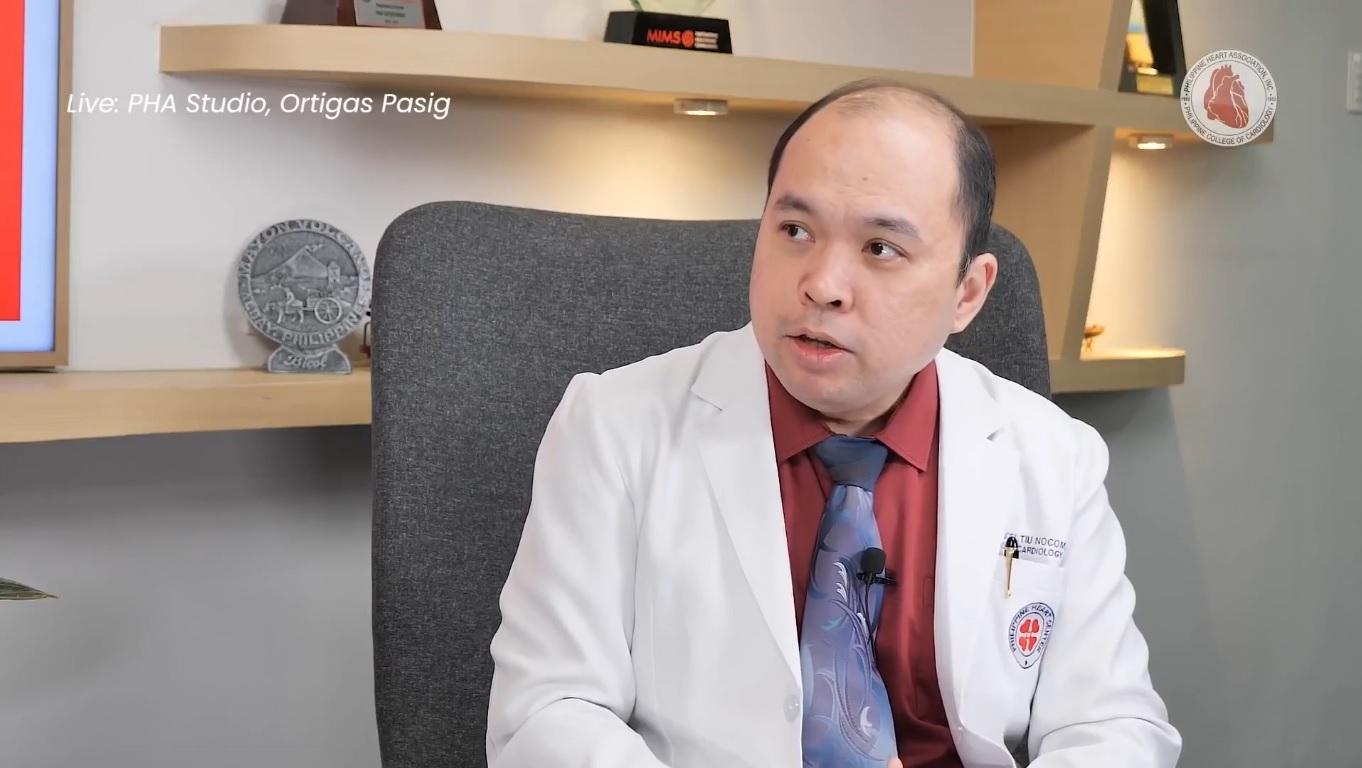
Leg pain while walking and wounds that are slow to heal could be indications of peripheral arterial disease, but about half of the people who have this illness do not experience symptoms at all, the Philippine Heart Association warned.
Peripheral arterial disease (PAD) is the narrowing of blood vessels. The PHA defines it as the "partial or complete obstruction of one or more peripheral arteries specifically of the lower extremities," and "one of the major manifestations" of atherosclerosis, or the build-up of plaque in the arteries.
According to PHA’s Chair of Council on Coronary Artery Disease Dr. Paolo Joel Nocom, a 2007 study found PAD in around 31% of patients.
“Maaaring ito po ay tumaas na po sa nakalipas na dekada, gawa po ng patuloy pa rin ang paninigarilyo. Siyempre, meron na rin na bagong bisyo na tinatawag na vape. Aabangan po natin sa mga susnod po na impormasyon kung maaaring dumadami pa lalo,” he shared.
(This number might have increased in the past decade because people continue to smoke. Of course, there’s also a new vice called vape. We’ll await newer information on whether there has been an increase.)
Nocom said that in the study, PAD was found in five out of 100 individuals aged 40 and up, and one out of every four individuals aged 70 and up.
It often manifests itself in symptoms such as wounds that do not heal, as well as claudication, or pain in the legs while walking. Unfortunately, symptoms often do not manifest in 50% of PAD patients.
“Kadalasan po nae-evaluate natin yan, nakikita po. Kaya ang mga iba, kung meron na pong mga risk factor, halimbawa mga naninigarilyo, mga diyabetiko, meron pong mataas na cholesterol… ‘Yan po ang tinitignan ng ating mga manggagamot sa puso, sa internal medicine, at dun sa mga primary health care physicians,” he said.
(Often when we evaluate patients, they have it. That’s why if someone already has risk factors, like being a smoker, or a diabetic, or having high cholesterol… That is what we cardiologists, internal medicine doctors, and primary health care physicians look at.)
“’Yung mga tinitignan natin kadalasan yung nagbabarang ugat o yung pulso na nagiging dahilan ng matagal na paghilom ng sugat,” he added.
(What we also look into most of the time are the clogged veins or pulse, which may cause the delay in healing wounds.)
Long-term or acute PAD
There are two types of PAD: chronic or long-term PAD, and acute or a “leg attack.”
Chronic PAD—also known as limb ischemia, when there are severe blockages of blood to the lower limbs—is what is most commonly diagnosed.
Other than wounds that take longer to heal, patients may also notice the thinning of the skin and muscles, shiny skin, loss of body hair, and brittle nails.
“Sa paglipas ng panahon, maaari pong itong tuluyan nang kumipot yung daloy ng dugo na nagiging dahilan na ang sintomas niyang nananatili kahit wala nang ginawa… Yung chronic, matagalan na po ito. Maaaring tumagal na po ito ng linggo, buwan… Maaari pong di ito emergency agad, pero kung ito ay pababayaan, malaki ang tsansa na sa susunod na isang taon, dalawang taon, aabot po sa higit 50% ng mga hindi ginamot ang napuputulan ng mga biyas,” Nocom said.
(As time passes, the blood flow may eventually thin out and may cause the symptoms to be felt regardless of what they’re doing… The chronic type of PAD is long-term. It may last weeks, months… This might not be an emergency right away, but if it is neglected, there could be a 50% chance of an amputation in the next one or two years.)
“Tandaan po natin, ang dugo po ang nagbibigay ng nutrisyon sa ating mga kalamnan, sa buto, na kapag ito po ay nahirapan ng pagdaloy ng dugo, nagkakaroon po ng atrophy o yung pag-urong po o yung pagkawala nang unti-unti ang tissues,” he added.
(Let us remember that our blood is what brings nutrition to our muscles and bones, and if the blood circulation becomes difficult we might contract atrophy or the redaction or gradual loss of tissue.)
Lack of care or neglect on chronic PAD may lead to the amputation of the affected limb.
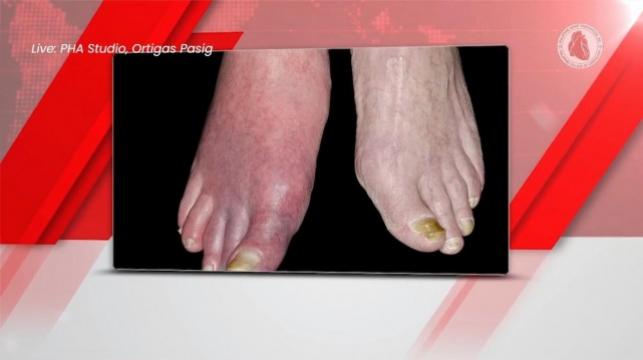
Acute leg attacks
Meanwhile, Nocom compared acute limb ischemia to other very serious situations. "Meron tayong heart attack, emergency po iyan. Meron tayong brain attack o stroke, emergency rin po iyan. At kung merong mga ganoon, meron ding acute limb ischemia so parang leg attack po siya. Kapag ito ay pabayaan natin, maaari pong idahilan na maging mamatay yung kanyang biyas o paa, at maging dahilan para tanggalin yung binti."
(We have heart attacks, which are emergencies, and brain attacks or strokes, which are also emergencies. And we also have acute limb ischemia, which is like a leg attack. If this is neglected, it could lead to the death of the limb or the foot, and eventual amputation.)
Nocom named six “Ps” that are symptoms of leg attacks:
- Pulselessness (loss of pulse in the leg)
- Pallor (paling of the skin)
- Paresthesia (numbness)
- Paralysis (lack of ability to move)
- Poikilothermia (cold temperature of the leg or affected area)
- Pain (ache in the leg or affected area)
“Pwede po yung iba, namanhid, nanlalamig, pwedeng nangingimi, nangingimay, pwede naman po yun pero kung may pulso, maaaring hindi tayo acute limb [ischemia]. Ang kawalan po ng pulso ay isa sa pinakaimportanteng determinant natin para masabi po nating walang acute limb ischemia,” Nocom said.
(Others may experience cold limbs or prickling or numbness, but if there is a pulse, that might not be acute limb [ischemia]. The loss of pulse is the most important determinant to say whether or not it is acute limb ischemia.)
Testing for PAD
Nocom said there are several tests to determine PAD. One is the ankle-brachial index.
“Ito po yung kinukunan po natin ng presyon sa braso, kinukunan din po ng presyon yung ating paa. Makikita po natin doon kung magkakaroon ng pagnipis ng daloy. Bumababa po kasi ang presyon ng mga biyas natin sa mga baba… Napakadali ng test na yan, blood pressure lang po sa binti,” he said.
(This is when we measure blood pressure on the arm, as well as on the leg. We can see if there is a thinning of blood flow. PAD lowers blood pressure in the lower limbs …This test is very easy, since it’s just blood pressure on the leg.)
He added that some medications may help in mitigating PAD, most of which are also prescribed for a patient’s primary ailment.
“Pag kayo ay natuklasan na may PAD, maaaring ibigay sa inyo ng inyong manggagamot ang mga tinatawag natin na pampalabnaw ng dugo o anti-thrombotic. Ang purpose nito ay para maiwasan natin ang karagdagang komplikasyon… Kung kayo ay may altapresyon, diyabetiko, meron pong mga magagandang mga gamot kaya siguraduhin na kung ano ang nireseta, nasusundan. Hindi po ito napapalitan ng herbal, 'di to napapalitan ng tapal, 'di po napapalitan ng tawas. Ito po ay kinukuha natin sa tamang gamot,” he said.
(If you are diagnosed to have PAD, doctors may prescribe what we can call the blood thinners or anti-thrombotic. The purpose of this is to avoid any further complication… If you have hypertension, or are diabetic, there are good medicines so ensure that you will follow what was prescribed to you. This cannot be replaced with herbal, or patches, or tawas. This is solved through proper medicine.)
Quit smoking
As a doctor, Nocom advised the public that the best prevention to PAD is to avoid smoking.
“Isa po yan sa puno't dulo na maaaring dahilan ng pagbabara ng ugat,” he said.
(This is one of the root causes that may lead to the clotting of blood vessels.)
He also advised patients to care for their primary ailments and follow their doctor’s orders, on top of regular consultation.
“Napakalaki na ng gastos nito, at ito ay di pa po saklaw sa ngayon ng mga benepisyo ng kaliwat kanan dahil limitado palang po ang mga espesyalistang nakakagawa nito… Siguraduhin na kayo po ay makikinig sa inyong manggagamot, kokonsulta po… Kung may sintomas po, wag kayong mahihiya na ikonsulta yan sa manggagamot,” he advised.
(This is such a big expense, and this is not yet covered by benefits because there are still limited specialists that are able to treat this… Ensure that you will listen to your doctors and consult with them… If you have symptoms, don’t hesitate to consult your doctors.) — BM, GMA Integrated News

