

 GMA Brandtalk
 Tracking
 Archives

Therapy 101: What is it and who is it for?
The death of Emman Atienza sent a shockwave across social media on Friday.
In a statement, Kim Atienza and his wife Felicia said that Emman hadn't been afraid to share her mental health journey, and added, "Her authenticity helped so many feel less alone."
Emman had been vocal about her mental health struggles online. In an Instagram post on January 9, 2025, she publicly opened up about dealing with "treatment-resistant mental illness" since she was 12.
She said she went to Los Angeles in 2024 for intensive therapy, "five hours a day, five days a week, for several months."
And while she returned to the Philippines still filled with doubts, with her fresh perspective, she was determined to make changes in her life, she said.
So how does therapy help? Here are the basics.
What is it?
According to Jon Edward B. Jurilla, MD, FPPA and Chairman of the Department of Psychiatry of Makati Medical Center, therapy or psychotherapy “is a structured and collaborative process where a trained mental health professional helps someone better understand themselves, their emotions, behaviors, thoughts, and relationships.”
He emphasized that therapy is not “venting” or “being fixed,” but rather, “it’s about developing insight, building skills, and supporting personal growth and healing.”
Rowalt Alibudbud, a psychiatrist from Medical Center Manila added that it is a “professional and confidential process.”
“In the Philippines, therapy helps people cope with stress, trauma, and daily challenges, and promotes emotional and mental wellness,” he said.
“It’s not just about problems; it’s also about growth, healing, and self-understanding,” he added.
Who is it for?
Therapy is not just for people with diagnosed mental health conditions. It can benefit anyone who wants to take care of their mental health.
“People seek therapy for stress management, relationship concerns, personal growth, grief and loss, and life transitions,” Jurilla said. “Just as people can see a doctor for both illness and preventive care, therapy can be proactive—not just reactive.”
Alibudbud also said, “Just as going to the gym strengthens your body, therapy can enhance your mind and well-being.”
When is it needed?
There are several factors to know whether therapy is needed. Therapy may be considered if emotions are overwhelming, constant, and confusing; if functioning at work, school, or in relationships is affected; if some bad habits or patterns need changing; if problems are experienced in relationships, work, or school; if there is trauma or loss; and if a safe space to explore and express thoughts without judgement is needed.
“You don’t need to be very depressed before going to therapy. In fact, you can go anytime you need support,” Alibudbud said.
Jurilla said people don’t need to "hit rock bottom" before asking for help.
“Anyone can go to therapy, but you have to want it. You can go for different reasons but you have to be ready to talk about things that can make you uncomfortable at times. There are so many different kinds of therapy, it would help for someone to try different styles and types of therapy to see what best fits them and their needs.”
Who do we go to?
It is also important to know whether to go to a psychologist or a psychiatrist.
Psychologists specialize in talk therapy or psychotherapy. They help process emotions and teach coping strategies. They do not prescribe medication.
On the other hand, psychiatrists are medical doctors who diagnose mental health conditions and prescribe medications. Most psychiatrists also provide talk therapy.
“A good starting point is often a psychologist for talk therapy, and a psychiatrist can help when symptoms are more severe or medication may be needed,” Jurilla said.
Alibudbud said that in many cases, Filipinos see a psychologist if they prefer therapy alone, and if medication is needed, they are referred to a psychiatrist.
"They can also go to a psychiatrist for talk therapy if they prefer. Both can work together to provide holistic care,” he added.
How much is it?
In the Philippines, therapy sessions may range from P1,500 to P5,000, whether they are psychologists, counselors, and psychiatrists.
It is important to note that many schools and workplaces also offer mental health assistance programs.
There are also free and low-cost services in government centers, non-government organizations, public hospitals, local government units, or mental health hotlines.
What happens in therapy?
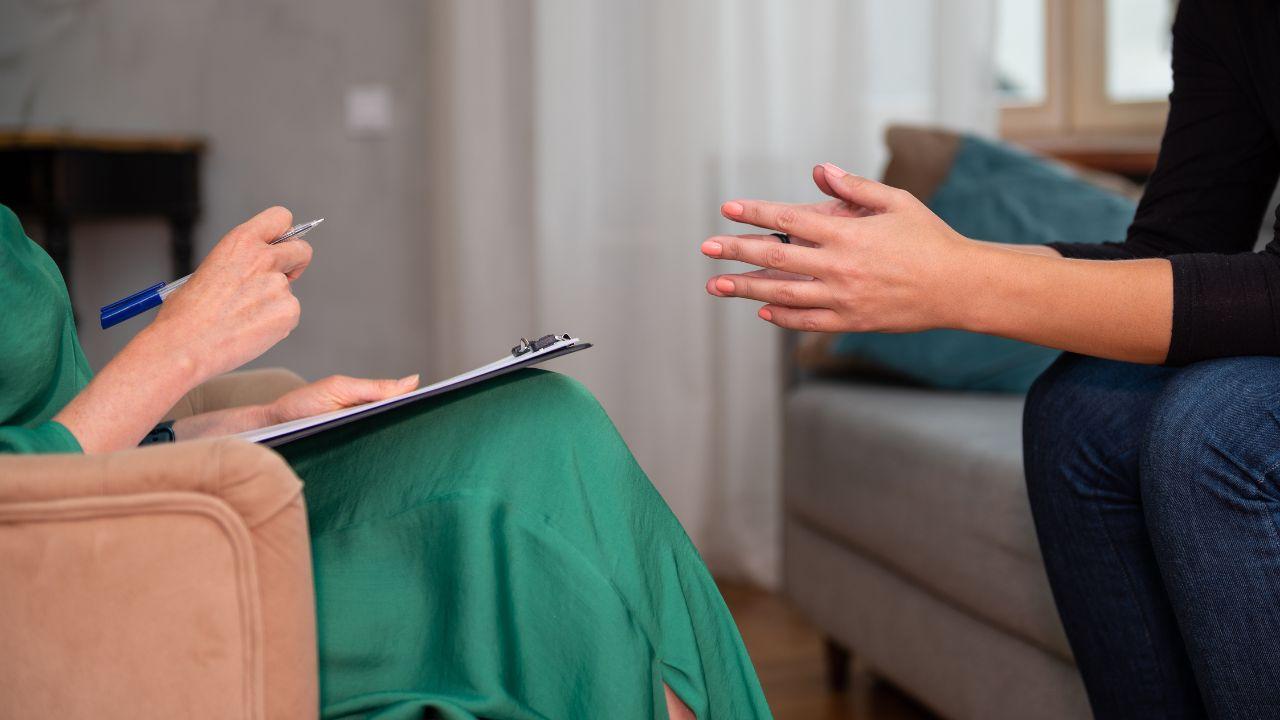
A therapy session is so much more than just talking.
“While talking is part of it, therapy involves goal setting, evidence-based techniques (e.g., Cognitive Behavioral Therapy (CBT), Dialectical Behavior Therapy (DBT), mindfulness), skill building, and reflection,” Jurilla said.
“Think of it as a structured conversation with a purpose — guided by science and empathy,” he said.
Therapy sessions may include the discussion of experiences, thoughts, and emotions; an assessment of needs; identifying unhealthy behavioral patterns and triggers; learning coping skills and problem-solving strategies for stressful situations; and exploring healing techniques fit for a person’s needs.
The Philippines has several mental health hotlines and services. These include: DOH-NCMH Hotline: 0917-899-8727 and 02-7989-8727; Natasha Goulbourn Foundation Hopeline: 0917-558-4673, 0918-873-4673, and 02-8804-4673; and In Touch Crisis Line: 0917-800-1123, 0922-893-8944, and 02-8893-7603. —JCB, GMA Integrated News

