

 GMA Brandtalk
 Tracking
 Archives

Healthcare experts push for early screening amid kidney disease surge
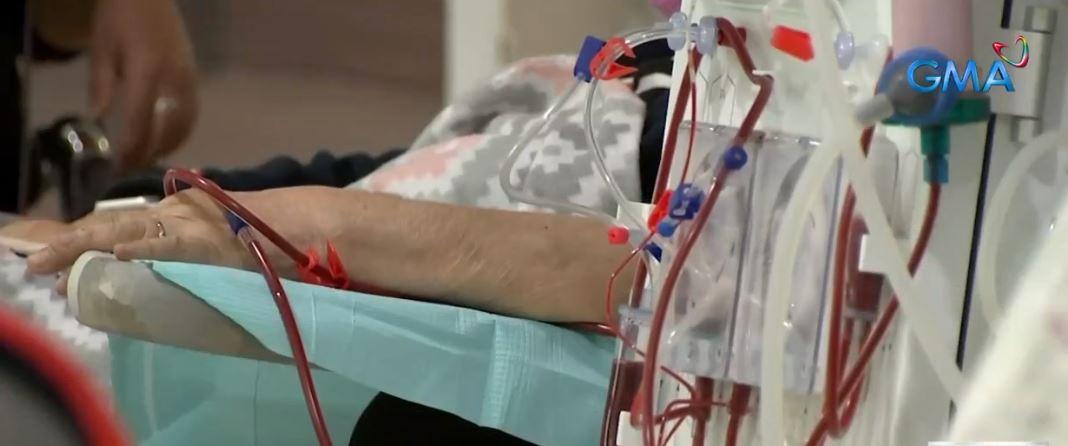
Healthcare advocates on Wednesday urged Filipinos to undergo early screening and tests amid the rapid rise in cases of patients with chronic kidney disease (CKD).
They made the call during Astrazeneca Philippines’ renewal of its partnership with Mercury Drug Philippines and Diabetes Philippines to offer free kidney screenings under the ACT Now Program in selected branches in Greater Metro Manila.
Dr. Rey Rosales, treasurer of Diabetes Philippines, stressed that early testing is vital to flag the signs of CKD in patients, as symptoms usually don’t manifest until the later stages of the disease.
For early screening, health advocates recommended the checking of blood pressure, blood sugar, and body mass index.
They highlighted the Urine Albumin-Creatinine Ratio (UACR), a urine test that measures the amount of albumin or protein spillage in urine compared to a patient’s creatinine or waste.
Excess protein leakages that indicate kidney damage is not flagged in usual urinalysis tests.
“The two major causes are diabetes and hypertension… Before we go to that dreaded complication, we can check already. There is an early screening and we call that UACR, and that is just submitting your urine sample, and we can detect already whether there is already a sign of early kidney damage, because if it's early, we can still prevent it from becoming the worst scenario and in fact, bring it back to normal,” Rosales said.
Data from Astrazeneca Philippines showed that Filipinos with CKD rose to 35.94% in 2022. This means that one Filipino is diagnosed with CKD every 40 minutes, with one patient progressing to dialysis every 60 minutes.
With their current advocacy and partnership, Astrazeneca said they are pushing for early and accessible kidney disease screening that “saves lives.”
“Eventually, these dialysis patients are at risk for survival, of death, and we don’t want that to happen. The best way for us to address this is through early screening because when we detect CKD early, then there’s something that we can actually do to prevent its progression,” said Astrazeneca PH Director for Media Affairs Dr. Cyril Tolosa.
“With early UACR detection, patients and their doctors can act sooner, adjusting lifestyle, optimizing medicines, and preventing progression to kidney failure resulting to dialysis,” he added.
The kidney screenings under the partnership of Astrazeneca Philippines, Mercury Drug Philippines, and Diabetes Philippines since 2024 have resulted in around 44,000 screenings, with 4% testing positive for possible CKD.
With the renewal of the partnership this year, the program intends to screen at least 10,000 patients at their Shangri-La Plaza branch, Pavilion Mall Mandaluyong branch, Trinoma branch, and Noveleta, Cavite branch.
“This screening program aligns with AstraZeneca’s bold ambition to reduce the burden of non-communicable diseases, especially across cardio-renal metabolic conditions. So, our North Star is actually very, very simple… It’s helping Filipinos live longer, healthier lives, and by intervening earlier together with the whole healthcare ecosystem,” Tolosa said.
“We know that we cannot do it alone. Mercury Drug cannot do it alone. Diabetes Philippines cannot do it alone. Even the government cannot do it alone… But together, as a whole community, we will be able to address this very important issue,” he added.
How to avoid kidney damage, CKD
Diabetes Philippines also reminded Filipinos to follow safe eating practices to prevent damage to their kidneys.
Rosales noted that while medications exist, lifestyle modification is the best way to avoid CKD.
He suggested cutting down on red meat like beef and pork and switching to healthier, more affordable sources of protein like vegetables, tofu, and fish.
“Diet alone helps. Kasama po ‘yan sa education kapag meron ka ng protein spillage (That’s part of education when you have protein spillage)… Change your protein source,” he said.
Dr. Jennina Duatin, a nutritionist-dietitian from Diabetes Philippines, also recommended limiting one's sodium and salt intake.
“Tayong mga Pinoy, may hilig tayo sa processed [food]. Aside from that, yung mga sawsawan… ‘Yan yung source ng mga high in sodium... ‘Yan yung dapat natin educate ng mga future generations about the safety and benefits,” Duatin said.
(We Filipinos have a love for processed food. Aside from that, there are also the sauces… These are our sources of high sodium… We should educate future generations about these things on safety and benefits.)
In July 2025, House Bill 819 filed by Samar 2nd District Rep. Reynolds Tan sought to require manufacturers of food products to provide warning labels for high salt, sugar, or fat content to help Filipinos make healthier food choices. It is currently pending with the House health committee.
Tthe Department of Health (DOH) also previously expressed concern about the increasing cases of CKD in the country, noting a spike in the number of children getting the disease.
President Ferdinand Marcos Jr. also backed a comprehensive program to prevent and address the causes of CKD in the country, including improved benefits for post-kidney transplant patients. — JMA, GMA Integrated News

