

 GMA Brandtalk
 Tracking
 Archives

Cardiologists stress tailored non-invasive surgical options for Filipino patients
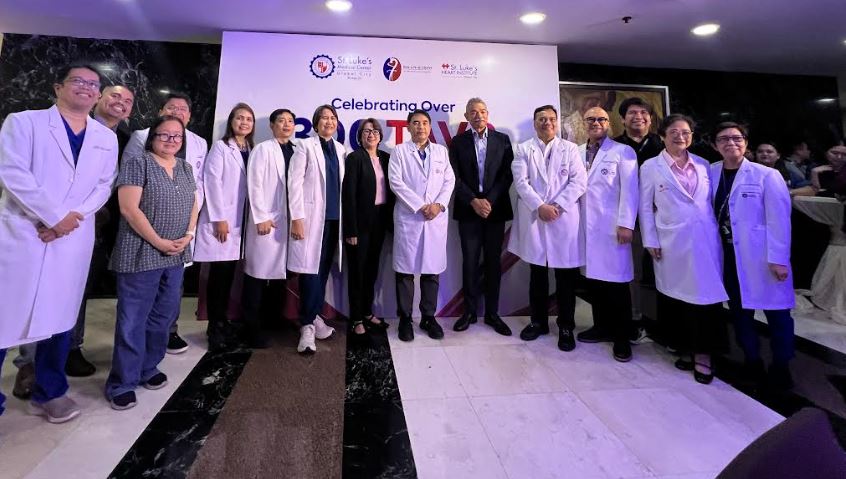
A team of cardiologists emphasized the importance of offering modern surgical options custom-tailored and curated for each patient in today’s medical field.
During the milestone celebration for hitting over 300 Transcatheter Aortic Valve Replacement (TAVR) procedures at St. Luke’s Medical Center (SLMC) in Bonifacio Global City (BGC) on Wednesday, Head of the Center for Structural Heart and Vascular Interventions Dr. Fabio Enrique Posas said that the current medical trend is to go minimally invasive.
As a result, cardiologists are now looking into options that would achieve the same outcomes without many surgical procedures or actions being done on the body.
“The less you do for patients, the less inpatient we cause to those patients, the better they do, especially those individuals who are at higher risk,” he said.
He noted that open-heart surgeries often bring a higher risk, as cutting open the chest would increase the risk of infection and bleeding, among other issues.
The introduction of the TAVR procedure, first administered in February 2012 at SLMC, opened another option for a safer procedure that involved no chest opening, faster valve delivery, and no stoppage of the heart.
“It's a far safer procedure in many ways when compared to surgery, but having said that, surgery is still a very good procedure when patients need it,” he noted.
Breakthrough Procedure
The TAVR is a minimally invasive procedure that allows doctors to replace a diseased aortic valve with a biosprosthetic valve through a small catheter inserted through a groin or wrist, mitigating the need for invasive surgery and long healing processes.
SLMC shared they have a more than 97% success rate with a 1.67% mortality rate, and a 3 to 5 day recovery process for patients.
“These are breakthrough procedures for many reasons, and one is that we no longer have to use heart valve anesthesia, and as a result, you consume fewer resources… More importantly, the long-term outcomes of these procedures are basically the same as those of surgical interventions,” Posas said.
With the TAVR, Posas said that patients with different risk factors may now sort through their options instead of having only open-heart surgeries to turn to.
“Even older individuals can tolerate these procedures. Even individuals with multiple medical problems, kidney transplants and the like, these patients can go through these procedures without necessarily increasing their mortality risk. So this is important for our medical services,” he shared.
Other minimally invasive options
Outside TAVR, SLMC said that they are exploring other types of minimally invasive procedures for their patients.
Posas discussed the microflip procedure designed to close leaking valves and microvalve replacements with transcatheter methods.
“What we are creating at St. Luke's Heart Institute is basically multiplicity of options, where you can have individuals who are very well suited for open heart procedures, and individuals who only can undergo minimally invasive procedures, and in between, for individuals who either need big surgeries but cannot take it, we have what we call hybrid procedures where our surgical colleagues will open up a smaller incision to their surgery minimally… It offers a range of options for patients,” he shared.
Meanwhile, Minimally Invasive and Robotic Cardiac Surgeon Dr. Ramiro Thadeus Pablo and Thoracic Cardiovascular Surgeon Dr. Marvin Martinez also discussed advanced technological options offered through robotic surgeries.
SLMC, last October 2025, said it has successfully conducted around 2,500 robotic surgeries in the country.
“When we launched our robotic program last year, we did the first robotic [cardiac surgery] here in the Philippines. It's doing well… The beauty of robotic [surgery] is that you have 10 times [more] visibility,” said Martinez.
“The beauty of St. Luke’s is that it's like you have a Swiss knife, you can offer everything… The beauty in St. Luke’s in the structural heart program is that it's not a one-size-fits-all moves. The patient comes in, and we give them all the options,” he added.
Posas said that their medical developments help raise the bar for Philippine medicine and help encourage further developments in other institutions.
Posas also said that they are training the next generation of structural fellows to offer the same medical options outside their institution.
“This is the dream of patients in procedure-specific care… We treat with what is most effective, taking into consideration all of the clinical pictures that we see,” Posas said. —LDF, GMA Integrated News

