

 GMA Brandtalk
 Tracking
 Archives

KMJS: Young Filipinos with CKD share experience growing up with disease, relying on dialysis
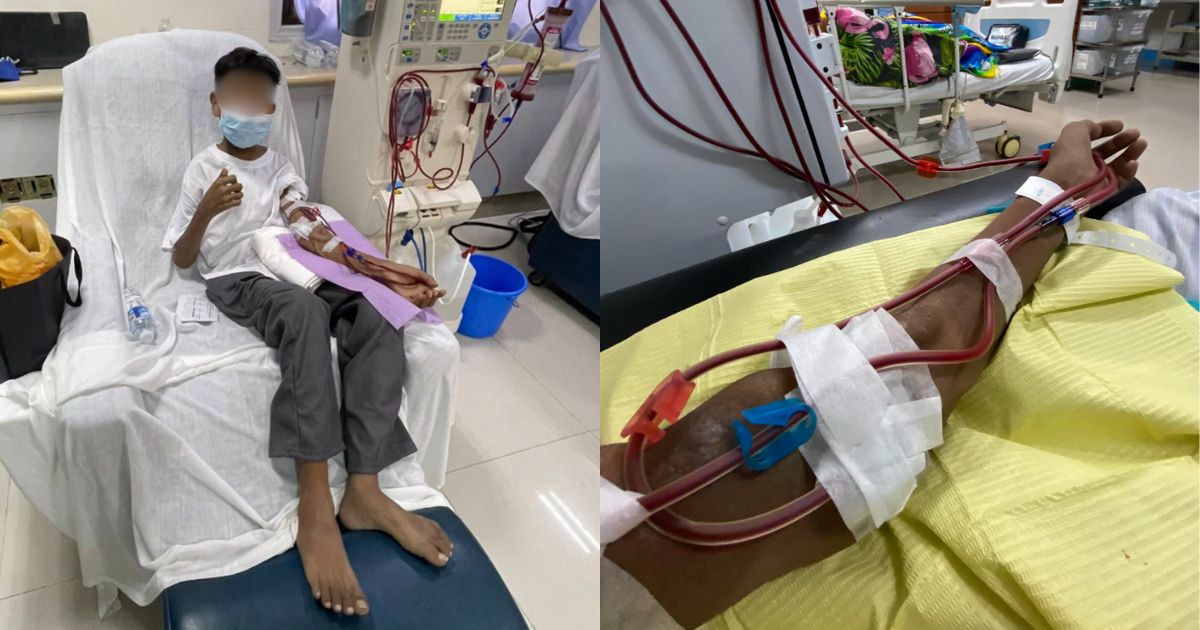
Cases of Chronic Kidney Disease (CKD) are rising in the Philippines, with more young people and even children now affected.
Sunday's Special Report episode of "Kapuso Mo, Jessica Soho" introduced Dodie from Conner, Apayao, who was diagnosed with CKD at a young age.
Dodie admitted that growing up, his diet mainly consisted of junk food and soft drinks.
"Kasi noong bata ako, 'pag nasa school eh puro sitsirya. Umaga, tanghali," Dodie said. "Hindi na po ako uminom ng tubig."
["When I was a kid, I always ate junk food at school in the morning and afternoon. I don't even drink water."]
Dodie was 15 years old when he was first diagnosed with kidney disease after experiencing swelling, back pain, and difficulty urinating.
By the time he sought a checkup in 2020, he was experiencing severe symptoms.
"Namaga po 'yung mukha ko nang sobra. Palaging masakit 'yung likod [ko]. Hindi na po nakakaihi. Masakit 'yung pag-ihi. Saka mahina po," he said.
["My face became extremely swollen. My back was always in pain. I couldn't urinate anymore. When I pee, it was painful and the flow was weak."]
Doctors immediately recommended dialysis, so Dodie now undergoes the treatment three times a week through an arteriovenous fistula in his arm.
"Kung hindi raw po ako mada-dialysis, baka hindi na raw po ako mabubuhay," he said.
["They said that if I didn't undergo dialysis, I might not survive."]
Dialysis cleans the blood by removing toxins, excess salt, and fluid when the kidneys can no longer function properly.
However, Dodie described the process as physically painful and emotionally exhausting.
"Pag-dialysis kasi kada salang mo, may dalawang tusok na titiisin mo hanggang sa matapos 'yung dialysis mo. Apat na oras mong titiisin 'yung itutusok sa'yo na dalawang malalaking karayom," Dodie said. "Pero tinitiis ko na lang po kasi nga po 'yun po 'yung dugtong ng buhay ko."
["Every time you undergo dialysis, you have to endure two needle pricks until the session is over. You have to bear two large needles being inserted into you for four hours. I have no choice but to endure it because that's what's keeping me alive."]
Dodie's mother, Medina, said the illness was difficult for their family to accept.
"Naaawa nga ako sa kanya. Palagi akong nagpe-pray, umiiyak dahil hindi ko talaga matanggap na nagkaganon siya," she said.
["I feel so much pity for him. I am always praying, crying, because I really can't accept that he ended up like that."]
Each dialysis session costs their family P3,500.
Because of his illness, Dodie had to stop schooling at Grade 12 and give up his dream of becoming a police officer.
"Gusto ko sanang maging pulis kaso wala na po, hindi na po siguro matutupad," he said.
["I really wanted to be a policeman, but I guess that dream won't come true anymore."]
He now relies on social media live streams to help cover medical expenses.
"Nagla-live po ako araw-araw para may mga taong inaasahan ko pong tumulong," Dodie said.
["I go live [on social media] every day, hoping there are people out there who might be willing to help."]
Dodie hopes to undergo a kidney transplant but said financial limitations make it difficult.
"Pangarap ko na sana maka-transplant na ko para maranasan ulit 'yung buhay na normal po. Pero dahil sa walang pinansyal, mahirap, hindi ko na lang po iniisip," he said.
["My dream is to undergo a kidney transplant so I can experience a normal life again. But because we have no money and things are so difficult, I just try not to think about it."]
Another patient is Sean, a nine-year-old from Iligan City who was diagnosed with Stage 5 CKD.
His father said they noticed Sean becoming easily exhausted and having difficulty breathing.
"Sabi ng doktor na stage 5 na at kailangang i-dialysis ang anak," he said, adding that Sean's kidneys were no longer functioning.
["The doctor said he's already at Stage 5 and my son needs to undergo dialysis."]
Doctors later explained that Sean had weak kidneys since birth, which worsened due to frequent consumption of junk food.
Sean now undergoes dialysis three times a week, and despite his condition, Sean continues attending school with an adjusted schedule.
Health experts explained that CKD is a progressive and irreversible disease, often detected only in its later stages when dialysis is already needed.
Common causes include diabetes, hypertension, excessive consumption of soft drinks, and frequent intake of salty, sweet, and processed food.
To help address unhealthy eating habits, the Department of Science and Technology–Food and Nutrition Research Institute is promoting Front-of-Pack Labelling, which shows clear warnings on packaged food high in sugar, salt, and fat.
Health authorities continue to remind the public to drink enough water, limit unhealthy food intake, exercise regularly, and undergo medical checkups, especially those with diabetes or high blood pressure.
Kidney disease may have silent symptoms, but doctors warn that once it progresses, its impact can be life-changing. —JCB, GMA Integrated News

