

 GMA Brandtalk
 Tracking
 Archives

Snake bites: Immediate actions and prevention tips
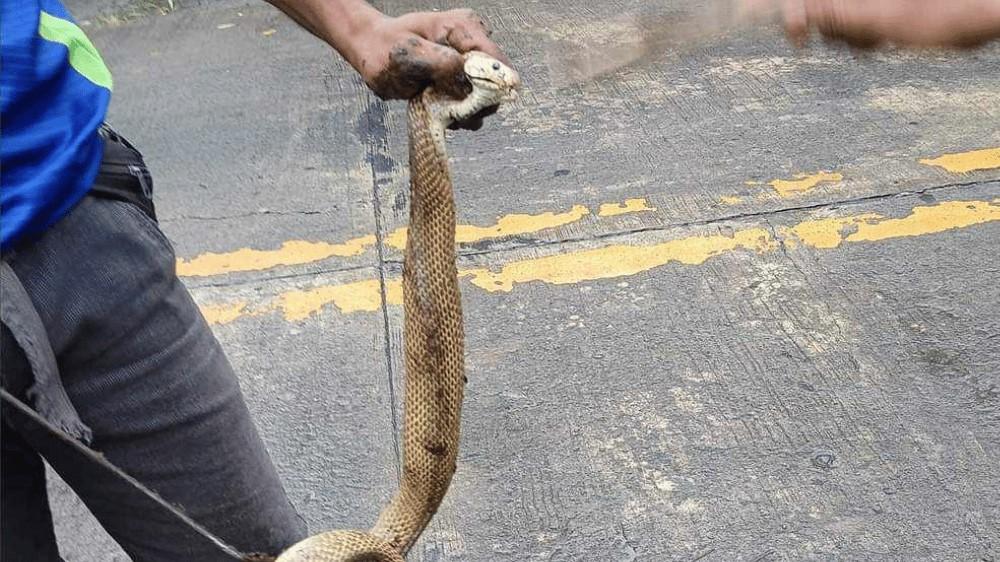
The World Health Organization (WHO) estimates that 4.5 to 5.4 million people globally are bitten by snakes each year, with 81,000 to 138,000 of them dying as a result of complications.
In the Philippines, a student athlete recently fell victim to a cobra bite in Sultan Kudarat after it was discovered hiding inside her bag.
Fortunately, the snake was unable to release its venom, which can cause rapid paralysis, respiratory failure, and severe local tissue necrosis.
Since you can never tell when you will encounter a snake, how can you know if it's dangerous? And what do you need to do if you end up getting bitten?
Venomous vs. Non-Venomous
According to Bali Reptile Rescue, venomous snakes and non-venomous snakes have different physical characteristics.
“Bites by venomous snakes can cause paralysis that may prevent breathing, bleeding disorders that can lead to a fatal hemorrhage, irreversible kidney failure, and tissue damage that can cause permanent disability and limb amputation,” the WHO said.
Venomous snakes often have triangular-shaped heads that house their venomous glands, with vertical, cat-like pupils and short, stubby tails.
They also have vibrant and distinctive patterns and are more defensive when threatened.
Non-venomous snakes have rounded heads with round pupils and longer, tapered tails.
They often have the same color and patterns with venomous snakes, although they appear less pronounced.
According to the Cleveland Clinic, a person is more vulnerable to snakebites if they:
- Work or play outdoors
- Live in a warm, desert or tropical climate
- Handle snakes
- Live in a rural area
They also advised the general public to always be careful with their hands and feet to ensure no snakes are hidden anywhere and to always be aware of their surroundings.
Cleveland Clinic also advised wearing high-top boots and long pants when working with dense vegetation and avoiding handling or interaction with snakes if encountered.
Considering these factors, what does a person do when they end up encountering a snake?
First, do not panic.
The Bali Reptile Rescue recommends no sudden movements and slowly making your distance and backing away at least six feet in case you encounter a venomous snake.
It said it was best to avoid handling the snake, regardless of whether it is venomous or not.
Cleveland Clinic also listed the symptoms of a venomous snake bite:
- Puncture wounds from the bite mark on your skin.
- Pain (sharp, throbbing, burning) at the site of the bite or throughout your limb or area of your body that has a bite. Not all venomous snake bites cause pain.
- Color changes to your skin.
- Sweating and/or drooling.
- Nausea and vomiting.
- Headache, dizziness and blurred vision.
- A metallic taste in your mouth.
Severe symptoms:
- Bleeding that doesn’t stop (abnormal blood clotting).
- Low blood pressure, a faster heart rate and a weaker pulse.
- Difficulty breathing.
- Muscle weakness or twitching and numbness in your face and/or limbs.
- Severe swelling
First aid and treatment
After a suspected venomous snakebite, the WHO recommends the following actions:
- Immediately move away from the area where the bite occurred.
- Remove anything tight from around the bitten part of the body to avoid harm if swelling occurs.
- Reassure the victim, as most venomous snake bites do not cause immediate death.
- Immobilize the person completely and transport the person to a health facility as soon as possible.
- Applying pressure at the bite site with a pressure pad may be suitable in some cases.
- Avoid traditional first aid methods or herbal medicines.
- Paracetamol may be given for local pain (which can be severe).
- Vomiting may occur, so place the person on their left side in the recovery position.
- Closely monitor airway and breathing and be ready to resuscitate if necessary.
If treated promptly, snake bite injuries are curable.
Safe and effective antivenoms are available, the WHO said, but challenges remain.
“A significant challenge in the manufacturing of antivenoms is the preparation of the correct immunogens (snake venoms)… A combination of strategic and risk-based placement of antivenoms, suitable healthcare staff training, availability of affordable, safe, and effective antivenoms and equipment, along with the promotion of responsible health-seeking behaviors, can lead to better outcomes for snakebite patients and a considerable reduction in the impact of snakebite-related morbidity and mortality,” it said.
“However, the combination of poor geographical access to and inadequate health services in remote communities hinders the chance of receiving appropriate treatment,” it added. —VBL, GMA News

