

 GMA Brandtalk
 Tracking
 Archives

Ateneo researchers develop card game combining Filipino herbal medicine, organic chemistry
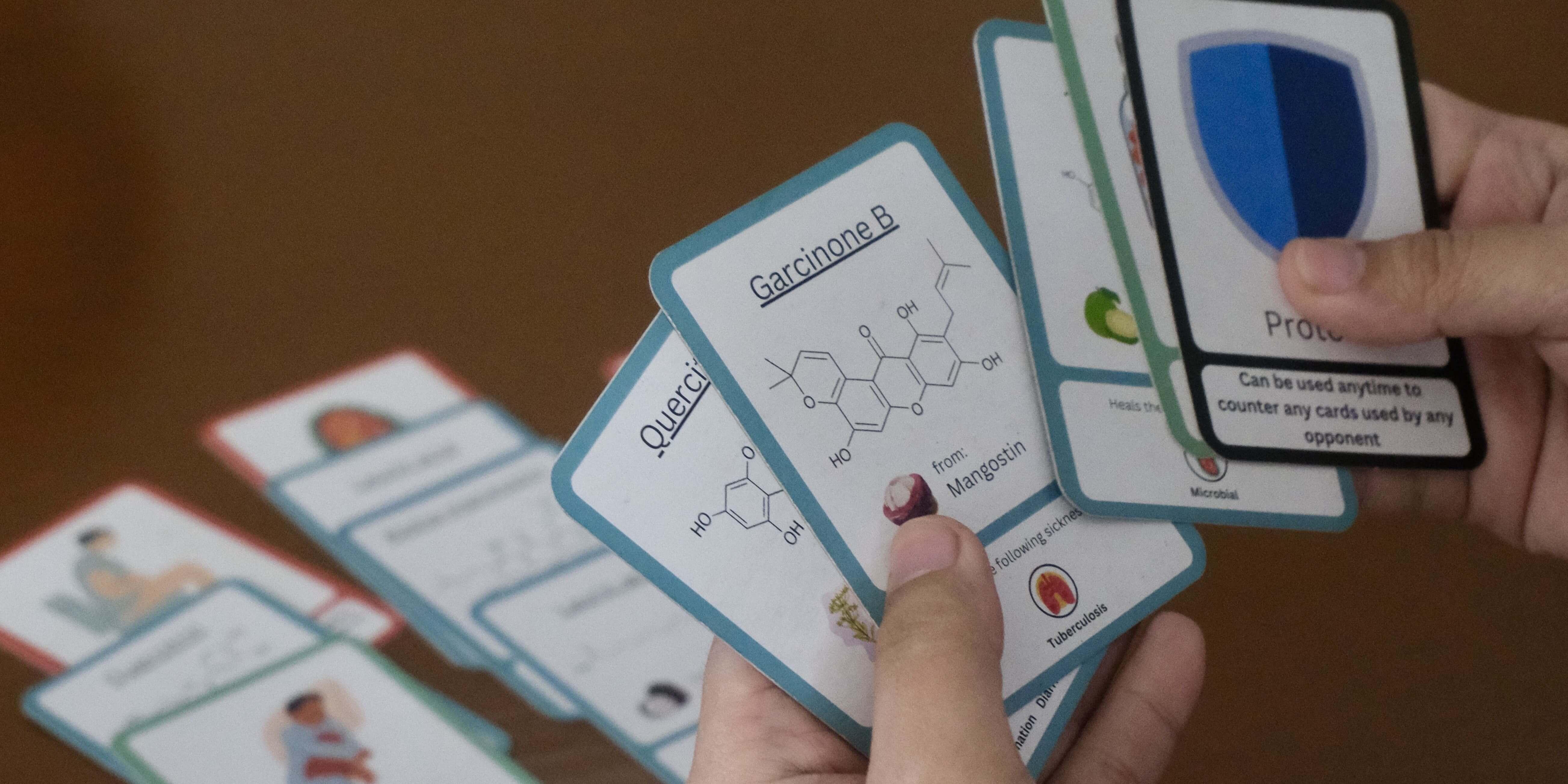
Researchers from the Ateneo de Manila University have developed an educational card game that teaches organic chemistry through traditional Filipino herbal medicine, offering students a hands-on way to learn science while highlighting the country's rich medicinal heritage.
Developed by researchers Maryjane Magsino, Inah Marie Rivera, Armando Guidote Jr., and Genejane Adarlo, Herbularyo is a fast-paced card game that introduces players to medicinal plants commonly used in the Philippines and the organic compounds responsible for their therapeutic properties.
A typical game lasts only five to 10 minutes, making it suitable for classroom learning and outreach activities.
The game draws inspiration from the Filipino albularyo or folk healer, with players taking on the role of traditional healers tasked with curing illnesses using medicinal herbs and their active compounds. The game also incorporates cultural concepts such as binat (relapse), sumpa (curse), and himala (miracle), blending Filipino traditions with science-based learning.
Players will match medicinal herbs to illnesses while determining the organic compounds in each plant. This encourages players to strengthen their understanding of chemistry concepts through interactive play rather than memorization.
The medicinal plants featured in Herbularyo were sourced from the “Encyclopedia of Common Medicinal Plants of the Philippines Volume 3,” which was published through a project supported b the Philippine Institute of Traditional and Alternative Health Care (PITAHC).
According to Magsino, the project aims to bridge traditional Filipino knowledge and modern scientific research.
"We wanted to make a game that not only teaches organic chemistry and Filipino traditions, but also how these areas of knowledge can inform each other," Magsino said.
"We wanted to underscore the value of traditional Filipino medicine that has stood up to scientific testing yet is within easy reach, practically in our own back yards." —Jade Veronique Yap/CDC, GMA News

