

 GMA Brandtalk
 Tracking
 Archives

ADVERTISEMENT
Filtered By: Lifestyle
Lifestyle
Cloudy with a chance to snorkel in the Great Barrier Reef
GREAT BARRIER REEF, Australia – Slowly they came into view, semi-circular patches of brown and white on the fringes of aquamarine waters staring out of the deep blue ocean. Thankfully, the carpet of fluffy clouds parted just enough to give the plane’s passengers a glimpse of the underwater wonders from the air.
Finally, the Great Barrier Reef! Enchanted in my half-asleep state, I gazed dreamily at the coral formations as they emerged from the edge of the Coral Sea, on the eastern coast of Australia. Despite the exhaustion of traveling overnight from Manila, I was giddy at the prospect of seeing the world’s biggest reef system.
A day before the start of the 12th International Coral Reef Symposium in Cairns this week, journalists covering the event were invited to visit the marine park in the company of eminent scientists attending the meeting. We were not quite sure what to expect, though, and there were even rumors the trip might be canceled due to inclement weather.
Normally sunny and cool at this time of year, Cairns was rainy and a little too warm for what was supposed to be winter in northern Australia. Sunday dawned cloudy and somewhat wet, but the intermittent drizzle failed to dampen our enthusiasm.
We piled into the Silverswift, a posh 29-meter catamaran with comfortable lounging tables and seats that were quickly filled up. Coffee, tea, and muffins were waiting for us on the second level, but the first order of the day was seasickness pills. Groan. I remembered the choppy seas and white-capped waves as we were making our descent to Cairns two days earlier, and I knew we would be in for a rough time.
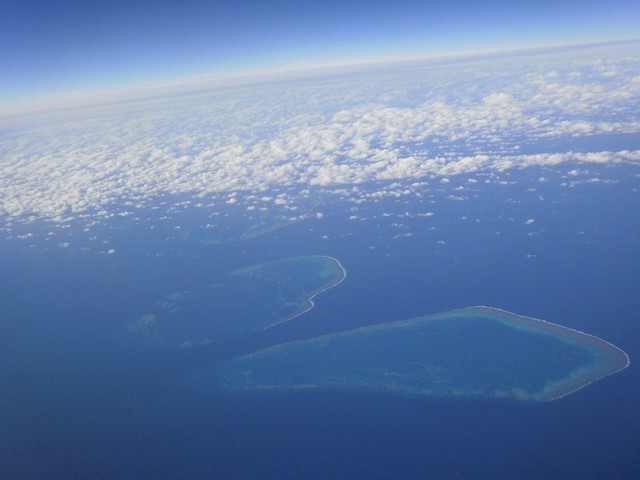
An aerial view of the Great Barrier Reef in Australia. Yasmin Arquiza
Before the vessel left the port, the crew did give ample warning about the conditions at sea and gave everyone a chance to back out if they felt they were not up to the stomach-churning challenge. It was like a comic wedding scene, when the priest gives his spiel about forever holding your peace. I’m pretty sure some journalists regretted not saying their piece by the time we got back.
Terry Hughes, the friendly convener of the forum and one of Australia’s most prominent coral scientists, gave a short talk about our destination before going around to personally meeting the journalists. He had enjoyed his brief visit last month to the Philippines, one of the countries that has the highest diversity of corals in the world, and he was glad to see three Filipino journalists in the group.
As the Silverswift started cruising out of the bay, there was time enough to admire the verdant stands of mangrove and the jagged outcrops lining the coast. But as soon as the boat charged ahead at 32 knots, the crew went on full alert for unwitting passengers who might soil the cabin’s carpet. Barf bags tucked to their waist, they led the really sick ones to the open-air section on the second level.
The hardier ones kept the buzz going inside the roomy lower cabin where our group had commandeered a table. It was a roller coaster ride, the boat cutting across the turbulent seas and landing forcefully as the waves slapped the vessel incessantly. At one point, someone shouted something about a whale sighting, but most of us were too groggy to care, and were glad when the boat finally dropped anchor.
We had reached Flynn Reef – 68 kilometers from Cairns, a crewmember told me – which is one of the most remote reefs in the chain. Compared to the reefs closer to the mainland, Flynn and other outer reefs are the most pristine because they are not as exposed to destructive human activities, I was told.
Out here, with no land in sight and just a couple of boats for company, the vital statistics of the Great Barrier Reef seem even more staggering: about 3,000 reefs and 900 islands in all, stretching 2,300 kilometers from north to south. That’s more than the length of the entire Philippines from Batanes to Tawi-Tawi.
On the deck, the slight drizzle and cool air caused goose bumps, and I wondered whether I could manage to go into the gray waters at all. The invite had indicated 25-degree, but on this cloudy day, it seemed five degrees cooler. Only the thought of facing snide remarks back home if I didn’t make even a feeble attempt kept me from chickening out.
And so together with our Australian host Jodie Rogers and Philippine Daily Inquirer reporter Kristine Alave, I suited up and gladly put on a bright yellow life vest for what seemed like a slightly scary adventure. Laurence McCook, a senior park official, volunteered to be our “snorkel taxi” and we took turns braving the unruly waters and nasty currents to catch a glimpse of the reef’s riches. 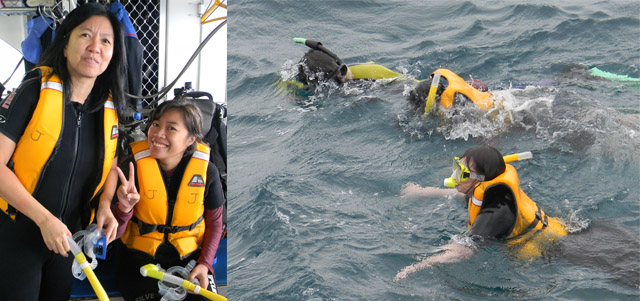
The author (L) with Kristine Alave try snorkelling at the Great Barrier Reef. Henrylito Tacio
Overcast skies meant the colors of the reef didn’t show up as magnificently as it would have if we had been blessed with sunny weather, but the marine life below the surface were a wonderful sight to see nonetheless. Everything seemed huge – the undisturbed coral heads and large fishes fit for a feast. The crew had mentioned some destruction from a previous cyclone, but luckily, there was no rubble here.
Just below the boat, a humongous humphead wrasse swam right up to the platform for snorkelers or divers. The crew had dubbed it Nigel, and while I waited for my turn with our snorkel taxi, I clung to the side of the platform and watched Nigel swim contentedly among much smaller fish – a bluish hue among the yellows and grays in the gloomy depths.
All too soon it was over, and I was glad the wetsuit did its trick in keeping me warm in the cool waters of the reef. Despite the brief foray, we finally had our bragging rights in having explored the Great Barrier Reef, and were even more delighted that the trip back to shore was not as jarring; it even lulled me to sleep.
The following day, local television reported that one of the tourist boats sprung a leak just before heading out to the reef. A tourist who was interviewed said they were just grateful the accident did not happen while they were out at sea.
I really shouldn’t complain. – VS/TJD, GMA News
Recommended related stories:
"Scientists warn of dire future for world’s coral reefs"
"Destructive fishing on the wane but pollution in PHL coral reefs increases"

