

 GMA Brandtalk
 Tracking
 Archives

ADVERTISEMENT
Filtered By: Lifestyle
Lifestyle
Remote island St. Helena on brink of tourist invasion
+
Make this your preferred source to get more updates from this publisher on Google.
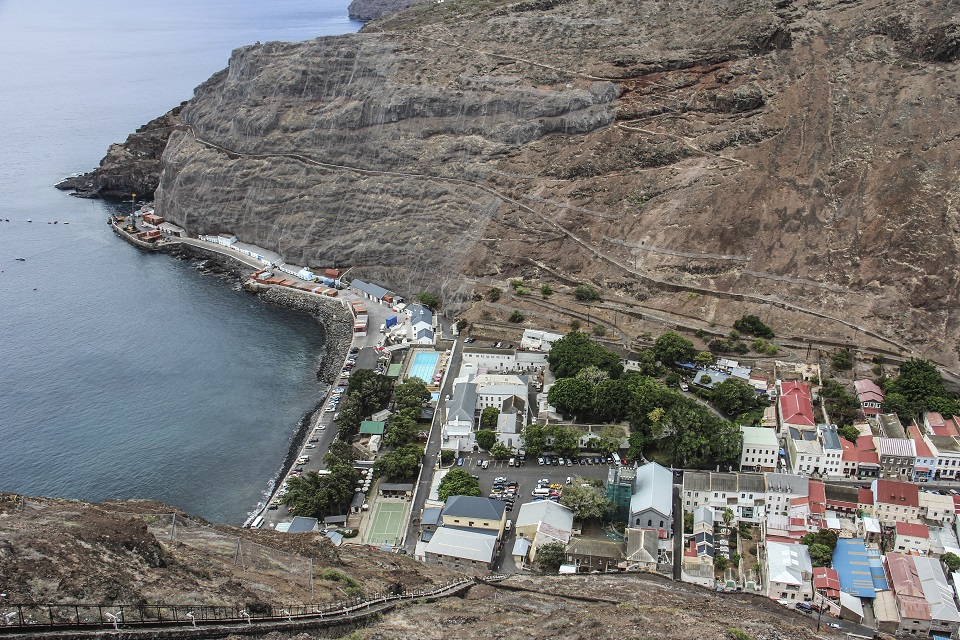
This picture taken on March 11, 2015 shows Jamestown, the capital of the South Atlantic island of St. Helena. Framed by cragged volcanic cliffs soaring 800 meters (2,600 feet) above sea level, the island is 122 square kilometers in area. It has 4,200 inhabitants, with 850 living in Jamestown, the only port, located on the island's northwest coast. AFP PHOTO/Jean Liou
For years only accessible by boat, St Helena has just one bank, no cash machine and no mobile telephone reception.
Sailing out to St. Helena from Cape Town every three weeks, the boat journey takes five long days. Because the island is so remote, only 1,500 tourists visit each year.
But the tourism office hopes the weekly 4.5-hour passenger flights scheduled to start from Johannesburg in February 2016 will change that—and the island's economy—forever.
Its director Cathy Alberts says she expects 30,000 tourists a year, and voices hope that the change will help St Helena become self-sufficient.
Perched in the Atlantic half-way between Africa and South America, the island relies on Britain for most of its income—£60 million (€83 million, $89 million) a year—but has its sights set on financial independence.
"We talk about 600 people per week. So it's not that much," Alberts said. "It is doable, absolutely. As the demand increases, people will start providing the services."
Visitors will have several days in St Helena, ample time to see the local sights, including the house where Napoleon, France's greatest military hero, died on May 5, 1821.
But not everyone is happy with the change.
The idea of crowds of camera-wielding tourists worries many of the island's 4,200 residents, who worry the island cannot meet such a demand.
"You can imagine the chaos on the roads," said Niall O'Keefe, who heads local development company Enterprise St Helena.
Island life threatened?
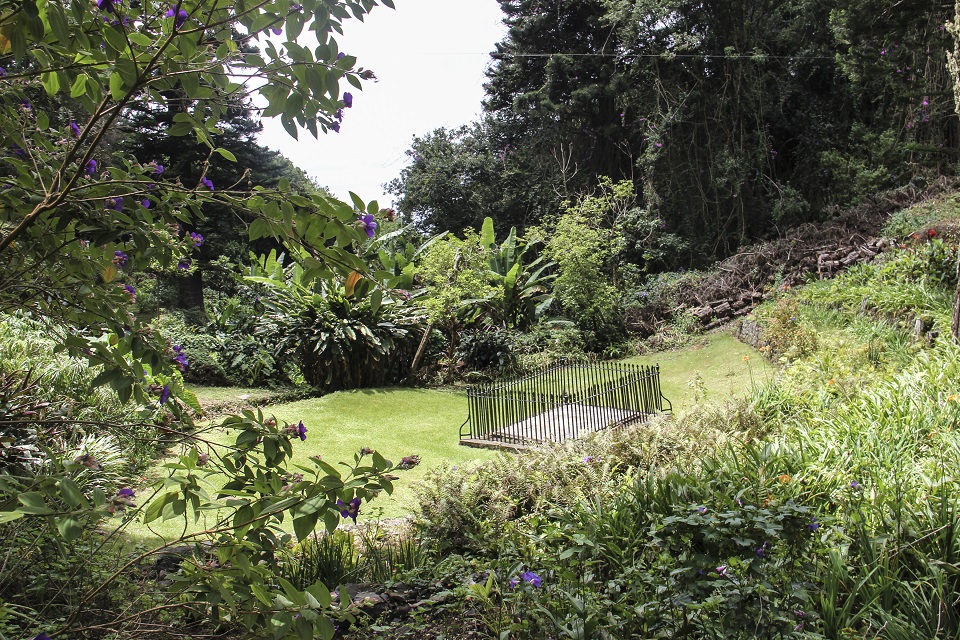
Photo taken on March 12, 2015 shows Napoleon Bonaparte's tomb in Jamestown on the British island of St. Helena in the South Atlantic Ocean. Bonaparte was exiled to St. Helena in 1815 and lived there until his death six years later. AFP PHOTO/Jean Liou
"In 10 years, I see St Helena livelier, with more people, more restaurants, more shops," the island's governor Mark Capes said.
"But it will not be a big bang, it will not happen overnight."
Hoteliers are lobbying for a second flight to Britain, home to most of the island's tourists.
"To have two flights a week, we will need to double our hotel capacity," finance official Dax Richards said, adding that a surge in demand would swamp St Helena's meagre facilities.
Currently, the island offers just 85 tourists beds for tourists and a few self-catering units.
Beds are just part of the problem. Because of its remoteness and dependence on funding, the island's infrastructure is lacking.
Some in the tourism industry worry that well-heeled visitors will be disappointed by unprofessional service—or problems like garbage in the Jamestown moat—and vent their disappointment on influential travel websites.
Others fear something worse: that the island could lose its soul.
"I hope we don't lose our cohesion, our sense of solidarity," tour guide Basil George said. "That's my fear with the airport, not the airport itself."
Building the airport has already disturbed the island, which is framed by craggy volcanic cliffs soaring hundreds of metres above sea level and enjoys a mild climate despite being located near the equator.
A construction crew of 600 has had a big impact during the four-year project, which included chipping away at a mountain and backfilling an entire valley.
Today the runway, 1,950 meters long and 45 meters wide, ends just before the cliff drops a dramatic 300 meters into the Atlantic Ocean.
Funded by the British government and built by a South African construction company, the airport cost £250 million (€350 million, $370 million).
Airport heralds revolution
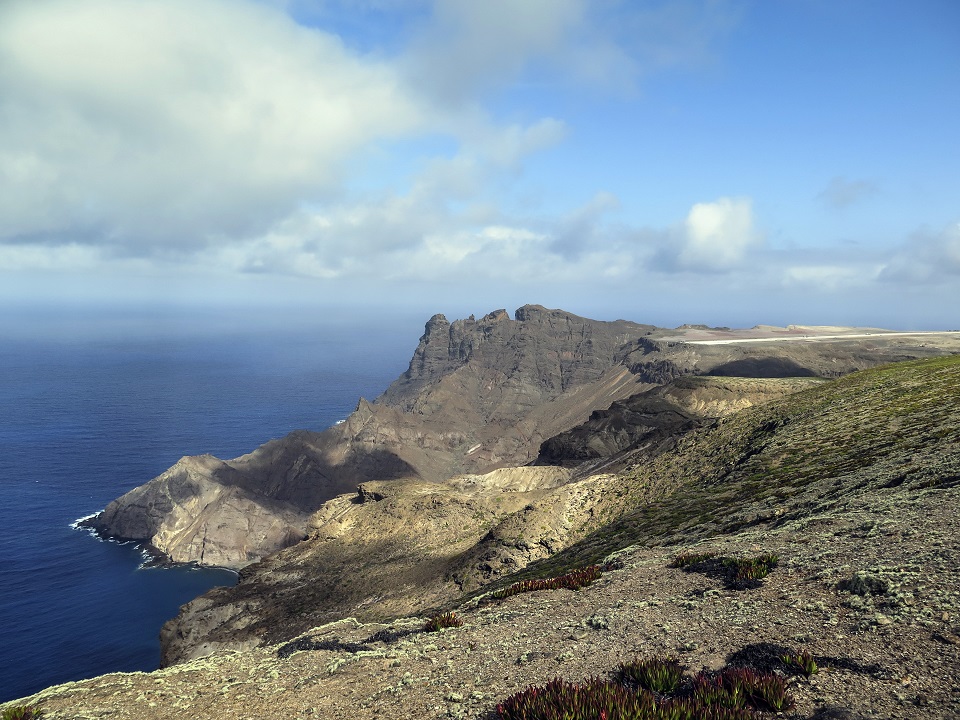
View taken on March 15, 2015 shows the edge of the runway of the future airport of the island of Saint Helena currently under construction in Jamestown. AFP PHOTO/Jean Liou
But the runway being built at the island's eastern tip is not long enough to accommodate larger aircraft flying from Europe.
The airport project also includes the construction of a 14-kilometer (nine-mile) access road, which leads into a valley near the capital Jamestown, where a new wharf is being built for £20 million (€28 million, $30 million).
Before the first plane lifts off, cell phone service is expected to start—another major upheaval.
Whatever locals think, they must soon accept the inevitable reality that after years in isolation, St Helena is joining the rest of the world. — AFP

