

 GMA Brandtalk
 Tracking
 Archives

7 ways to stretch your travel budget in Japan
You might have snagged the ultimate airfare steal to Osaka or Tokyo, but as the saying goes, almost everything in Japan is expensive. The always-on-time trains cost at least ¥120 (currently about P48.50) to ride, while cheap meals like a small bowl of gyudon or ramen will set you back at least ¥500-¥600 (P200-P240).
While these are just the cost of living in a first-world country, there are ways to stretch your budget in the Land of the Rising Sun.
Packaged train passes
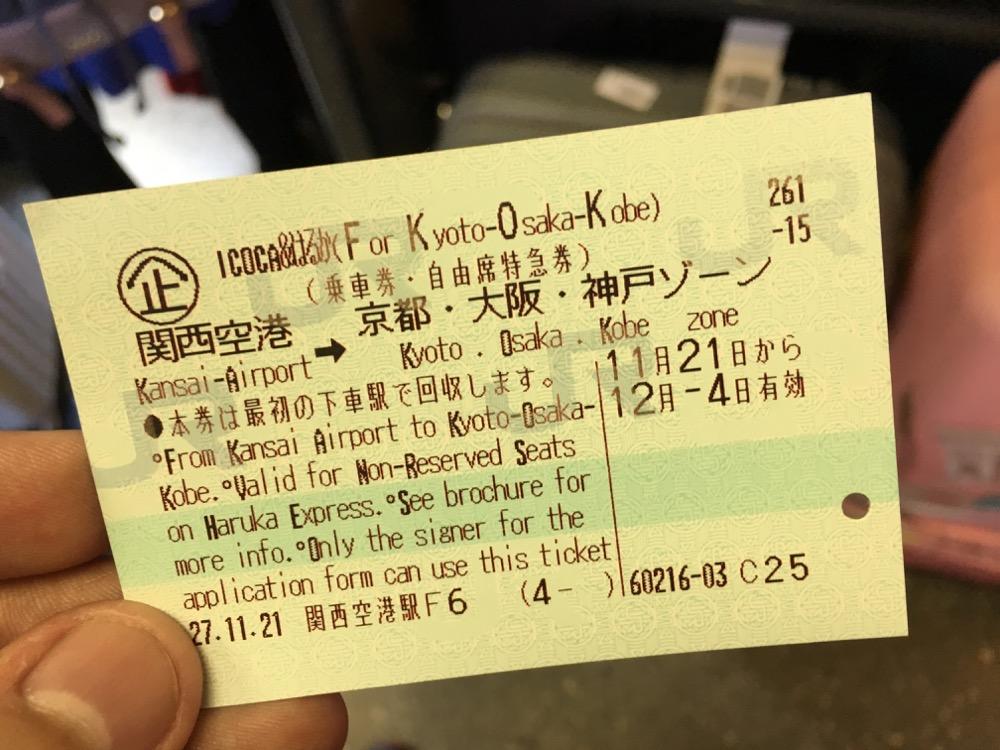
For Filipinos choosing the Kansai area (Osaka/Kyoto) as their base camp, one of the most cost-effective packages is the Haruka and ICOCA combination pass. Haruka, the airport express train from Kansai International Airport to Tennoji, Shin-Osaka or Kyoto, already costs ¥3,370 (P1,360) for a one-way trip to Kyoto Station; together with the ¥1,500 (P605) credit inside the ICOCA card, the value of the ¥4,060 (P1,640) round-trip pass (¥3,030/P1,223 one-way) is already more than double what you pay for if purchased separately.
The ICOCA card can be used on subways, trains, buses, vending machines and convenience stores inside Japan. Separate passes like the Kansai Area Pass and Kansai Wide Area Pass of Japan Railways (JR) allow unlimited rides on JR trains within a specified network.
The Kansai Area Pass can be bought for one day (¥2,300/P929) to four days'(¥6,500/P2,625) use, but is not valid on the bullet trains (Shinkansen) or reserved seats in the Haruka. The fixed, five-day Kansai Wide Area Pass (¥9,000/P3,635) costs more but has a wider network compared to the Area Pass and can be used to ride on non-reserved seats in the Sanyo Shinkansen.
Kyoto bus passes
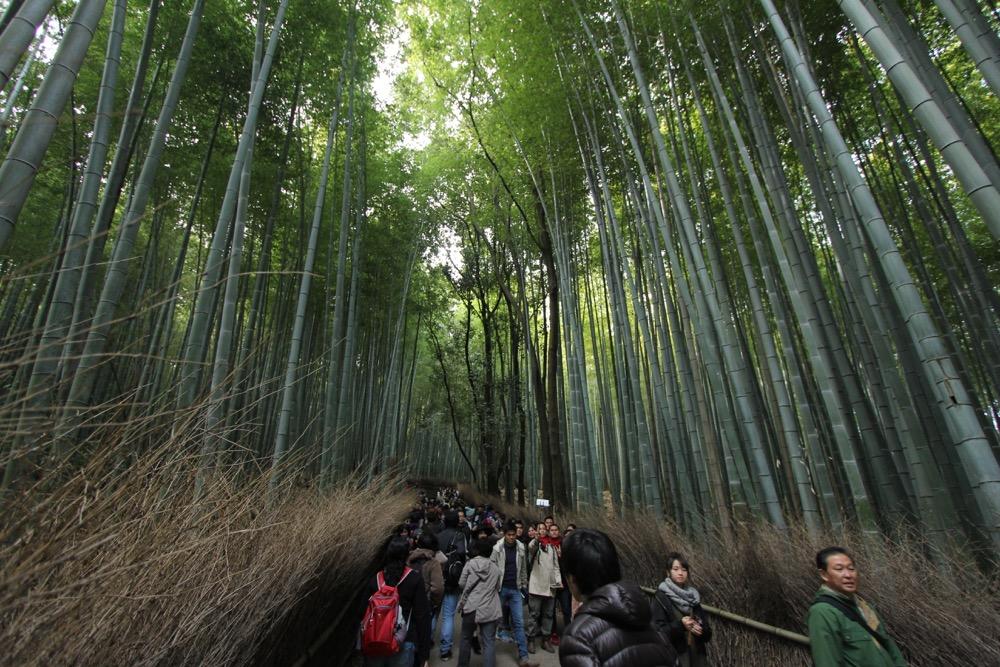
Tourists who want to maximize their transportation budget while visiting the numerous temples and shrines of Kyoto would find it wise to buy the one-day Kyoto bus tickets. The ¥500/P202 Roku bus pass is enough to visit the Nijo Castle, the famous Kinkaku-ji Shrine (Golden Pavillon), the Zen temple Ryoan-ji and Arashiyama and its picturesque Bamboo Grove. Without the pass, passengers must pay ¥230 (P93) for every bus ride, either in cash or smart card (ICOCA, Suica, Pasmo, etc.), once they arrive at their destination.
Cup noodles and Onigiri
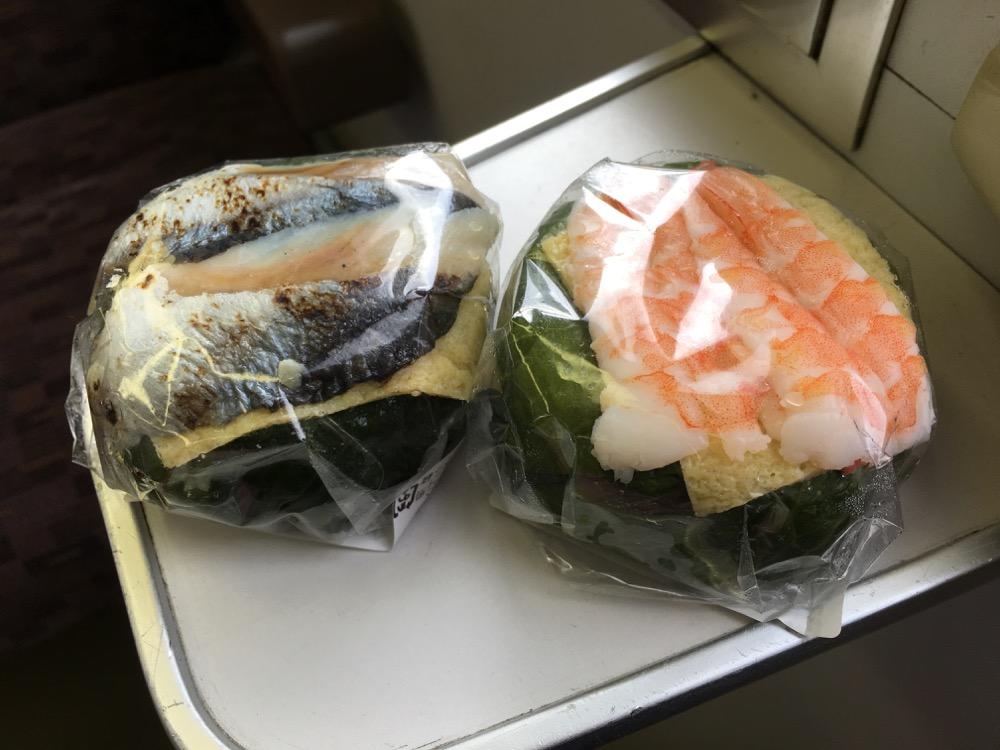
For as little as ¥160-200 (P65-81), a cup of Japanese instant noodles or an Onigiri can satisfy one’s hunger until the next big meal. The Onigiri, rice wrapped in seaweed with salmon, meat or other fillings, can be eaten as a quick snack inside the train station or in the train itself. The fillings of the triangular-shaped Onigiri’s are written in Japanese, but picking an unknown flavor may be an adventure in itself.
Potable tap water
Drinking water straight from the faucet is something very uncommon for us Filipinos but is very much the accepted practice in Japan and other developed countries. If you do not want to bring a metal canister from Manila, buy a good size bottle of mineral water (550 ml) and refill it at the tap or public water fountain to easily save a few thousand Yen.
Save 8% by buying in bulk
Foreign tourists can also save while shopping; the trick is to buy in bulk and remember the minimum required amount to spend on consumables (¥10,001/P4,038) and non-consumables (¥6,001/P2,423) to be eligible for Japan’s sales tax (8%) refund. Not all stores offer the tax refund scheme but major shopping establishments like Uniqlo, Don Quixote (DonKi) and Yodobashi Camera do; visitors must simple present their passports before paying and accomplish the necessary paperwork.
Balance paid attractions with free ones
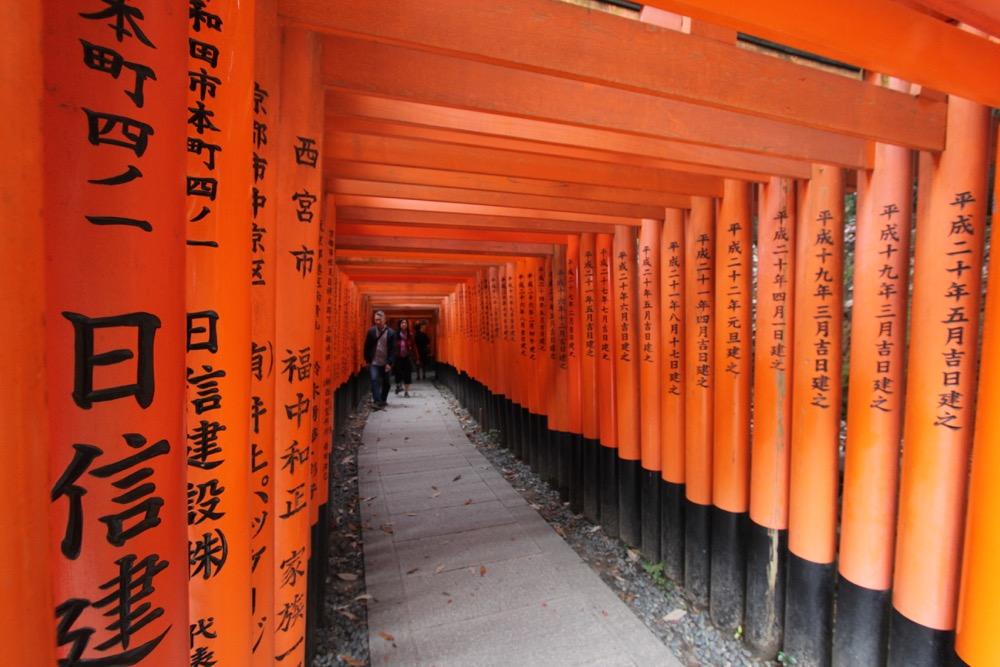
For every UNESCO Heritage site with entry fees: Kinkaku-ji (¥400/P153 for adults), Todai-ji (¥500/P202) and Horyu-ji (¥1,500/P606 for 3 attractions), there are venues and landmarks that are free to visit. The Torii-laden Fushimi-inari is only two local stations away from Kyoto Station while the Nara Deer Park in front of the entrance to Todai-ji is filled with cute, free-roaming deers, considered to be the messengers of the gods in Shintoism.
Also within the Nara Deer Park is Kofuku-ji and its famous three and five-story pagodas while in Osaka, Dotonbori is a spectacle of displays and lights and features famous characters such as the Glico Man and the Kani Doraku Crab.
Keep a journal of daily expenses
This tip is not limited to Japan trips but on any domestic or international one as well. Keeping track of where your pocket money goes is not only a good habit but also helps keep expenses within budget and acts as a pseudo-guide on how much (or little) you can spend on food, transportation and sightseeing in the next few days. — BM, GMA News

