

 GMA Brandtalk
 Tracking
 Archives

Oslob without whale sharks
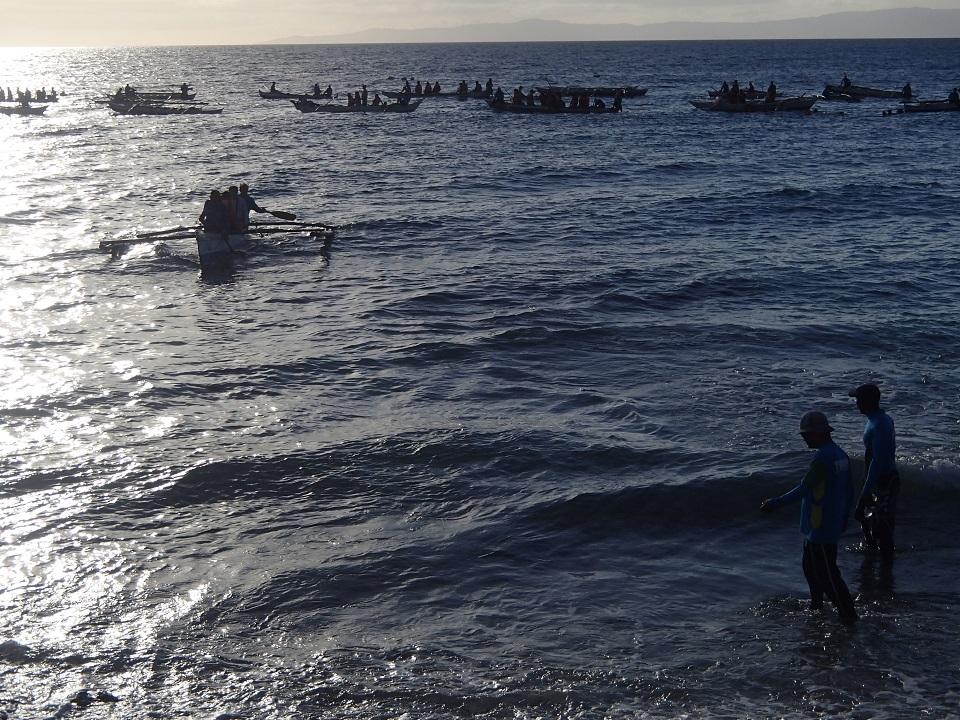
Our first day in Oslob was spent on nearby Sumilon island, where the sand was soft and the water an intoxicating shade of blue. Our resort had a beach, too, but it was too stony. The island was clean and there were few people around, so we took advantage and spent the afternoon swimming against the waves.
Back at the resort, there was dinner of grilled seafood, followed by stories and beer in a dark hut, the steady crash of waves in the background. We stayed up late, not minding the occasional bugs—a small price to pay for the chance to escape the city.
It was the perfect recipe for falling into a deep sleep, the kind that makes you oblivious to the sunlight the next morning.
Having slept through our alarm, we were the last to get on the shuttle that would take our group from our resort to Barangay Tan-awan, where sighting whale sharks is "99% guaranteed."
As it turned out, waking up early was not necessary to see the whale sharks. Tourists can see the whale sharks all year round (except on Good Friday) from sunrise until noon. It sounds like a good deal, and this is the main tourist attraction in Oslob, a coastal town a few hours away from Cebu City. However, it’s much more enjoyable to experience the town without the whale sharks.
Environmental groups have pointed out that feeding whale sharks is against the protocols on whale shark watching. Save Philippine Seas explains that feeding them frozen fish means the nutritional content of their diet is reduced. It also keeps them from going into deep waters, which in turn affects their biological activities. Despite this, the practice continues, keeping the whale sharks and tourists coming.
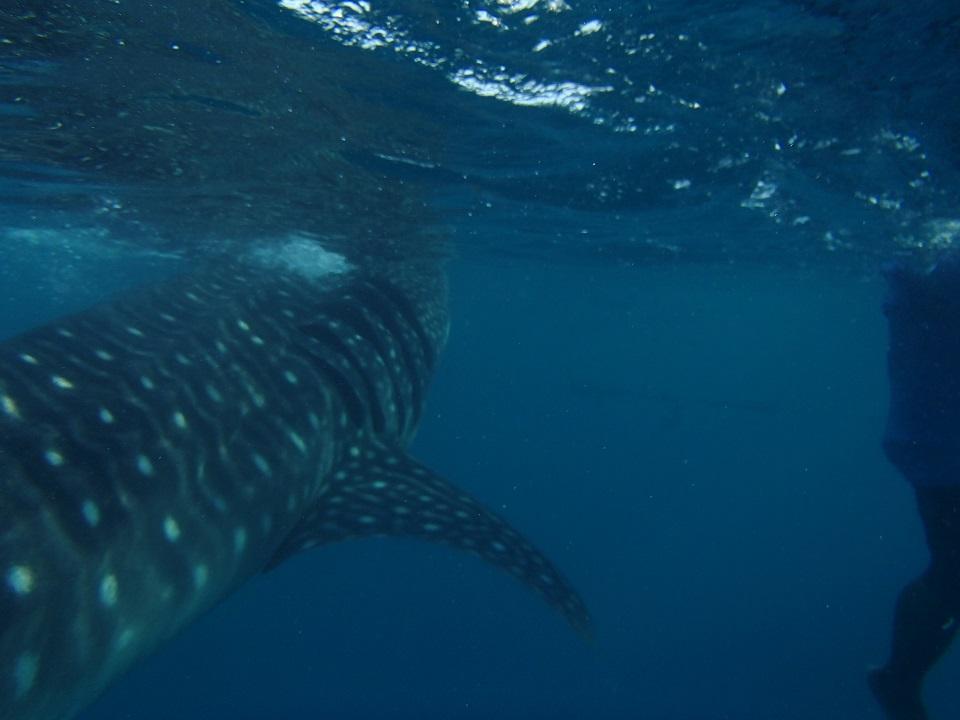
It was a few days before Christmas, a very busy time at the whale shark interaction area. Upon arrival, we were led to the ticket booth. Prices varied with regular rates as well as discounted rates for Filipinos and Oslobanons: P500, P300, and P30 respectively for whale shark watching from the boat. Swimming and scuba diving would cost a bit more.
After payment, we were brought to a row of benches where, once all seats were occupied, a young boy delivered a quick orientation. Despite his apparent mastery of his script, we didn't get the feeling that he really knew what he was talking about. It sounded more like a home TV shopping spiel than an orientation on whale sharks. Behind him were two posters on whale shark interaction guidelines. One stated people must keep a distance of four meters from the shark, while the other said it should be five to six meters.
Any questions about the correct distance proved not to matter, as once we were out in the boats, people would swim right next to the whale sharks. As far as we could tell, there were no consequences from the uniformed guides (called Sea Wardens according to their shirts).
In fact, it was these guides who would encourage the tourists to swim near the sharks. They would also work in teams for the perfect underwater shot—one sea warden would bait the whale shark with raw fish, another would push the tourists underwater, and a third would take the picture. Taking underwater photos with the whale sharks seemed to be the main goal for the sea wardens. "Isa pa sir para sulit yung bayad niyo!" one said as he pushed a tourist down a third time.
Keeping distance from the whale sharks was not the only guideline being ignored. While the poster said there should be at most six tourists to a whale shark, the number was closer to six boats. There were several whale sharks at once, surfacing for the krill that was being thrown from the boats (and filling the air with a slimy smell). It wasn't even necessary to swim to see the whale sharks—they were right there.
This was very different from whale shark watching in Donsol, Sorsogon, where there is no guarantee of seeing a whale shark. There, the boat will go far from the shore, where a Butanding Interaction Officer will tell you that there is no way of knowing when a whale shark might surface. There, they do not feed the whale sharks, who eat mostly plankton and krill. You wait patiently, sometimes for hours, sometimes for days, hoping a whale shark will come by. We had been there a few years back, and the experience of finally seeing the whale shark was dreamlike.
In Oslob, it felt strangely ordinary. They were everywhere, and would be there every day, all year round as the locals promise. At one point, the area was so crowded that a whale shark bumped its head on one of the boats. Not such a big deal, perhaps, but certainly not the best situation. "I was more afraid of what the humans were going to do to the whale sharks than what the whale sharks were going to do to the humans," said my daughter, as the boat made its way back to shore.
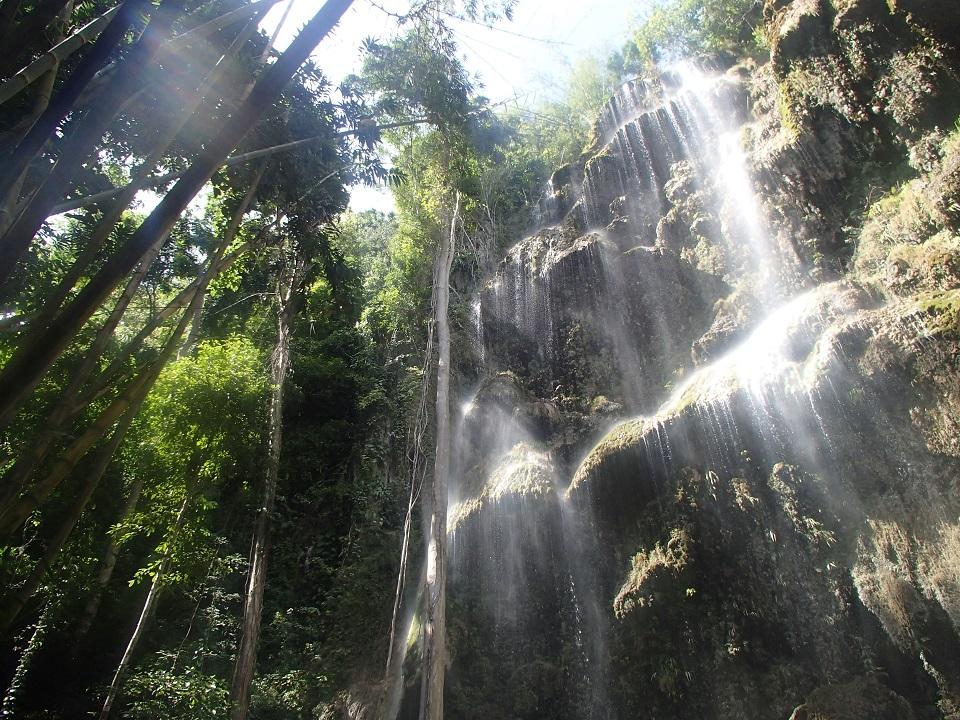
That afternoon, we took a bus to see the Tumalog Falls, just 15 minutes from the resort. There were motorcycles that you could ride, but we managed the short and very steep hike down. The road disappeared into a bamboo grove, where we could feel already feel the mist from the waterfalls. There was a manmade pool, where some tourists were swimming, but the main activity, again, seemed to be taking pictures. Groups would take turns posing under the falls, which formed shimmering umbrellas. Sometimes, when the light was just right, you could see rainbows. On the way out, there was a fish spa where you dip your feet and try not to laugh as the tiny fish nibbled on your dead skin.
We returned to the resort for more grilled seafood, more beer, and more stories in the dark hut by the beach. Without the whale shark watching, the trip to Oslob was a simple one. Clear water, fresh food, a short hike and some picturesque falls. Nothing epic, but still a better experience than the tangle of tourists, boats, and whale sharks. — BM, GMA News

