

 GMA Brandtalk
 Tracking
 Archives

Music and beauty at Vienna’s Schönbrunn Palace
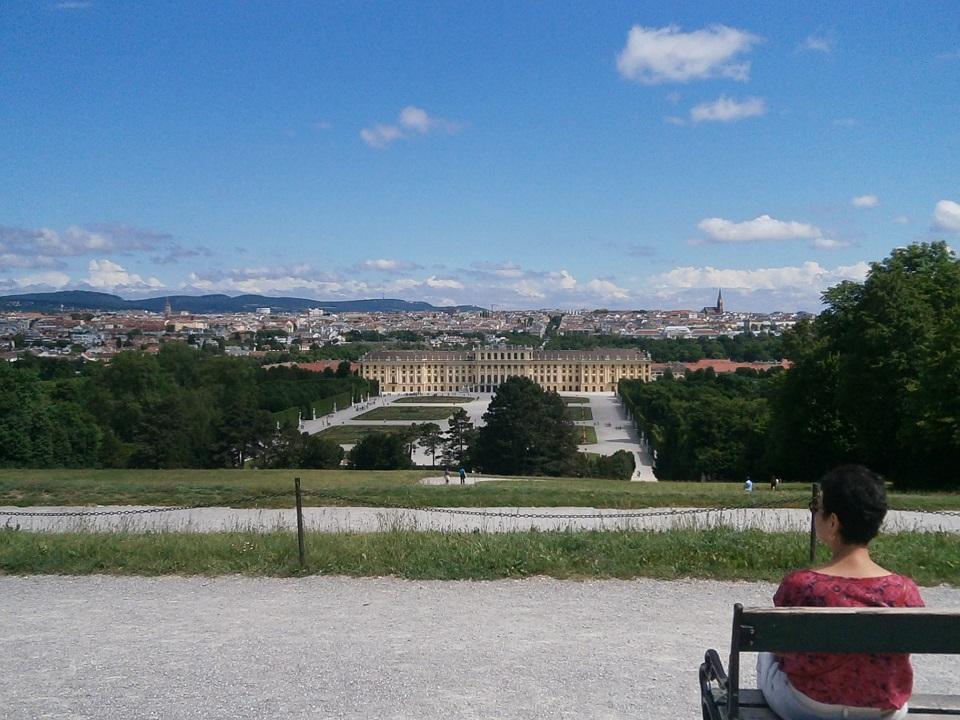
My husband Alex and I often caught the Summer Night Concert of classical music in Vienna on TV. This one-night only concert was held in beautiful Schönbrunn palace and was open to the public. Locals and visitors to Vienna alike would await this event eagerly, looking forward to a night of beautiful music and dancing the waltz.
We vowed to visit this magical place, so one late spring morning while in Vienna, we took the U4 metro train from Karlplatz, a station about a ten-minute walk from our hotel, to the Schönbrunn stop.
Schönbrunn (which means “beautiful spring”) Palace was the summer residence of the Habsburg monarchs. The country's longest-reigning emperor Franz Josef was born here in 1830, and returned to die here in 1916.
It was during the reign of Archduchess Maria Theresa in the mid-18th century that the palace was turned into an imperial residence, its opulence and beauty befitting a monarch, although each ruling emperor added his own touches to the summer residence. After the death of Franz Josef, the palace became state-owned, and now a private company maintains it. Its glory and grandeur though, lives on, and the palace is one of the most visited places in Vienna.
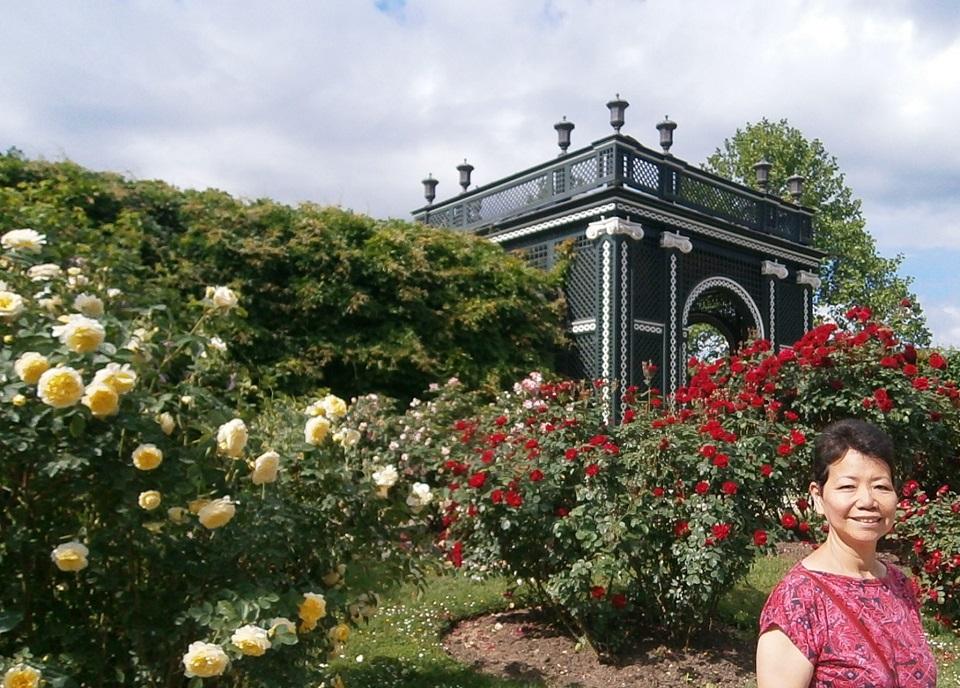
The front courtyard entrance was spacious, and many people were milling around. As we turned a corner, I saw a long wall of red blooms on climbing trellises, and when we drew near, they turned out to be masses of huge roses, their crimson color enlivening the sunlit morning. At the other side too, were yellow and peach-colored roses. A gazebo and a long green arbor provided some respite from the fierce morning sun.
The palace was a huge and long edifice, built along classical lines. Double staircases provided access to the 40 apartments in the upper rooms, including the imperial apartments and staterooms of Empress Maria Theresa, Emperor Franz Joseph and his wife Elisabeth.
"Opulent" and "magnificent" would probably be understatements to describe the rooms, where there were offers of daily concerts with three-course dinners. On the ground floor were the White and Gold Rooms with its rococo paneled walls; some of the suites were offered as venues for civil weddings and private parties.
Going down the palace staircase we encountered the Gran Parterre, the huge garden where the Summer Concert Festival was held. Here, the wide avenues spoke of tranquil walks beside manicured shrubberies, multi-hued flowers in full bloom, tall evergreens on the sides, with numerous images of gods, goddesses and virtues on their individual pedestals.
A bit winded after more than an hour’s walk, I sat down on one of the benches in a shaded area of the huge garden, near the Kammergarten gazebo, said to be the place where the Empress Elisabeth (fondly called “Sisi”) would do her daily walks and exercises. I read about Sisi before our visit, and she indeed led a very colorful life. Often depicted as a beautiful woman with long luxuriant hair, she was quite obsessed with physical beauty, exercising daily to maintain her 18-inch waist even after her four pregnancies, wearing very tight corsets and eating so little to maintain her weight. Later in souvenir shops we would find a lot of her images in fans, mirrors, small bags, and even fridge magnets!
There was a well-tended garden maze as well, and I could hear children laughing and chortling as they went around it, calling out happily to their parents and friends.
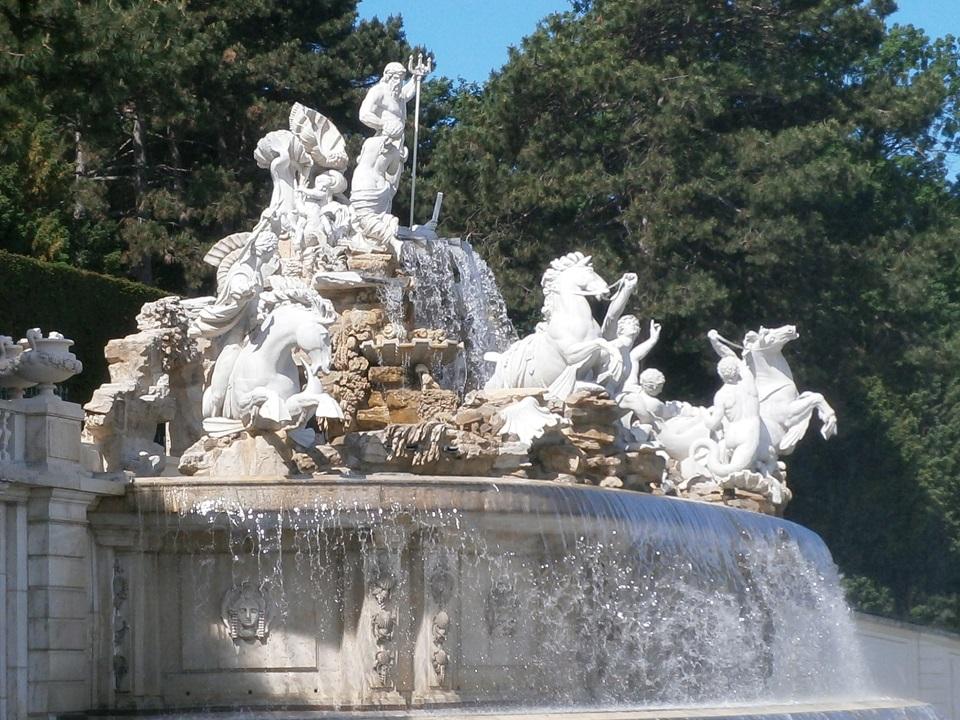
We continued to walk towards the Fountain of Neptune, with waters flowing all over, depicting the sea god on his chariot, trident in hand. Wild horses were being subdued by mermen. The sound of splashing water was refreshing, as the sun slowly rose above us. But wait, there’s a path behind the fountain!
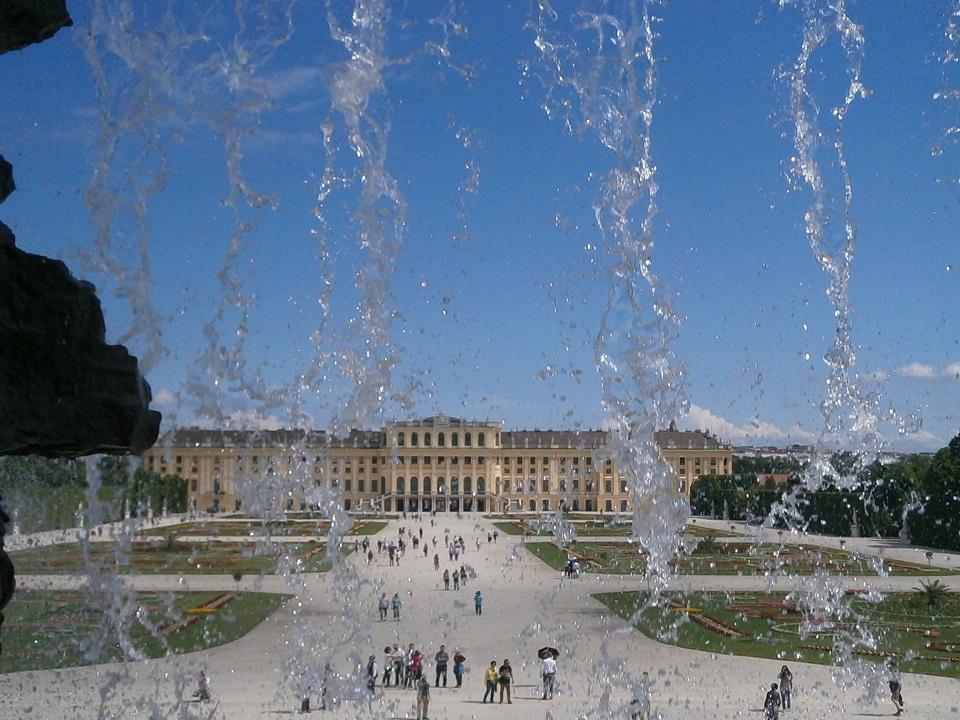
We followed this path and we reached a place at the rear where we could see the marble statues more closely, and got splashed with the cold water that bathed the figures. A large aperture in the rocks gave us a beautiful view of the Schönbrunn palace through the fountains’ water.
There was more: a hill behind the fountain, and a path that led to an arched structure at the top of this hill. We learned that this was the Glorietta, and along the way we passed a man-made lake where many were jogging, or simply lolling around, catching the sun’s rays.
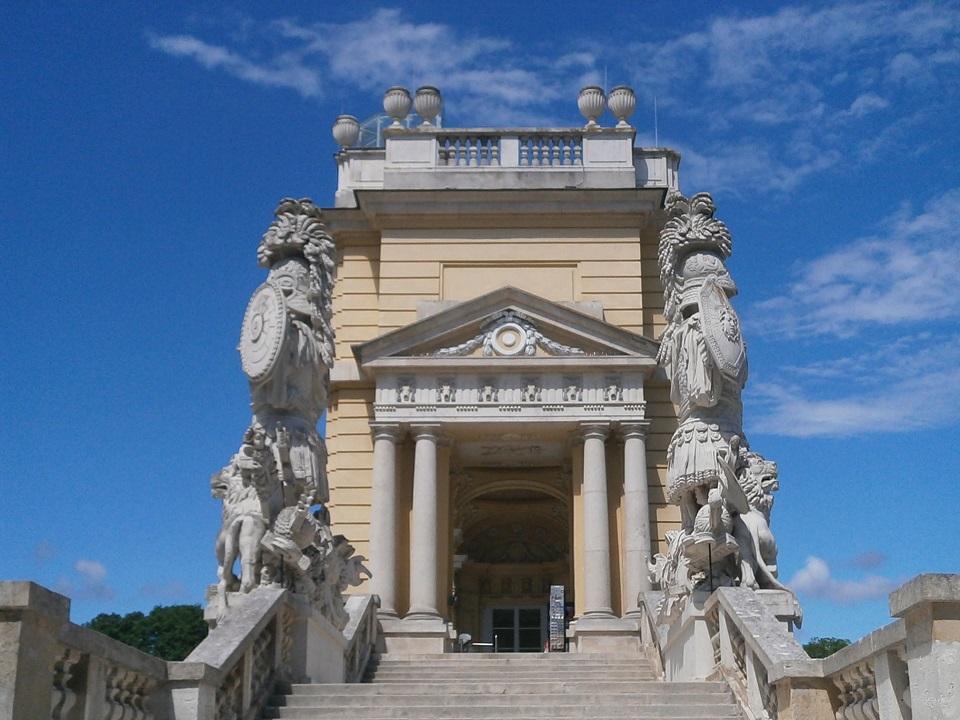
During the Summer Concert Festival many brought blankets and food hampers and sat on the grass here on the hill, and enjoyed, even from afar, an evening of Mozart and Strauss played by the Vienna Philharmonic Orchestra.
At a closer look, there were triumphal decorations at the top of the Glorietta, and a double-headed eagle was at the center. An elegant café inside offered coffee and sandwiches. It was good to sit on one of the benches beneath the large leafy trees, smiling at the mothers wheeling their babies as they pass by. Children ran here and there, their voices mingling with birdsong. From our vantage point, we could see the fountain, the Gran Parterre, the palace, and a panoramic view of the city of Vienna.
We opened our backpacks and had our lunch: homemade egg sandwiches, apples and pears, water, and beer.
_2017_02_01_22_17_59.JPG)
Going back we passed by the Columbary, a huge cage for birds, built during the 1770s. Again, there were antique-looking benches for the foot-weary, and we spent some time enjoying the quiet atmosphere, listening to the birds, smelling the warm earth and the freshness of growing things around us, knowing that there was no hurry to go home. — BM, GMA News

