

 GMA Brandtalk
 Tracking
 Archives

Türkiye's countryside charm: Stone houses, vineyards, and olive fields
[This story is the second of four parts.]
The air shifted as we left Izmir City behind. We were off on a trip to the small towns of Izmir Province, Türkiye's Agean coastline unfurling outside the window of our bus. It was October, and the second day of our media familiarization tour, and during a gas station stopover, the cold morning breeze blew me wide awake, leaving behind the taste of anticipation for the adventure ahead.
It was a slow, hazy day. As our bus chugged on the expressway, I watched as the world slipped by in flashes of olive groves, vineyards, and greenhouses. Horses galloped across wide fields. Sunlight filtered through yellowing leaves.
This is Türkiye's quieter beauty.
Read more from this series:
Wind and stone in Alaçati
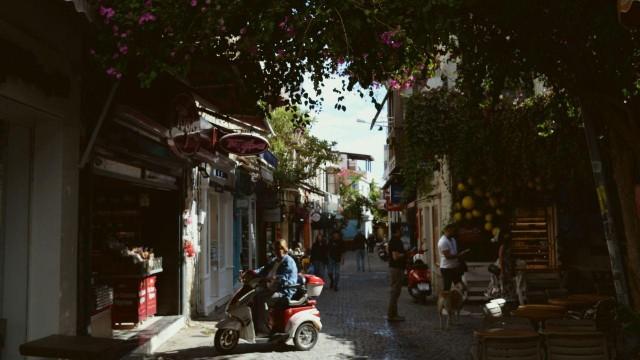
Alaçati has a storybook kind of beauty: stone houses, cobbled streets, windmills. It is one of Türkiye’s most traditional towns, whitewashed and rustic at once, making it a popular day trip from Izmir City. Once a Greek settlement, the village is now a must-visit for adventure-seekers wanting to try windsurfing and kitesurfing.
The wind doesn't just lend itself to surfers — it's also the reason for the town's iconic windmills. The steady, strong winds in the region made it an ideal location for wind-powered grain milling. Wheat and barley were turned into flour for local consumption and trade. Now, the windmills symbolize Alacati's agricultural heritage.
At the town center, it's much livelier, thanks to the boutiques, cafes, and aesthetically-pleasing alleys perfect for picture-taking. Stray cats and dogs kept our group company all throughout — we even found a litter of friendly puppies!
We rested at Kö?e Kahve, where I enjoyed a fresh glass of pomegranate while the rest had strong Turkish tea, before heading to the next stop of our journey.
Between the castle and the sea in Çesme
Just 15 minutes away is Çesme, Alaçati’s coastal neighbor. It's a harbor town where white yachts glint under the sunlight, jostling gently on the gently blue waves. Near the shore stands Çesme Castle, a 15th-century Ottoman fortress recently restored which now houses a museum. Cannon-lined walls overlook the restaurant- and villa-lined harbor.
From the promenade, between the castle and the sea, it's easy to spot the Grecian island of Chios, glimmering faintly across the water.
We stopped for lunch at Dost Pide. A local favorite since 1974, the restaurant is beloved for its signature Turkish-style pizza, known locally as pide.
The town was the very definition of a pause, a perfect breather.
The heart of the land in Urla
From Çe?me, we hit the road again, driving past the now familiar sight of rolling hills of olive trees and vineyards. For what appeared to be endless nature, there turned out to be lots to do in Urla. We visited the Köstem Olive Oil Museum, where we learned about the evolution of olive oil production. Türkiye, I found out, is the fourth largest olive oil producer in the world. We were treated to a tasting, the olive oil poured into small clear glasses. meant for us to drink like a shot.
I took a sip instead and quickly learned that good olive oil is supposed to burn your throat. Surprised by the sting, I immediately suffered from a coughing fit, prompting the resident expert to say, "That's how you know it's good." Eyes watery, I put the glass still half-full down.
Our next stop was the Uzbas Arboretum, a 2,200-acre home to various plants and trees from all over the world. The arboretum is proud of its plum preservation efforts, its water-filled bottle trees, and its 700-year-old dinosaur bonsai olive trees — only 120 of which exist in the world.
Urla is also known for its farm-to-table restaurants. We had a late dinner at Bagevi Vineyard — but perhaps I only remember it as late. The pitch blackness surrounded the restaurant, which made it seem as if it was located in the middle of nowhere. I found it quite charming.
Inside the restaurant, a furnace warmed the room, and a fresh bouquet of flowers sat on the wooden dining table. We were given samples of their red and white wine, and treated to a full-course meal: the freshest salads, olives, fork-tender lamb and beef with heavy sauce, and a lava brownie topped with pomegranates.
Outside, the streets were bathed solely by orange street lamps. We left Izmir Province when the stars were out, the lingering taste of sweet fruit on our tongues.
Like the rest of Turkiye, the past isn’t gone in this region. It’s alive, underfoot, in the burn of olive oil and wine, in the whip of wind through old trees.
This trip was sponsored by Turkish Airlines and the Turkish Ministry of Tourism. —LA, GMA Integrated News

