

 GMA Brandtalk
 Tracking
 Archives

At the country’s far north: Childhoods carved by wind and stone
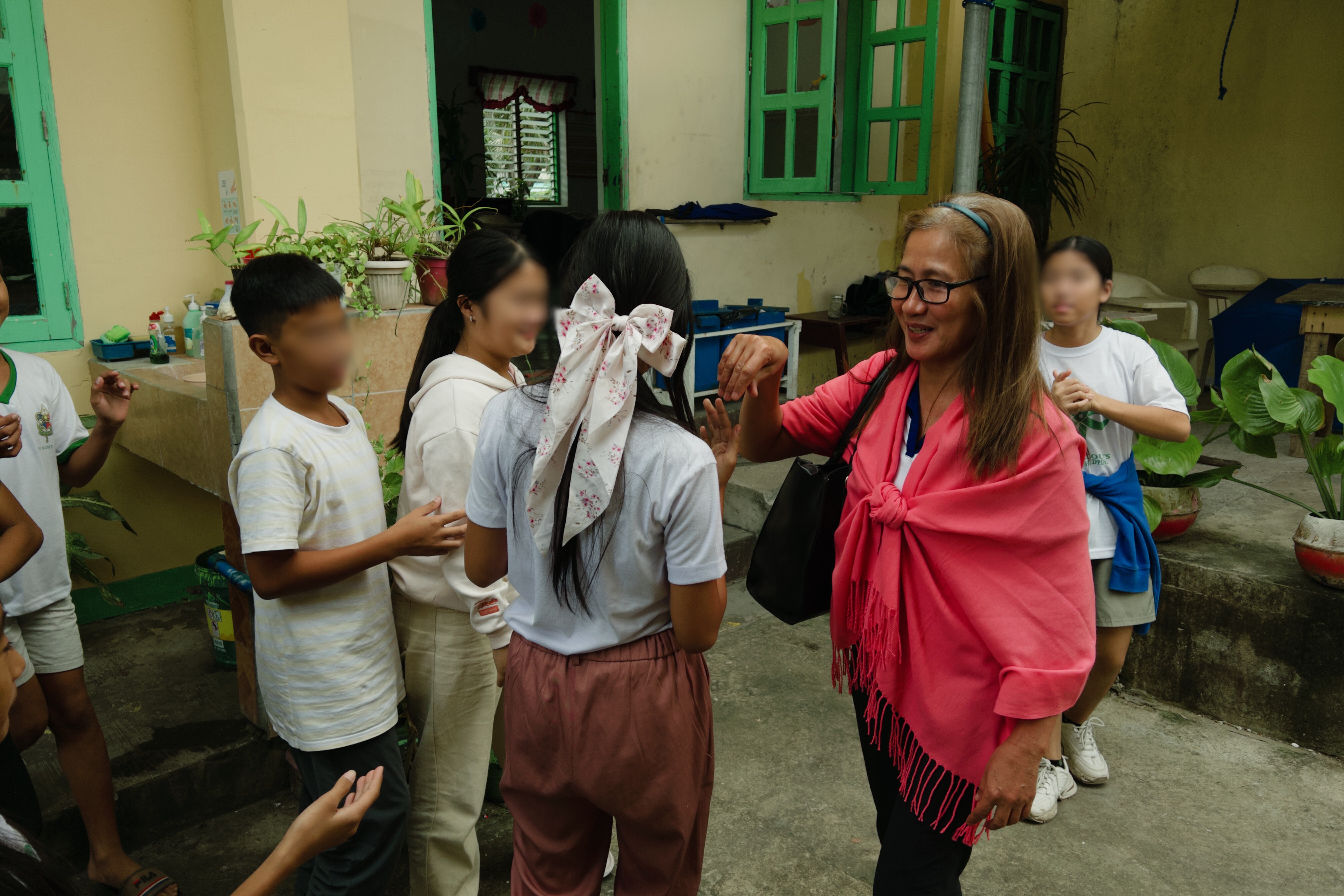
BATANES, Philippines — On the narrow road leading to the House of Dakay, we paused to take photographs. A small group of children pedaled toward us, then — without hesitation — hopped off their bikes and approached with a gesture that has nearly vanished in much of the country.
One by one, they pressed our hands to their foreheads in pagmamano, smiling shyly before riding off again.
In Batanes, this isn’t performance. It is culture — an everyday expression of respect woven into Ivatan childhood across all its towns and islands. Here, young people grow up greeting elders, neighbors, visitors, and even unfamiliar adults with a quiet, instinctive grace.
At Uyugan Elementary School, where Teacher Marissa de los Santos, 53, taught for 28 years, this cultural inheritance is simply part of the school day.
Photo by Sherylin Untalan
“Nakasanayan na kasi ng mga estudyante yung gano’n,” she said. “Nagmamano sila kahit sino ang makita nila.”
Respect is not instructed — it is embodied.
A school where everyone knows everyone
Uyugan Elementary School has only 54 students across Kinder to Grade 6. Its 11 teachers all come from Batanes, many of them teaching multi-grade subjects.
“Magkakakilala po lahat,” Marissa said.
Classes are intimate — the largest has twelve learners; the smallest, four. In a place where families have known one another for generations, anonymity is impossible.
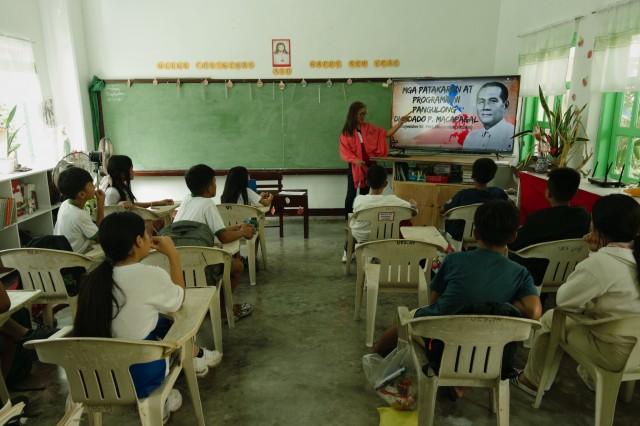
Photo by Sherylin Untalan
Teachers know their students’ habits, fears, talents, and tempers; parents know exactly who is shaping their children each day.
Inside the classroom, the wider Ivatan culture of respect remains unmistakable.
“Pagpasok ng mga estudyante, nagbe-bless pa sila,” Marissa shared.
“Aside from ‘good morning,’ nagmamano pa sila.”
Children move through this world with a calm confidence that startles outsiders. In Uyugan — as in most of Batanes, many students bike to school alone, sometimes from long distances.
“Kahit 'yung mga bata, maliliit pa, nagbibisikleta sila kung saan man sila aalis,” she said. Parents trust the roads and the community to keep children safe.
“May paalala lang — keep on the right.”
Freedom, here, is a childhood birthright.
Yet beneath that tranquility lies a surprisingly heavy workload for teachers.
School Head Teacher I Michael Ryan Cabugao explained that people often assume Uyugan has “too many” teachers for such a small population.
“Sinasabi nila na parang over ang teachers dito, pero hindi nila nakikita 'yung number of subjects na hawak namin,” he said.
“Halos wala nang vacant — tuluy-tuloy ang hawak.”
When one teacher is absent, schedules must be adjusted immediately.
“Kapag may umabsent, mahirap agad magpasok kung sino ang magsa-substitute,” he said.
A designated emergency teacher must quickly adjust the day.
This, too, is part of small-school life: everyone carries more than what numbers reveal.
A peaceful routine — until the weather changes
School days in Uyugan unfold quietly: morning greetings, lessons, play, and the unhurried hum of children learning in a place that has never known urban chaos.
But in Batanes, the weather is a teacher of its own.
“Modular kami pag may bagyo,” Marissa said. When storms shut down classes, teachers pivot instantly to printed modules. If the internet signal holds, students may watch online resources; if it doesn’t, learning simply waits.
“Kung walang signal, doon kami nahihirapan,” she admitted.
Children have grown up with fierce winds — “Sanay na sila doon,” she said — but the coastline can be dangerous.
Teachers remind students not to approach the shore during rough seas and keep evacuation kits ready through the typhoon months.
Even so, Cabugao emphasized that community vigilance strengthens safety.
“Nakakadagdag talaga sa security ng mga bata — teachers, parents, kapitbahay, lahat aware,” he said.
In Batanes, every adult watches every child.
The island’s education gaps
Shipments to Batanes arrive slowly — if at all. Some textbooks never reach Uyugan.
“Kami na lang po ang nagpo-provide,” Marissa said.
Teachers create supplemental worksheets, print materials, and scour the internet to fill the gaps.
“For as long as within 'yung objectives na dapat ma-learn ng mga bata,” she explained.
But even with these efforts, Uyugan — like the rest of the country, faces the reading comprehension crisis.
“May the same problem din kami,” she said. “They can decode words, but 'yung comprehension — problema talaga.”
Cabugao confirmed this:
“Magaling silang magbasa, pero pagdating sa comprehension — doon sila nadadapa,” he said.
Division assessments reflected frustration-level results among some learners.
Uyugan’s teachers respond through interventions: vocabulary work, remedial reading groups, and integrating culture and language into unlocking of words.
“One factor talaga is vocabulary development,” Marissa noted.
Technology arrives, quietly changing childhood
Even in a place where children still play outdoors, digital life has reshaped language.
Teachers noticed that students increasingly default to English, not because of school, but because of smartphones.
“Mas na-expose sila sa cellphone, kaya more in English sila,” Marissa reflected.
She sometimes introduces lessons in English because students understand it more quickly than Ivatan.
Is that bad? She shook her head.
“Hindi naman siya bad thing,” she said. “Ang kailangan lang 'yung proper guidance kung paano gamitin 'yung gadgets.”
In Batanes, modernity arrives slowly — but it still arrives.
Culture as classroom
Culture is not an optional subject in Uyugan. It is the foundation of learning.
Marissa teaches Ivatan traditions, including payuhuan — the cooperative labor system where seven to eight community members rotate tasks to help one another.
“Ginawa 'yun kasi walang pambayad ng labor,” she explained.
“Magkakatulungan kayo sa field o sa bahay.”
Language, too, is treated not as barrier but bridge.
“Pag nag-unlock ako ng words, minsan English, minsan Ivatan, depende saan mas maintindihan nila.”
Here, culture and curriculum move together.
Dreams shaped by distance
Students in Uyugan do not always dream of mainland life.
“Konti lang 'yung gustong pumunta ng Manila,” Marissa said.
To many children, Manila is a place of malls and Jollibee — not long-term plans.
But distance and cost shape futures. Only limited senior high school strands are available in Batanes; students who want STEM (Science, Technology, Engineering and Mathematics) strands often cannot pursue it unless they move.
One aspiring engineer ended up with back subjects because the needed track wasn’t offered.
“Kung anong naka-offer dito, 'yun na 'yun,” Marissa said.
“Kahit iba 'yung gusto nila, wala silang choice — unless kayang i-support ng parents.”
Her own son had to study aeronautical engineering in Manila, rarely coming home due to airfare.
Distance shapes ambition.
A teacher who believes in staying
Marissa taught in Itbayat and Sabtang before coming home to Uyugan.
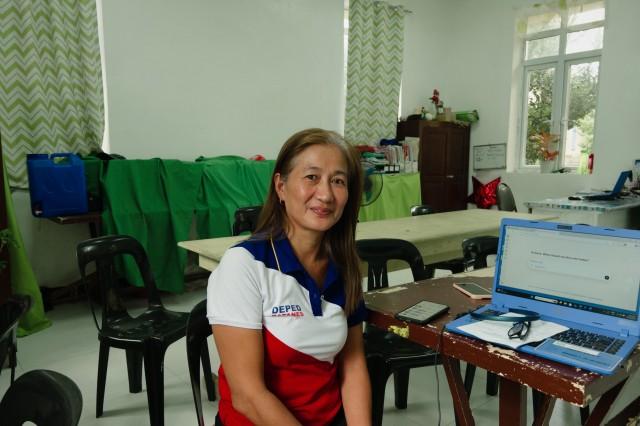
Photo by Sherylin Untalan
Each island, she said, formed her understanding of community and culture.
“Kung hindi ako na-assign doon, hindi ko ma-experience 'yung culture nila,” she said.
“Iba ang Itbayat, iba ang Sabtang, iba dito.”
Has she considered leaving the profession or the island? She shook her head softly.
“Masaya ako,” she said.
“Committed ako sa work. Kapag may nakita ka sa bata, may nagawa ka — masaya ako.”
Her fulfillment is quiet, steady — carved not by grand moments, but by decades of small, steady victories.
What Batanes offers the world
As we left the schoolyard, the late-afternoon wind rising from the sea, a pair of students slowed their bicycles and again offered pagmamano.
In that simple gesture — palm to forehead, child to adult, the essence of Batanes revealed itself.
Uyugan, like all of Batanes, is not spared from education gaps, storms, and scarcity.
But it remains one of the rare places where childhood still unfolds with gentleness, freedom, safety, and dignity — where culture protects children as much as adults do.
It is a reminder that education is not only about what children learn, but about the world that shapes them.
And in Batanes, that world is still carved by wind, stone, and the quiet strength of community. —AOL/KG, GMA Integrated News

