

 GMA Brandtalk
 Tracking
 Archives

Can the Philippines turn motorcycles into a tourism engine?

[First of two parts]
Motorcycle tourism is quietly growing in the Philippines, powered by riders willing to brave an archipelago that both inspires travel and challenges it. The Philippines may sell freedom on two wheels, but without fixing the road beneath it, that freedom comes at a cost riders already know too well. Can passion turn riding into a credible tourism product?
On a clear morning ride out of Metro Manila, the contradictions of Philippine motorcycle tourism appear almost immediately. The ride from Pasay to Baguio was organized by Philippine Motorcycle Tourism, a program of the Tourism Promotions Board (TPB) that’s designed to align riders’ passion with national tourism goals, and was joined by tour operators from Japan, Mongolia, Slovenia and India, among many Filipino riding enthusiasts.
The road opens the gateway to Philippine cultural heritage sites, natural wonders and promises of freedom and adventure on iron horses, but it also exposes long-standing problems: uneven pavement, chaotic traffic, weak signage, and an uneven safety culture.
These tensions sit at the heart of a growing question: Can the Philippines turn motorcycle travel into a credible tourism product, or will it remain an informal pursuit driven mainly by enthusiasts willing to accept the risks?
For a small but growing community of Filipino and foreign riders, the country already has the raw ingredients of a world-class destination. What it lacks, they argue, is not scenery or hospitality, but working systems, complete infrastructure and harmonized policies.
Experience abroad, reality at home
For riders Edwin and Jeosen Cua, a couple who have toured by motorcycle across the United States, Europe, Southeast Asia, Japan, and New Zealand, the contrast between riding abroad and riding in the Philippines is stark. Decades of unguided, long-distance travel have given them a clear benchmark for what works on the road and what doesn’t.
According to Edwin, “infrastructure, roads, bridges, RORO ferries, ports, traffic standards, and population density,” are some of the biggest gaps he noticed when comparing Philippine routes and services to those abroad.

In countries like Northern Thailand and New Zealand, he explained, roads are designed with riders in mind with consistent surfaces, logical traffic flow, and scenic rest stops that prioritize safety.
He notes that while the Philippines can compete with other ASEAN countries for backpacker-style scooter travel, it remains far behind as a destination for long-distance big-bike touring. “We are not big bike-friendly, but [for] backpacker scooter adventure, we are comparable to any ASEAN nation where Thailand and Vietnam are tied as first,” he said.
For long-distance, high-displacement touring, however, he believes the country is still far behind, constrained by fragmented road networks and difficult inter-island transfers.
Jeosen agreed, stressing the gaps extend beyond riding itself. “It’s not just moto-touring - our tourism infrastructure in general is behind,” she said, pointing to the lack of proper parking, walkways, and clean restrooms at many tourist sites. For a country made up of islands, she added, inefficient ports and unnecessarily complicated RORO (roll-on, roll off) systems make inter-island travel stressful.
Together, the Cuas’ experience suggests that while the Philippines offers scenery and warmth few countries can match, the fundamentals needed to support world-class motorcycle tourism remain unfinished.
Safety, certainty as deciding factors
Safety remains the sector’s most serious barrier. Motorcycle crash rates remain high, and in Metro Manila alone, more than 33,000 accidents involving motorcycles have been recorded by the Metro Manila Development Authority in 2024, the highest in a decade.
Motorcycles also stand out as particularly vulnerable on the road, experiencing the highest fatality rates among various vehicle types. Based on official 2024 fatality records from MMDA, motorcycles accounted for the largest share of deadly road crashes, with 349 fatal cases, more than double those involving cars with 135 cases and over three times those linked to trucks with 101 cases. Outside Metro Manila, anyone who’s on social media is familiar with the infamous Marilaque highway and its fair share of recorded motorcycle stunts that sometimes end in tragedy.
Concerns go beyond accidents to include inconsistent road quality, weak enforcement of traffic rules, theft risks, weather hazards, and limited access to emergency care.
For touring riders, especially foreigners traveling unguided, predictable systems matter. Edwin cited experiences in Thailand and New Zealand, where ambulances were efficient and affordable — or free — and hospitals were equipped to handle injured riders even in rural areas. “Emergency care ranks very high for solo riders,” he said. “You don’t have a backup vehicle or a tour operator to catch you if something goes wrong.”
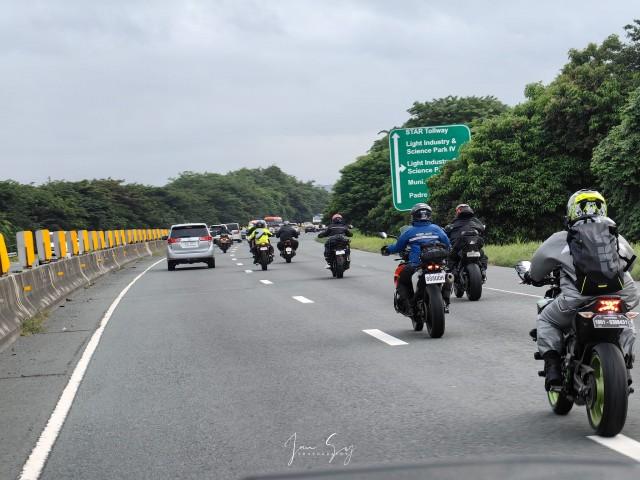
Without credible safety standards and emergency response, riders warn that aggressive promotion risks reinforcing perceptions of the Philippines as a dangerous riding destination rather than a viable one.
For Rozle Verhovc, founder of Slovenia-based Clutch Moto Tours, the Philippines is approaching a familiar crossroads. For eight years, his company brought Filipino riders to Europe. “I think it’s time to turn it around,” he said at the PMT forum, “and start bringing riders from all over the world to the Philippines.”
Verhovc, who has operated tours across Europe, North Africa, and the Caucasus, said global motorcycle tourism is shifting toward premium, personalized experiences with guaranteed departures. “Everyone can rent a motorcycle,” he said. “We are here to create lifetime memories, as long as we are safe and riding.”
But inbound tourism raises expectations. International riders look first for rental availability, trained local guides, emergency response, and legal clarity in case of accidents. The first thing customers need is motorcycles - and safety, he said.
Geography: obstacle or advantage?
The Philippines’ archipelagic geography presents both its biggest challenge and its biggest opportunity. With more than 7,600 islands, long-distance motorcycle routes in the country means inter-island travel is necessary, yet ferries and RORO services are frequently cited as the weakest link, plagued by inconsistent schedules, unclear procedures, congestion, and variable safety conditions.
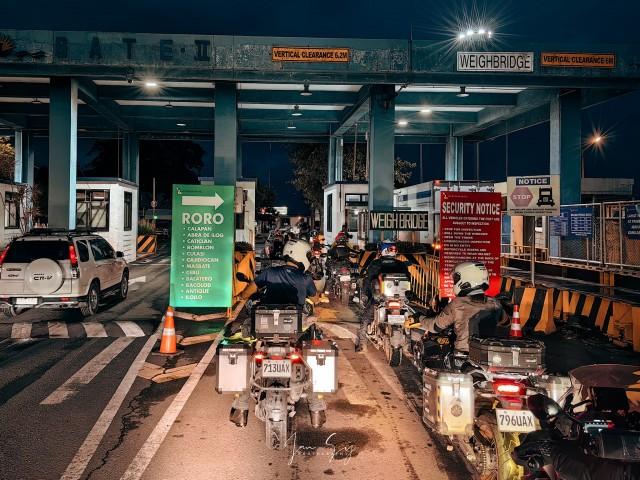
Riders recount being treated as cargo at ports, required to secure multiple gate passes and wait hours to board ferries. Rules vary by port and shipping line, creating uncertainty that discourages longer journeys. That alone can kill the idea of touring.
At the same time, few countries offer the possibility of multi-island motorcycle journeys combining coastal highways, mountain passes, and cultural sites. Riders argue that targeted reforms such as standardized ferry procedures for motorcycles, clearer information, and better port coordination could turn a chronic bottleneck into a defining advantage.
Rather than attempting a nationwide rollout, experienced riders suggest focusing on specific regions with clear potential. Northern Luzon, the Cordillera, Aurora, Albay, Sorsogon, Eastern Samar, Southern Leyte, and Northern Mindanao are frequently cited as areas that could rival international routes if infrastructure improves.
Meanwhile, Siargao, Marinduque, Siquijor, Palawan, Kalinga, and Manila City tours were also cited as potential pilot areas to attract international riders, with Siargao already having an established motorcycle rental market and Marinduque, which already has already established tour packages for motorcycle tourists.
For Jeosen, the Philippines has a lot to offer. “Cliche but honestly, our beaches, our people, and—for lack of a better term and our present reality—the kind of “chaos” that makes you feel wonderfully alive and present while riding,” she said. Meanwhile, Edwin went the other, yet similar way. “For motorcyclists, the road itself is the main attraction,” Edwin said. “Tourist sites are just a bonus.”
Handoff: What began as a rider-driven movement has now entered a more precarious phase. As government agencies step in and public money begins to follow, motorcycle tourism is no longer just about passion on the road but about whether policy, infrastructure, and accountability can keep pace.
— LA, GMA Integrated News
