

 GMA Brandtalk
 Tracking
 Archives

Philippine tourism on two wheels: Can passion meet policy?
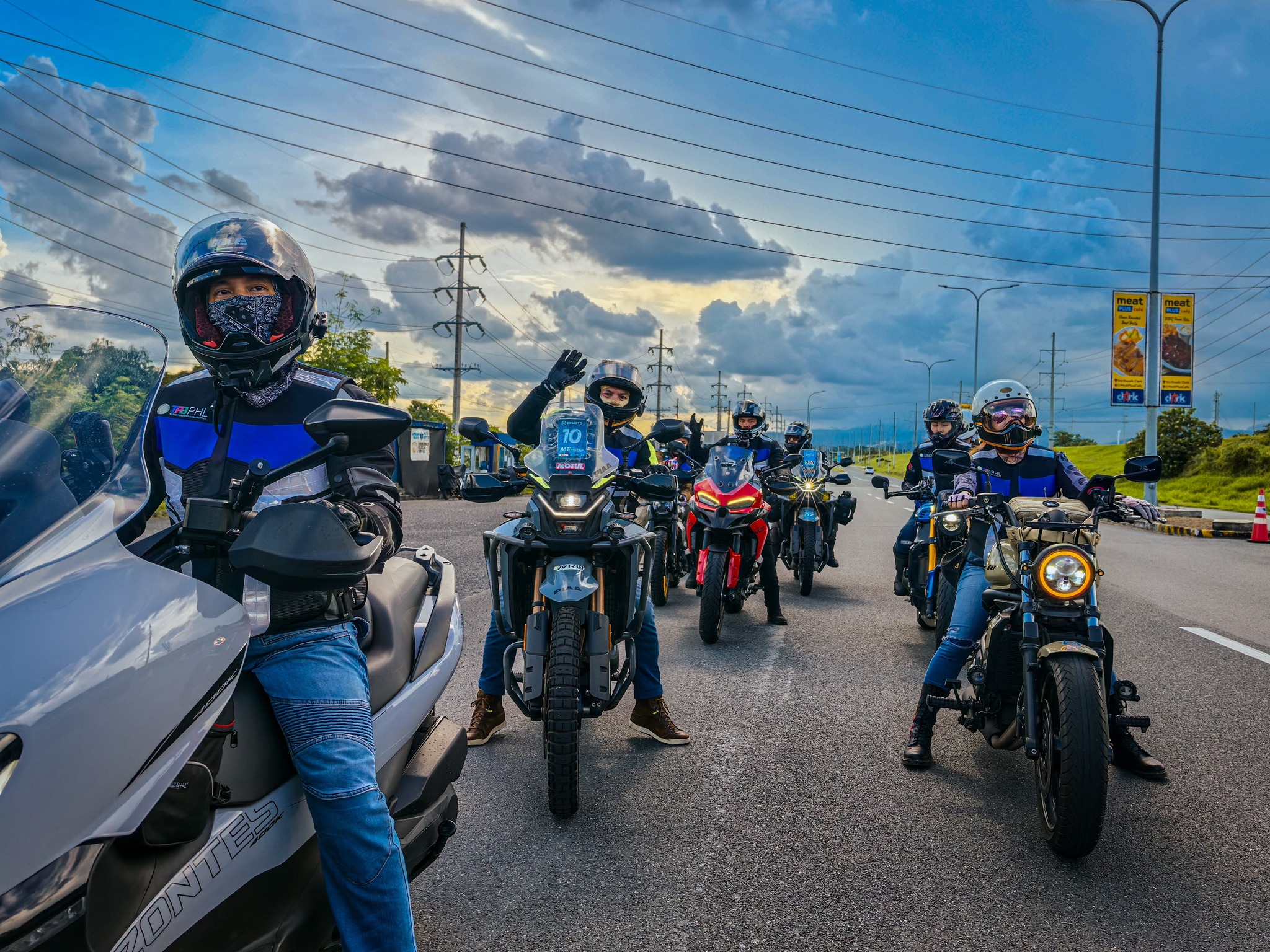
[Second of two parts]
The Philippine Motorcycle Tourism program has generated billions in tourism receipts on paper. But as local tourism surges and the country courts foreign riders, the question shifts from enthusiasm to accountability: who fixes the systems when growth exposes their cracks?
If Part 1 of this story lives on the road, Part 2 lives in meeting rooms where numbers, policies, and promises attempt to harness a movement that grew faster than the Philippine government’s ability to manage it. The community is ready, but the infrastructures and policies aren’t. Can Philippine motorcycle tourism keep pace with the growing global market?
At the center of this effort is the Philippine Motorcycle Tourism (PMT) program of the Tourism Promotions Board (TPB), designed to align riders’ passion with national tourism goals. Cesar Villanueva, Division Chief for Domestic Promotions Department of the TPB, is careful to frame PMT not as an authority but as a platform.
“PMT is a tourism program, not a government office,” he said. “Our role is to unite and integrate the riding community in a common purpose, which is to promote the country's tourism destination while they are enjoying the passion of riding motorcycles,” Villanueva said.
Grassroots before government
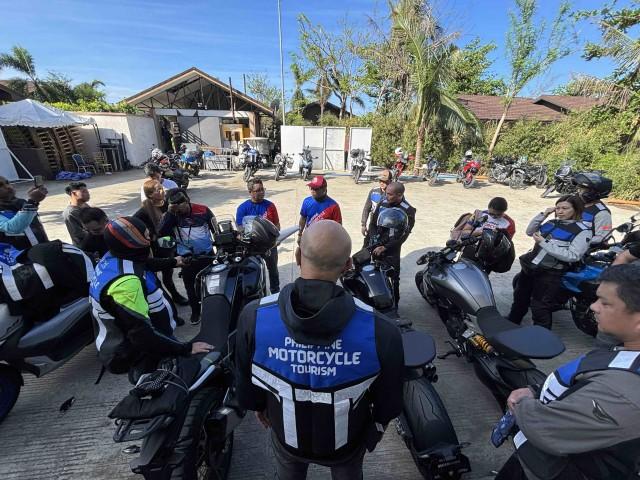
The PMT program did not begin as a government campaign. It emerged from personal rides and informal communities that slowly grew into organized groups.
Advocacy started as early as 2016, when riders began framing long-distance riding not just as recreation but as a way to discover and support lesser-known destinations. What began as informal breakfast rides grew into clubs, inter-island journeys, and eventually a nationwide network.
At the center of this growth is Raymon Gabriel, founder of Breakfast Ride Community, whom Joey Ermita described as a key force in shaping a tightly connected national riding community.
In late 2018, the idea of Motourismo was laid down on the table. Villanueva met with former DoT Secretary Bernadette Puyat and Senator JV Ejercito, who was not an incumbent senator during that time. They talked about how TPB can create a program that can support the riding community and create an opportunity of promoting less known tourist destinations in the country. Ermita and Gabriel, who were in parallel talks with Ejercito, were later looped in, together with other advocates.
“I thought, to make this successful, kailangan may partnership with the government. Kasi yung effort namin, kahit libo yung dala naming tao, it will just die kung walang program,” Gabriel said.
Thus, the initial idea for the PMT program was born.
But like every industry, the Covid-19 pandemic put nearly everything into a screeching halt. During the pandemic, when buses and planes were restricted, the economy was carried by and ran on two wheels – bicycles and motorcycles and became a primary means of domestic travel.
Demand for motorcycles surged, and in many areas, riders kept small businesses afloat. “Motorcycles became the backbone of local travel during that time,” said PMT’s Gabriel. What had been a niche activity suddenly demonstrated economic value.
As the country slowly attempted to open the following year, PMT launched in November 2021 with a ride to Calabarzon, attended by over 300 riders.
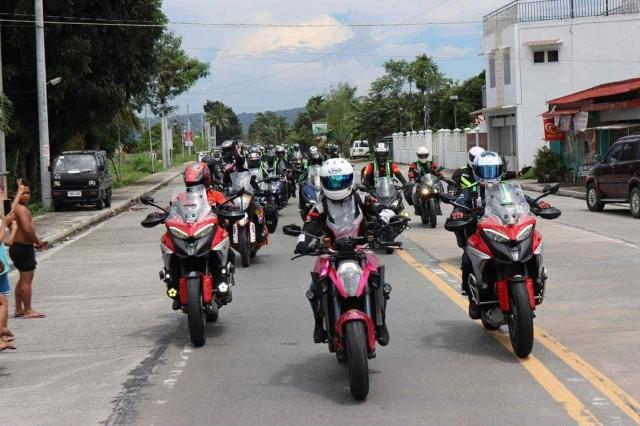
Since the launch, TPB data showed that PMT-supported events generated an estimated P1.4 billion in tourism receipts over four years from 93 events and more than 54,000 rider participants. Public spending totaled P62.3 million for a period of four years from 2022 since the program was first funded by the DoT, producing what TPB describes as an 8,000 percent return on investment.
These figures explain why policymakers are paying attention, and unlike fly-in tourists, riders disperse spending across small towns. According to Villanueva, big-bike riders, often retirees or business owners, are estimated to spend P6,000 to P12,000 per day on food, lodging, fuel, and activities.
Scooter riders, typically more budget-conscious, still spend P3,000 to P5,000 daily, but they make up an overwhelming majority of local moto-tourists.
The increase in local moto-tourism can be tied to the rapid surge of motorcycle ownership in the Philippines. For 2025 alone, we are on track to add 1.79 million units on the road, according to Motorcycle Development Program Participants Association data.
“In the Philippines, motorcycles represent freedom - not in the first-world sense, but in the sense that they offer freedom from the lack of public transport, freedom to navigate pothole-ridden roads, freedom to explore beyond one's barangay and workplace, and even financial freedom,” said Ibba Bernardo, host of weekly motorcycle lifestyle podcast Tunay na Rider.
But critics caution that receipts alone do not equal readiness. This growth exposed the limits of a purely grassroots movement. Without coordination, safety standards, or institutional backing, riders faced the same barriers repeatedly: ports, permits, inconsistent rules, and unclear responsibilities when something goes wrong.
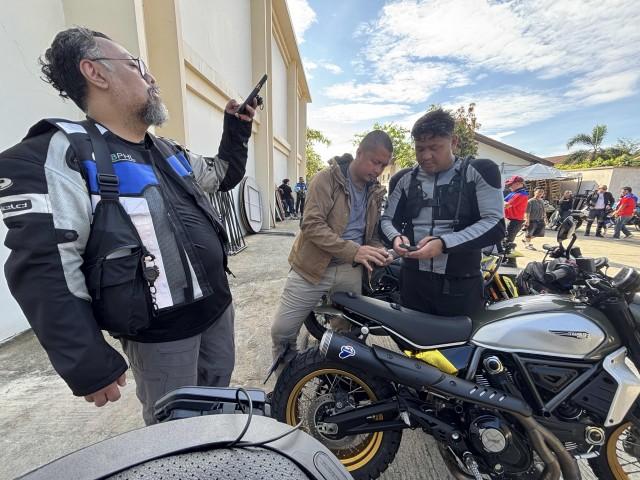
Revenue is not the same as resilience, and if systems fail, the costs show up later.
Beyond economics, Ermita stressed the importance of rider psychographics. “We are driven by adventure, freedom, camaraderie, love of nature, and exploration,” he said. “That emotional connection is why riders spend, return, and bring others with them.”
Legislation catches up, slowly
Ejercito, a long-time advocate of motorcycle tourism, believes it can become a strong economic driver for the Philippines if safety, infrastructure, and promotion are addressed together. Turning this niche into a reliable economic driver requires more than enthusiasm from the riding community and demands serious investments in safety, infrastructure and promotion.
“To fully support motorcycle tourism, we need enabling measures in road safety, infrastructure, and tourism promotion,” Ejercito said, stressing that rider welfare must come first. “Better-trained riders mean safer roads, a better touring experience, and ultimately a stronger motorcycle tourism sector.”
Motorcycle crashes remain a persistent concern nationwide, often cited as a reason for resistance to promoting riding-based tourism. Ejercito argues that safety and tourism should not be treated as competing priorities. He is pushing for Senate Bill No. 1133, or the Comprehensive Road Safety Education Act, which seeks to integrate road safety and driver education into the K-to-12 curriculum.
“Nilalayon ng panukalang batas na ito na maaga pa lang, matutunan na ng kabataan ang tamang asal at disiplina sa kalsada,” he said. The proposed measure covers traffic sign literacy, pedestrian rights, and the risks of distracted or intoxicated driving - interventions he believes will have long-term effects on road safety.
For 2026, the Senate version of the national budget allocates P4.1 billion for the Tourism Road Infrastructure Program, intended to develop priority access roads to tourist destinations. Ejercito said lawmakers are closely guarding this allocation as the budget moves into bicameral deliberations, citing infrastructure’s “strong multiplier effect” on local economies.
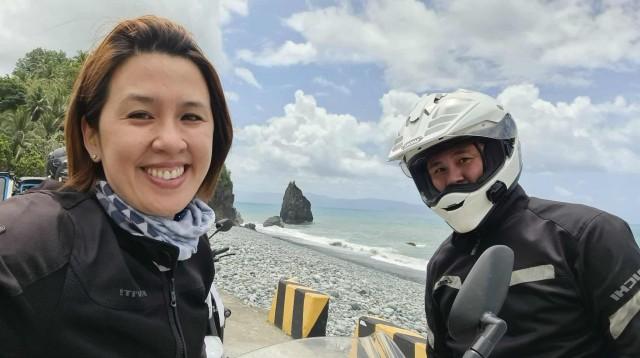
Promotion, however, remains another weak link. The DoT’s branding budget had been slashed over the years from P1 billion to just P100 million by 2025 which limited the country’s ability to compete with its ASEAN neighbors. This year, the Senate increased the branding and marketing budget by P500 million, on top of another P500 million under the General Appropriations Bill, bringing it back to P1 billion.
“With stronger tourism branding, we can properly promote our local destinations, including motorcycle loops, to both local and foreign riders,” he said.
While there is no dedicated Motorcycle Tourism Act yet, he said Congress remains open to legislating one if it strengthens funding, safety standards, and LGU participation. Local governments, he noted, stand to benefit the most. Riders spend directly in communities on food, fuel, lodging, and local products, particularly in far-flung towns often bypassed by mass tourism. “LGUs can be empowered through small but high-impact projects,” he said, including access roads and basic facilities.
The accountability question
As the industry looks toward inbound tourism, cross-border routes, and international marketing, the stakes change. Growth will no longer expose abstract weaknesses, but highlight specific institutional failures. And those failures already have names.
Roads and roadside safety sit squarely with the Department of Public Works and Highways (DPWH) and, by extension, local government units that maintain provincial and municipal roads. Riders consistently point to uneven pavement, sudden surface changes, poor drainage, and missing guardrails as primary crash risks especially in rural tourism corridors. While DPWH highlights kilometers built, riders say the issue is not expansion but consistency, maintenance, and motorcycle-aware design.
Ports, ferries, and inter-island travel fall under overlapping authority of the Department of Transportation (DOTr), the Philippine Ports Authority (PPA), and private shipping operators, with maritime safety regulated by the Maritime Industry Authority (MARINA).
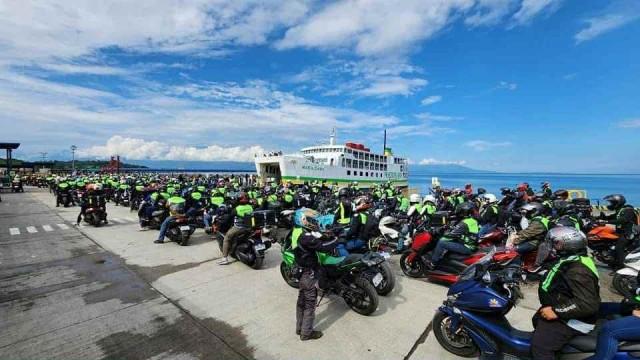
This fragmentation produces the sector’s most persistent complaint: riders treated as cargo, subjected to inconsistent fees, multiple gate passes, and hours-long processing depending on the port or shipping line. When a ferry refuses a motorcycle, or a port applies different rules island to island, there is no single office riders can turn to for resolution.
Maritime safety and vessel standards belong to MARINA, yet riders say enforcement feels uneven, particularly in smaller ports where older vessels, improvised tie-downs, and unclear loading procedures are common. Damage or delays during sea crossings rarely come with clear accountability.
LGUs control on-the-ground tourism conditions: signage, traffic enforcement, parking rules, local ordinances, and access to attractions. Riders describe arriving in one town welcomed with police escorts and clear rules, then crossing into another where requirements suddenly change: reflective vests mandated, balaclavas prohibited, routes restricted, or be charged with varying amounts of environmental and tourism fees. Without harmonized guidelines, LGUs can unintentionally undermine national tourism efforts.
The DoT and TPB occupy a different role. Their mandate is promotion and coordination, not enforcement. PMT can align stakeholders, fund events, and build communities, but it cannot compel DPWH to redesign roads, DOTr to standardize ferry rules, or LGUs to adopt uniform ordinances. That gap between promotion and power is where riders fear the system will fail.
As motorcycle tourism shifts from grassroots movement to formal tourism product, the question is no longer whether riders are willing. It is whether agencies will accept responsibility for the parts only they can fix and whether failures will be treated as isolated incidents or as systemic problems demanding reform.
Five years from now, Ejercito hopes to see consistent riding traffic across provinces, rising incomes for small businesses, and expanding tourism-related jobs. “If communities see sustained economic benefits,” he said, “that’s when we know motorcycle tourism is working and the Philippines can begin positioning itself as a premier motorcycle tourism destination in Asia.” — LA, GMA Integrated News

