

 GMA Brandtalk
 Tracking
 Archives

Kalayaan revives ‘patriotic tourism’ to Pag-asa Island
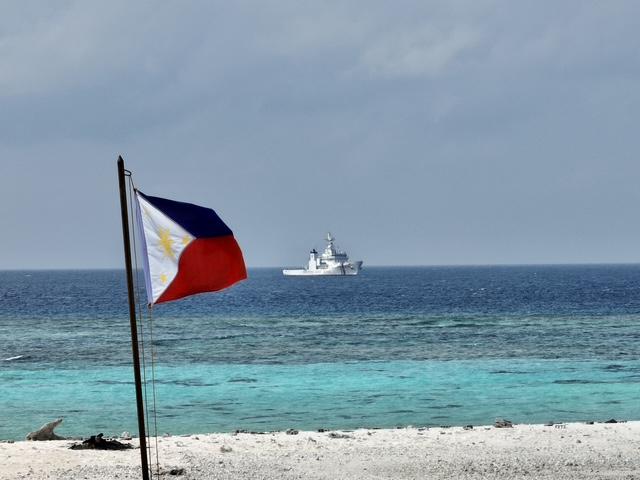
The view doesn’t grow old.
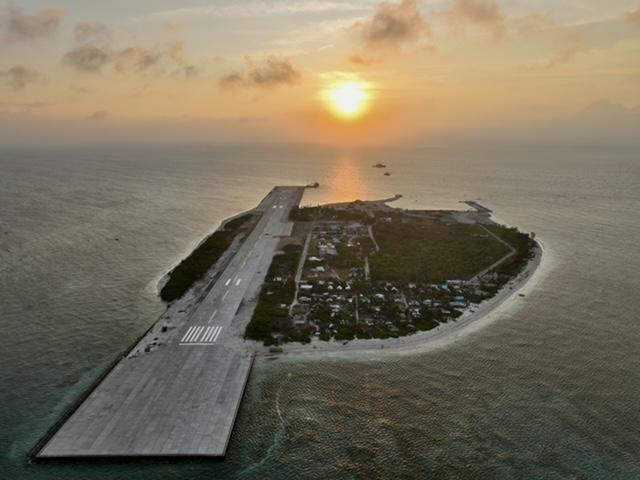
Powdery white sand rings almost the entire stretch of Pag-asa Island, meeting clear light blue waters that turn to deep blue as the water gets deeper.
From a clear pollution-less sky, the horizon ignites in hues of red and gold, fading into nights so dark and pristine that the farthest reaches of the universe seem within view. With no light pollution and barely any noise from vehicles, the island offers a rare stillness, one where an hour-long walk around the island feels both grounding and surreal.
Welcome to Pag-asa Island.
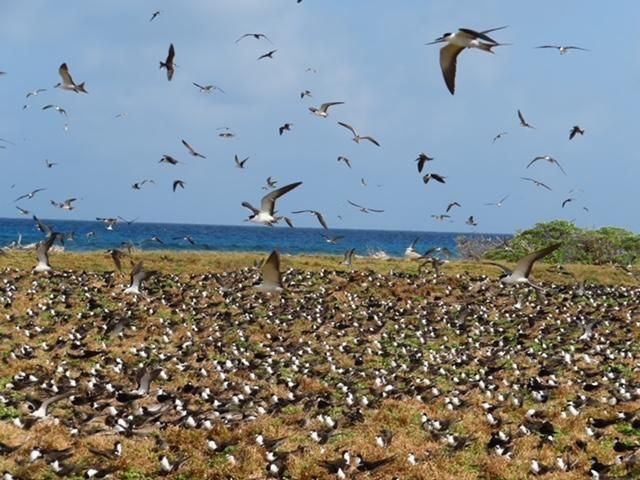
In March 2023, I joined one of the first groups of tourists invited to tour the Kalayaan Islands. It was an experience that blended exclusive tourism with a sense of purpose. We explored several islands under the municipality, diving into thriving marine ecosystems on Likas Island and visiting Lawak, teeming with thousands of seabirds.
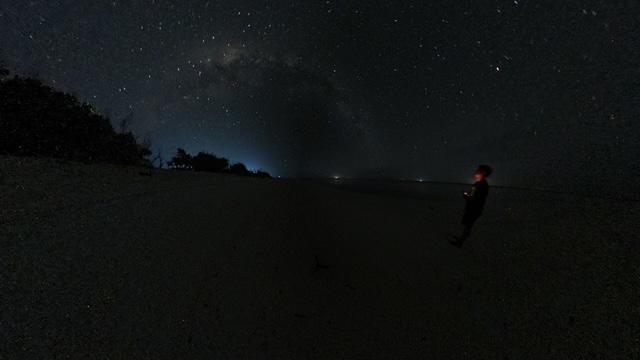
I have also been to Pag-asa several times as a journalist. In one such trip, I set up my camera to capture a time-lapse of the night sky. The edge of the Milky Way slowly revealed itself, cutting across the island, an image that perfectly captured the isolation and beauty of Pag-asa.
But even that moment carried a reminder of the island’s reality.
A faint streak appeared in the time-lapse, something that at first seemed like a passing anomaly. Military personnel stationed on the island later said drones frequently fly over Pag-asa, especially at night. These are believed to be coming from the artificial island built by China on nearby Subi Reef, roughly 20 kilometers away.
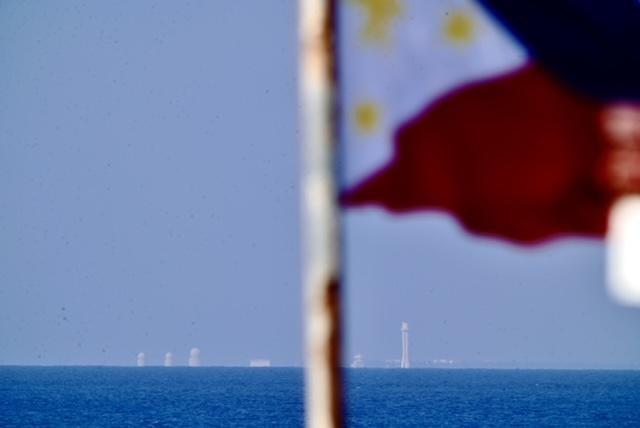
By day, that presence is just as visible.
On a clear morning, one can see the massive structures on Subi Reef from Pag-asa Island, another sight that leaves a lasting impression on those who visit. It is a view that patriotic tourists will likely encounter, underscoring the reality of why Pag-asa is considered to be at the forefront of the issue of sovereignty in this part of the South China Sea.
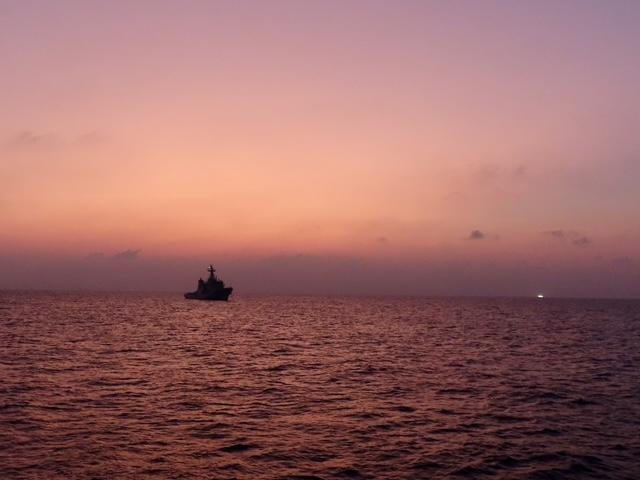
Even on ordinary days, the broader situation is impossible to ignore. On the western side of Pag-asa Island, it is common to see more than 20 Chinese maritime militia vessels gathered in the distance. Closer to the island, Chinese Coast Guard ships and huge warships of the PLA Navy regularly pass across the horizon, a constant and unmistakable presence.
This is not your typical tourist destination.
This is the scene that awaits visitors as the Municipality of Kalayaan prepares to relaunch its tourism program, now rebranded as “patriotic tourism.”
Under the initiative, selected tourists will be ferried to Pag-asa Island free of charge. Visitors will only need to pay for accommodation in transient houses and purchase food available on the island.
According to Vice Mayor Maurice Phillip Albayda, the program is designed to go beyond leisure travel.
“We hope to awaken patriotism in every Filipino who sets foot on Pag-asa,” Albayda said, emphasizing that the experience is meant to deepen public understanding of the island’s significance.
The program builds on the groundwork laid in 2023, but with a sharper focus on civic awareness. By allowing civilians to witness life on the island firsthand, from its serene natural beauty to its strategic realities, officials hope to foster a stronger connection between Filipinos and the country’s maritime frontiers.
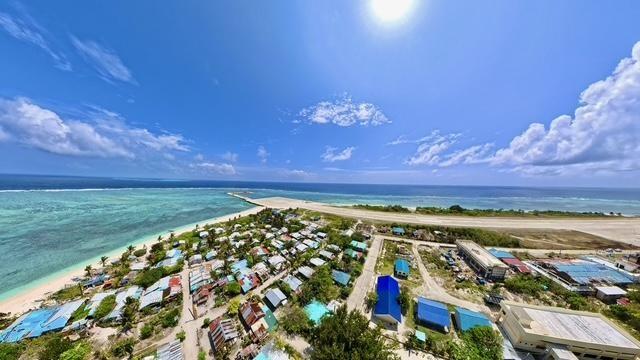
Meanwhile, efforts to further develop Pag-asa as a complete and self-sustaining community are also underway.
Next week, through the initiative of the Philippine Coast Guard and its spokesperson, Rear Admiral Jay Tarriela, a groundbreaking ceremony will be held in cooperation with the Archdiocese of Palawan for the construction of what will be the first-ever Catholic church on the island.
The addition of a church marks another step in transforming Pag-asa into a fully functioning community. The island already has an elementary school, with plans for a high school, alongside a new rural health facility. The local government is also planning to put up an ice processing plant to support local fishermen, allowing them to preserve their catch before transporting it to mainland Palawan.
In recent weeks, the island has also drawn increased attention from national leaders.
Over the past four weeks, two senators have visited Pag-asa, Senator Risa Hontiveros and, just this weekend, Senator Win Gatchalian, chairperson of the Senate Committee on Finance. Gatchalian underscored the importance of the island and its community, saying the island “carries the weight of sovereignty of the entire nation.”
The Senator adds, “yung mga nakatira dito sila ang nagpapatunay na may Pilipino dito, may kababayan tayo dito at hindi natin puwedeng ipamigay itong island na ito.”
More national leaders are expected to visit Pag-asa in the coming weeks, signaling sustained government focus on the island and its role in asserting Philippine ownership and control of this small parcel of land.
For those who have been to Pag-asa, the contrast is striking. One moment, you are surrounded by untouched beauty, coral reefs, seabirds, and endless skies. Next, you are reminded that you are standing at the edge of a geopolitically contentious area, where sovereignty is not an abstract concept but a lived experience.
That duality is precisely what makes Pag-asa Island unlike any other destination.
As Kalayaan reopens its doors to a new wave of visitors, “patriotic tourism” offers not just a journey to one of the country’s most remote communities but an invitation to see, reflect, and understand what it truly means to stand on the frontlines of Philippine territory. — BM, GMA Integrated News

