

 GMA Brandtalk
 Tracking
 Archives

DICT chief Aguda defends Konektadong Pinoy Act
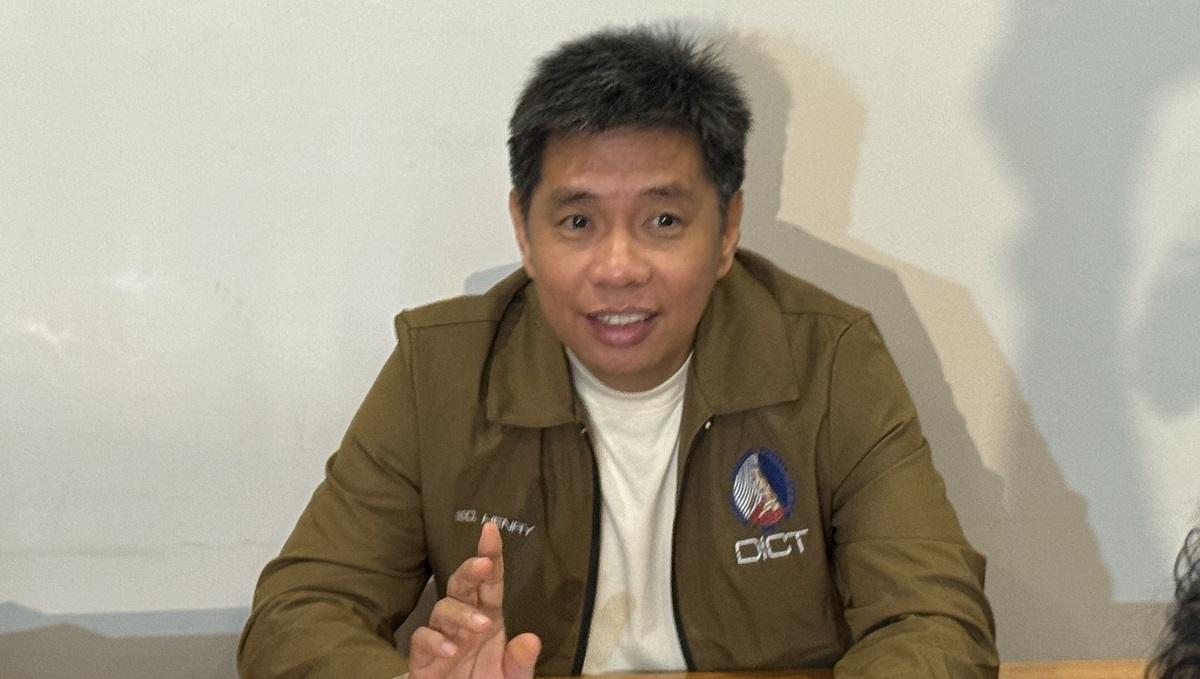
Department of Information and Communications Technology (DICT) Secretary Henry Aguda is backing the passage into law of the Konektadong Pinoy Act, which faces opposition from various telecommunications industry stakeholders, saying it would increase competition in the country’s telecoms space and eventually lower cost of services for the benefit of the consuming public.
“We’ve already endorsed it, me and Secretary [Arsenio] Balisacan of DEPDev [Department of Economy, Planning, and Development], we’re awaiting the schedule on when it will be taken to Malacañang,” Aguda told reporters at an informal briefing in Quezon City on Thursday.
“Mataas ang chance na matutuloy na ‘yun [There’s a high chance it will become a law],” the DICT chief added.
However, he clarified that he does not want to preempt what President Ferdinand "Bongbong" Marcos Jr.’s decision would be.
Critics of the Konektadong Pinoy Act include the Philippine Chamber of Telecommunications Operators (PCTO), composed of the country’s leading telcos, and the Philippine Association of Private Telecommunications Companies (PAPTELCO).
PCTO called for a review of the ratified version of measure, citing national security concerns and weakening of regulatory oversight among new entrants in the country’s connectivity service sector.
PAPTELCO, on the other hand, urged Marcos to veto the bill also flagging national security issues as new players would no longer be required to secure a legislative franchise.
Under the measure, new data transmission players are no longer required to secure a legislative franchise or Certificate of Public Convenience and Necessity (CPCN).
Aguda, in the bill’s defense, said that “there’s no denying that Konektadong Pinoy will increase competition in the industry… and nobody is going to deny that [increased] competition will be good for the industry.”
“Konektadong Pinoy squarely addresses affordability because the more competition… the public will have more choices, which would bring down prices,” the DICT secretary said.
The ICT chief said major telcos would even benefit from increased competition as they could divert revenues from end-users to wholesale as new entrants could tap into their existing internet infrastructure.
“Actually maganda nga ‘tong Konektadong Pinoy sa major telcos kasi ‘yung mga magtatayo para sa ‘middle mile’ makikigamit ng kanilang broadband service kasi hindi naman sila magtatayo ng transmission na malaki eh… So malilipat ang revenue nila from retail to maybe wholesale,” Aguda said.
(Actually this bill will be good for the major telcos because those putting up the "middle mile" will need to use their broadband service, because they won't be putting up a big transmission...so their revenue will be transferred from retail to maybe wholesale.)
As to concerns on national security and other issues raised by critics of the bill, the DICT secretary said the ICT Department and its attached agency, the National Telecommunications Commission (NTC), would address it in crafting the measures implementing rules and regulations (IRR) once the bill is signed into law.
“We just have to be very exacting on the specific concerns of the industry. What I was hearing were… one is national security… we hear them and we’ll address that with the help of the telcos. Another concern was… spectrum refarming… the NTC will set the specific regulatory [oversight] on frequency allocation,” Aguda said.
On PH’s dip in Mobile Connectivity Index
The DICT chief also emphasized that the Konektadong Pinoy Act, which he said would result in increased competition in the telecoms space, would help in improving the Philippines’ ranking in the GSM Association Mobile Connectivity Index.
The latest edition of the GSMA’s index—which assesses countries’ performance on key factors in adopting mobile internet such as infrastructure, affordability, consumer readiness, and content and services— saw the country’s score drop by 0.52 to 67.69.
Aguda said that “while this marks a slight decline from the previous year, it serves as a timely reminder of the work that remains in achieving universal, reliable, and affordable digital access for all Filipinos.”
“We see this report not as a setback, but as a guide that reinforces our focus on closing the digital divide, in line with President Ferdinand R. Marcos Jr.’s directive to have an inclusive and digitally connected Philippines,” he said.
The DICT reiterated that the agency is pushing for the passage of the Konektadong Pinoy Act, which he described as a "landmark legislation" that promotes open-access policies, infrastructure sharing among telecommunications providers, and streamlining of permitting processes for broadband rollout.
“By lowering operational barriers and fostering competition, the measure is expected to reduce internet costs by 2028, while accelerating the deployment of high-quality connectivity across urban and rural areas alike,” Aguda said.
The ICT Department, he said, is also expanding the Free Wi-Fi for All Program, particularly in remote and underserved communities. — BM, GMA Integrated News

