

 GMA Brandtalk
 Tracking
 Archives

Walmart hits $1 trillion market value, joins club dominated by Big Tech giants
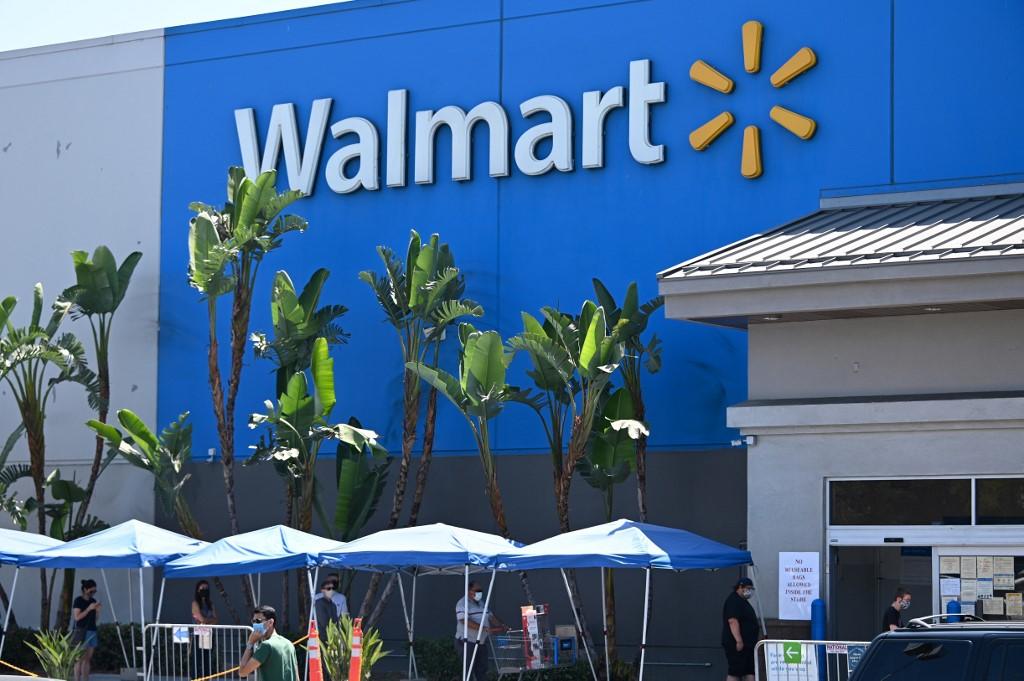
Walmart WMT.O became the first retailer ever to hit $1 trillion in market valuation on Tuesday, riding on a year-long rally that has seen its shares rise nearly 26%, placing it among the ranks of Big Tech heavyweights such as Nvidia and Alphabet.
Walmart's ascent has been notable as it has managed to tap into a mix of appealing simultaneously to higher-income customers seeking value and convenience and retaining its core base of lower-income shoppers. The stock has surged 468% over the past decade, outpacing the S&P 500's 264% gain, in part due to that dual strategy, which competitors have struggled to replicate.
In the past five years, the retailer has expanded its online marketplace to over half a billion items, launched one-hour delivery, created Walmart+ to rival Amazon Prime, and built a $4-billion advertising business that boosted margins.
Critically, Walmart bet early and aggressively on AI, pouring billions into supply-chain automation to stock fresher produce, speed up deliveries and improve inventory forecasting and search, giving the Bentonville, Arkansas-based retailer an operational edge that has helped it beat U.S. same-store sales estimates for 15 consecutive quarters, based on estimates compiled by LSEG.
Investor optimism around Walmart's AI investments has further fueled the stock's rise as consumers increasingly shift grocery shopping online.
With every $1 in $4 spent on groceries in the U.S. going to Walmart, the retailer finds itself in a sweet spot in a challenging consumer environment where low- and middle-income households face strain from inflation, a cooling job market, tariffs, and uncertainty from the recent U.S. government shutdown, all of which have made the retailer's every day low price strategy more compelling.
"It really is a remarkable accomplishment. We think of trillion-dollar market caps as being a tech-stock phenomenon, but Walmart is a gritty 'old-economy' company," said Charles Sizemore, a Walmart investor, appreciating the retailer's investment in technology to cut costs.
John Furner, stepping into the role as Walmart's global CEO on February 1, faces the critical challenge of accelerating the company's technology investments in an AI-driven era while fending off competition from rivals AmazonAMZN.O, Aldi, and Costco COST.O.
Walmart was added to the tech-focused Nasdaq-100 Index .NDX last month, home to the most valuable non-financial companies, replacing British drugmaker AstraZeneca AZN.L.
It joins a roster of U.S. companies valued at $1 trillion or more, including Nvidia NVDA.O at $4.5 trillion, Alphabet GOOGL.O at $4.1 trillion, Apple AAPL.O at $3.9 trillion, Microsoft MSFT.O at $3.1 trillion, Amazon AMZN.O at $2.6 trillion, Meta META.O at $1.8 trillion, Broadcom AVGO.O at $1.6 trillion, Tesla TSLA.O at $1.6 trillion, and Berkshire Hathaway BRKa.N at $1 trillion.
The milestone caps a remarkable journey for the retailer, which opened its first store in Rogers, Arkansas, in 1962 and now operates 4,600 locations across the United States. Walmart went public in 1970 at $16.50 on the over-the-counter exchange before listing on the New York Stock Exchange in 1972. The company joined the Dow Jones Industrial Average in 1997 and has been a fixture in the S&P 500 for decades.
Walmart's stock was trading at $127.10 in afternoon trading. This price reflects multiple stock splits, most recently a 3-for-1 split on February 26, 2024.
AI arms race
The chain has struck partnerships with OpenAI and Google to embed its online shopping tools directly into their search chatbots. These growing investments in AI are also aimed at closing the gap with Amazon, which had a head start with its chatbot, Rufus, a GenAI-powered assistant that answers shopping queries.
"Walmart is really five stores in one and their boom has come from food retailing. I expect it will approach a $2 trillion market capitalization in the next few years," said Louis Navellier, chief investment officer at Navellier & Associates, which has held Walmart shares for nearly 2 years. —Reuters

