

 GMA Brandtalk
 Tracking
 Archives

SEC issues compliance guidelines for one-person corporations
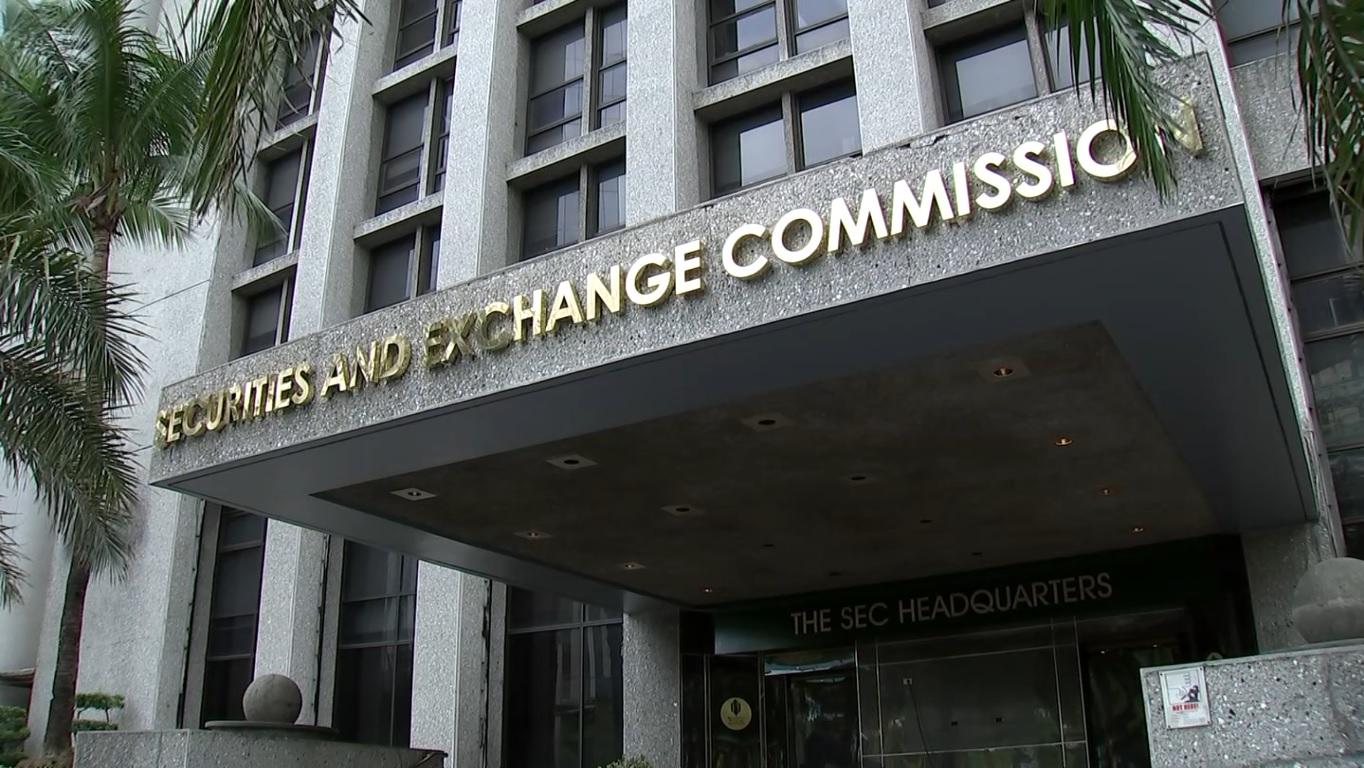
The Securities and Exchange Commission (SEC) on Saturday announced it has issued a comprehensive compliance checklist for one-person corporations (OPCs).
In a statement, the SEC said the guidelines would help OPCs comply and stay up-to-date with their reportorial requirements.
The corporate regulator said it issued Memorandum Circular No. 10, Series of 2026, or Guidelines on the Compliances of OPCs, on February 16.
The new guidelines consolidate rules that govern the compliance of OPCs with reportorial requirements and bond posting, while also providing the scale of fines and penalties for corresponding violations as provided under the Republic Act 11232, or the Revised Corporation Code, and other existing rules and regulations.
“These new guidelines outline the reportorial requirements and penalties imposed on OPCs. By clarifying expectations around their submissions, we are eliminating ambiguity and empowering business owners to operate with the confidence that they are in full compliance with the law,” said SEC Chairperson Francis Lim.
“This streamlined approach also allows the SEC to strengthen its monitoring powers over corporations, in line with its mandate of promoting transparency and accountability in the corporate sector,” he added.
Under the guidelines, an OPC must appoint its treasurer, corporate secretary, and other officers and subsequently submit a Form of Appointment (FAO) for the OPC to the SEC within 20 days from the approval of its certificate of incorporation.
Failure to do so will result in a penalty of P10,000.
For the subsequent appointment of an officer, the OPC must file an FAO within five days after the appointment; otherwise, the company will face fines per missed report worth P5,000 for the first offense and up to P9,000 for the fifth offense.
The SEC said OPCs shall submit their annual financial statements (AFS) on the deadline prescribed by the Commission, or within 120 calendar days from the end of their respective fiscal year, and must conform with Republic Act No. 8799, or the Securities Regulation Code (SRC).
Under the guidelines, the corporate regulator said it introduced lower and more proportionate penalty rates for OPCs, effectively amending MC No. 6, Series of 2024, which imposed uniform penalties for the late and non-filing of reportorial requirements for stock corporations and OPCs, as it recognizes the distinct nature of OPCs and ensures that penalties for late or non-filing of financial statements are “fair, reasonable, and commensurate with their scale of operations.”
For late filing of AFS, or submission within the year of the prescribed deadline, the penalty would be between P5,000 and P9,500 for the first offense and up to P9,000 to P13,500 for the fifth offense, depending on the retained earnings of an OPC.
Meanwhile, for non-filing of AFS, or submission beyond one year from the prescribed period, an OPC would be penalized with an amount ranging between P10,000 and P19,000 for the first offense and from P18,000 to P27,000 for the fifth violation, based on the net profit.
The SEC said OPCs with total assets or liabilities exceeding P3 million are required to submit an audited annual financial statement, effective for the fiscal year ending on or after December 31, 2025.
The corporate regulator said OPCs that do not meet the new audit threshold must submit a financial statement accompanied by a Statement of Management’s Responsibility, signed under oath by the president and treasurer.
Moreover, OPCs whose single stockholder also assumes the role of treasurer shall post a surety bond, or other acceptable bond forms, such as in cash or property, according to the commission.
The SEC said the bond shall be subject to renewal every two years, or as may be required based on the review of the financial statement or of the latest amended articles of incorporation, in instances of approval of an increase in the authorized capital stock.
Under the guidelines, the corporate regulator said bond coverage ranges between P1 million and P5 million, depending on the authorized capital stock of the OPC.
Companies with authorized capital stock of over P5 million shall post a bond equal to the amount of their authorized capital stock, it said.
The SEC said that a self-appointed treasurer of an OPC at the time of incorporation shall post bond within 30 days after the issuance of the certificate of incorporation, while a single stockholder appointing another person as treasurer, but later on appointing himself/herself to the role, must post bond within 30 days from the submission of the FAO.
The commission said that non-compliance with the deadline for the posting of bond shall result in a basic fine of P10,000 plus an additional P500 per month of delay for the first violation of initial posting.
For registered OPCs with no filings of Appointment of Officers and whose single shareholder also assumes the position of the treasurer, they are given 30 days from the date of effectivity of the guidelines to comply with the necessary posting of the bonds. Failure to do so will result in the necessary fines and penalties.
The SEC said OPCs who posted the necessary bonds with the Commission must ensure their compliances are still valid and up to date.
It said that OPCs that had been monitored for failure to timely post the required bond or for the late filing of their Appointment of Officers but were not penalized yet shall be assessed a penalty of P5,000. Upon payment, the company shall not be considered to have committed a first offense.
OPCs with pending monitoring applications as of the date of effectivity of the guidelines will not be processed under the previous guidelines.
The SEC said they are mandated to file a new monitoring request and will be evaluated based on the memorandum circular. —VBL, GMA Integrated News

