

 GMA Brandtalk
 Tracking
 Archives

Airline stocks in Asia, Europe slide as passengers scramble to leave Middle East
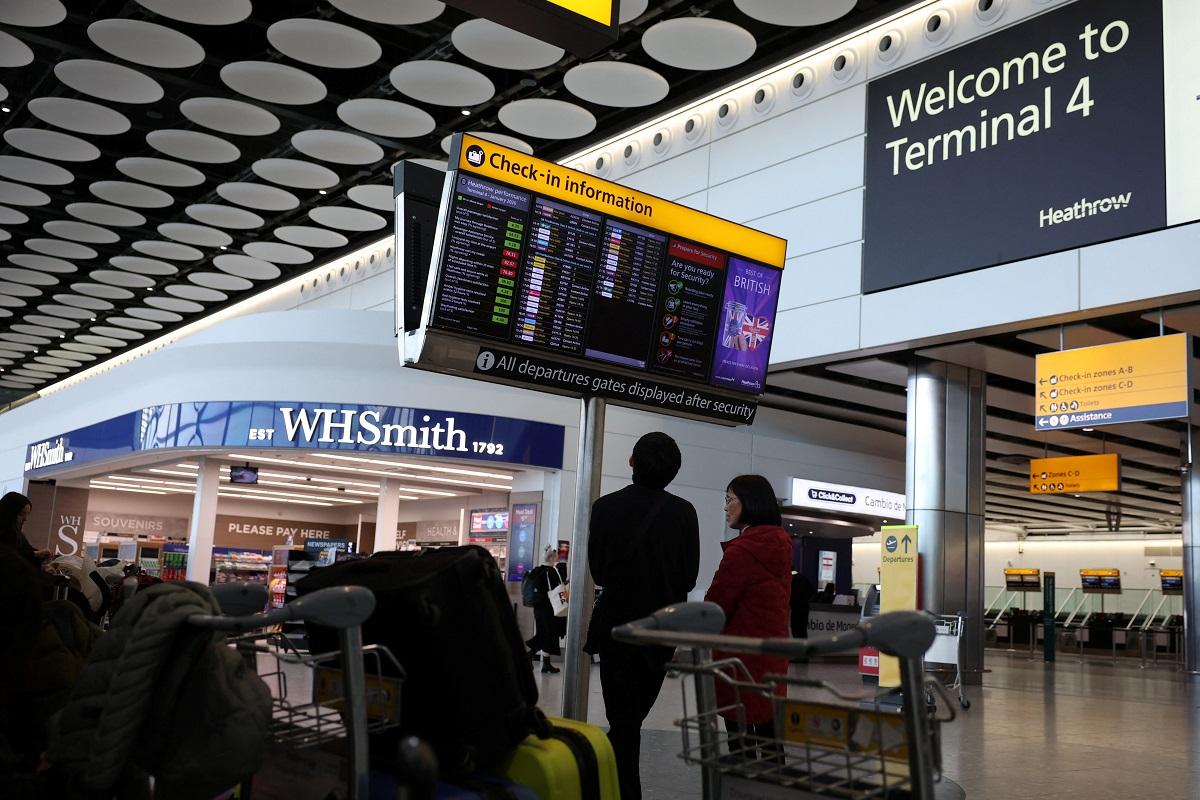
SYDNEY/HONG KONG/LONDON — Airline stocks in Asia and Europe extended losses on Tuesday as the US and Israeli air war against Iran escalated, with carriers monitoring fuel price spikes and passengers scrambling to find flights or alternative routes out of the Middle East.
Major Gulf hubs including Dubai, the world's busiest international airport and normally handling more than 1,000 flights a day, remained closed for a fourth day, leaving tens of thousands of passengers stranded.
"It's pretty well the biggest shutdown we've seen certainly since the COVID pandemic," said Paul Charles, CEO of luxury travel consultancy PC Agency, adding that beyond passenger disruption the cargo impact would run to "billions of dollars."
Across the region, stranded travelers rushed to secure seats on the few repatriation flights that began operating.
Ambra Chessa, an Italian passenger who had been in Dubai, said she eventually boarded an unscheduled charter flight home. "As soon as I arrived at the airport, they said to me, 'Get on board immediately, you're leaving in an hour'," she said.
Carolina Raggi, another Italian passenger, said she received a last-minute alert through Italy's foreign ministry travel portal, leaving little time to pack. Each seat cost 1,500 euros ($1,739) and the "plane wasn't full," she said.
Kirill Lechleide, a German tourist in Dubai, chose to stay. She said the loud bangs of missiles and drones being intercepted overhead were frightening, but ruled out trying to leave overland via neighboring Oman due to safety concerns.
"The safest place to be is the hotel."
Airlines hedge rising oil price
Oil prices have surged amid the widening conflict, rising roughly 30% so far this year and threatening to lift jet fuel costs and squeeze airline profits.
Qantas Airways CEO Vanessa Hudson said the airline had "pretty good" fuel hedging but the spike in oil prices was significant for the industry. The Australian airline's shares fell for a second day, closing down 1.8%.
Qantas said last week it had 81% of its fuel hedged for the second half of its financial year ending June 30, while Singapore Airlines and Hong Kong's Cathay Pacific Airways have fuel hedging programs.
Japan Airlines chief financial officer Yuji Saito said on Monday the carrier planned to adjust its fuel surcharge for international flights, but gave no timeframe. It was offsetting part of the price spike through hedging.
Shares of Japan Airlines closed down 6.4%, while Korean Air Lines dropped 10.3%, its biggest drop since March 2020. Cathay Pacific shares closed down about 3%.
Shares of major Chinese carriers Air China, China Eastern Airlines, and China Southern Airlines all closed down between 2% and 4% in Hong Kong and Shanghai.
In Europe, shares of Wizz Air, British Airways owner IAG, Lufthansa and Air France KLM were down around 5% to 7%. Shares of US carriers United Airlines, Delta Air Lines, American Airlines and Southwest Airlines were down between 3% and 4% in premarket trading.
Financial impact varies by airline
Uncertainty over how long the conflict will last is likely to force travelers to cancel or reschedule travel plans.
With Russian skies largely closed to Western airlines since the Ukraine war started in 2022, carriers are now squeezed into narrowing flight corridors over the Middle East, forcing many to add more flying time and fuel to circumvent war zones.
Demand for alternatives to Gulf airlines has surged, with bookings and ticket prices jumping on routes like Hong Kong-London, Reuters checks showed on Tuesday.
"Flight plans have to normalize to get the backlog of stranded guests unstuck," Benjamin Jacobi, Germany head for travel giant TUI, said at a travel show in Berlin.
The operational and financial impact varies significantly among airlines, said Karen Li, J.P. Morgan's head of Asia infrastructure, industrials and transport research.
"There are important differences across carriers in terms of hedging strategy, air cargo exposure, and network rerouting capabilities that will shape the actual impact from the Middle East situation," Li said.
Li expects "investors will increasingly differentiate between airlines based on these factors as the situation evolves, rather than treating the sector as a monolith." — Reuters

