

 GMA Brandtalk
 Tracking
 Archives

Sanjia Steel claims harassment after Tagoloan plant raid and shutdown
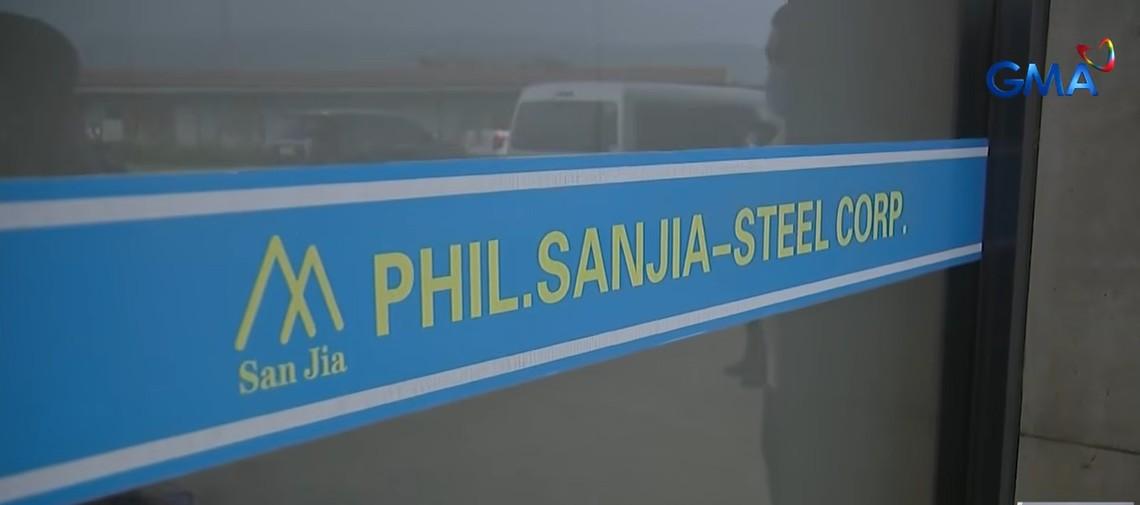
The Philippine Sanjia Steel Corp. branded as "harassment" the raid on its steel plant in Tagoloan, Misamis Oriental, by the Presidential Anti-Organized Crime Commission (PAOCC) and the National Bureau of Investigation (NBI).
In a statement, Sanjia Steel also said that businessman Tony Yang, who was linked to Philippine offshore gaming operations and who was arrested on charges of falsification of public documents and the use of aliases, was no longer one of its shareholders.
“This was not about public safety. This was harassment packaged as law enforcement,” the company said through its spokesperson and legal counsel, Atty. Julia Chu.
GMA News Online reached out to PAOCC executive director Benjamin Acorda Jr. and NBI director Melvin Matibag.
On Saturday, the Department of National Defense (DND) said 69 Chinese nationals were arrested after joint operatives from the Armed Forces of the Philippines, PAOCC, NBI, and other law enforcement agencies raided Philippine Sanjia ‘s steel plant in Misamis Oriental.
In its statement, however, Sanjia Steel said that Yang is “not listed as a shareholder of the corporation” based the company’s Securities and Exchange Commission (SEC) fillings for 2025.
The steel manufacturer said that Yang “was previously a shareholder of the company, he had fully divested his shareholdings and for the last several years has no longer been affiliated or involved with the company in any way, whether as a shareholder, director, officer or beneficial owner.”
Authorities claimed that materials processed in the plant may be harmful and could pose health risks to workers and nearby communities.
They also warned that steel products manufactured at the facility could be substandard and dangerous if used in construction projects in the country.
“These alleged infractions fall strictly under the regulatory supervision of civilian agencies. Legitimate compliance issues are ordinarily addressed through a Notice of Violation process—not by serving criminal search warrants, shutting down an industrial complex, and detaining technical personnel,” Chu said.
Following the operation, authorities ordered the temporary closure of the facility pending legal proceedings.
Sanjia Steel warned that the shutdown immediately displaced over 300 Filipino workers and operators, creating what it described as an avoidable humanitarian and economic crisis.
“We demand the immediate reopening of the factory because our Filipino workers are hungry. Their families are suffering from an artificial economic crisis triggered not by market forces, but by state-sponsored harassment,” said Chu.
The firm likewise criticized authorities for publicly accusing the plant of manufacturing substandard steel products despite the absence of representatives from the Department of Trade and Industry–Bureau of Philippine Standards (DTI-BPS), which Sanjia noted is the agency legally authorized to conduct product-standard testing.
The company said that its products meet all engineering and dimensional standards and stressed that it possesses valid and active Product Standard (PS) certifications.
Sanjia also rejected claims involving uranium and so-called “nuclear waste,” calling the allegations baseless and sensationalized.
The company clarified that its operations involve imported Japanese scrap metal and emphasized that Japanese industrial standards are among the strictest in the world.
It added that all imported materials enter the country with complete certifications and are processed locally under a valid Environmental Compliance Certificate issued by the Department of Environment and Natural Resources.
According to Sanjia, careless public references to “nuclear waste” and “uranium” involving highly regulated Japanese industrial materials could unnecessarily strain sensitive international trade relations.
The company also defended the 69 foreign nationals apprehended during the operation, identifying them as specialized engineers and technical personnel necessary for machinery operations and technology transfer.
“All foreign personnel possess valid immigration documents and active Alien Employment Permits issued by the Department of Labor and Employment,” Chu said.
Sanjia further alleged that serious due process violations occurred during the operation, claiming that authorities prevented the company’s legal team from entering the facility, leaving workers and detained personnel without access to counsel for nearly 24 hours.
The company argued that such actions may constitute a violation of Article III, Section 12 of the Constitution and could potentially affect the admissibility and integrity of evidence gathered during the operation.
Sanjia also questioned the absence of regulatory agencies with direct jurisdiction over several issues cited during the operation, including the DENR, Bureau of Immigration, and SEC.
“These agencies possess direct jurisdiction over the issues raised during the raid,” Chu said.
“If the objective was truly regulatory compliance, then the proper agencies should have been present from the beginning,” she added.
Amid the controversy, Sanjia said it plans to invite independent international auditors and its Japanese suppliers to conduct transparent assessments and validate the facility’s compliance and operational standards. –NB, GMA News

