

 GMA Brandtalk
 Tracking
 Archives

Mama Jita's tablea grows into thriving enterprise
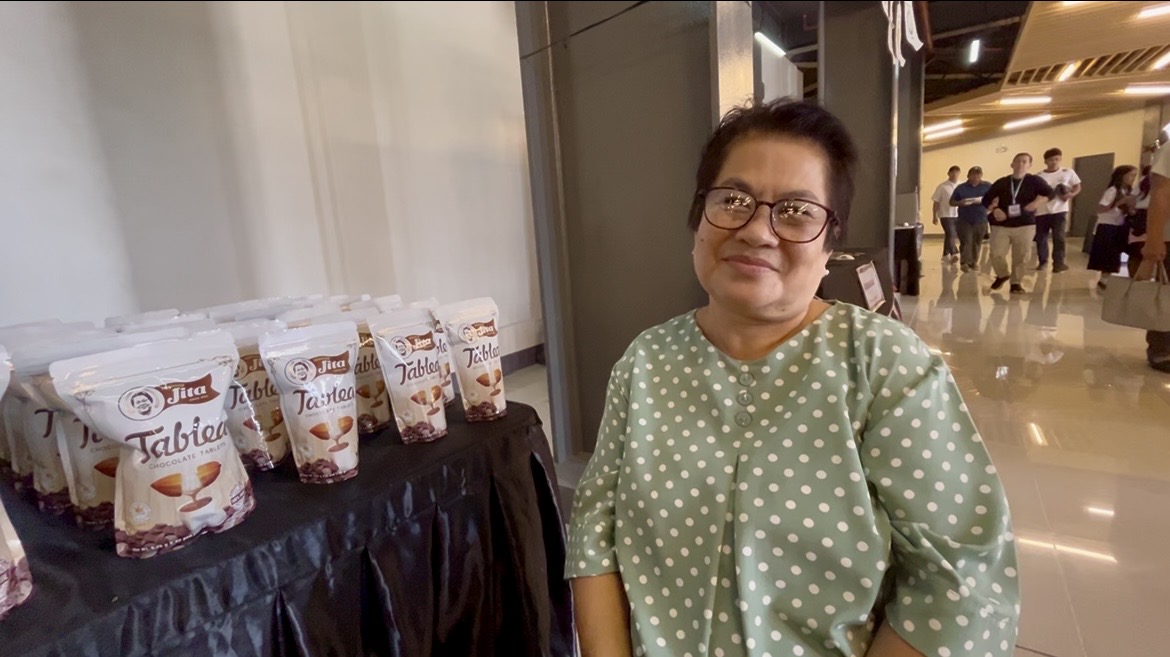
MAMBAJAO, Camiguin — What began as a way to keep paying her employees during the COVID-19 pandemic has grown into one of Mambajao, Camiguin's most popular pasalubong (take-home souvenir) brands.
Mama Jita's Food Products, a homegrown business founded by Julieta Dela Cerna, produces tablea in various package sizes, as well as iced sikwate (traditional hot chocolate served cold), and calamansi, mango, and lanzones juices.
Cerna established the business in 2020 using cacao beans from trees planted by her parents after the pandemic forced her fruit stand to shut down.
“Dahil sa COVID-19, wala nang turistang pumunta dito sa Camiguin, so nag-isip na lang po ako ng ibang paraan para makasahod ang mga tauhan ko,” Cerna told GMA News Online.
(Because of COVID-19, tourists stopped coming to Camiguin, so I had to think of another way to ensure my employees could still earn a living.)
However, success did not come overnight.
Cerna recalled spending days experimenting before perfecting her tablea-making process.
“So, sa mga ilang araw na nagpatuloy ang aking pag-trial and error hanggang makamit ko na makuha po ang tamang pag-tablea or pagsikwate,” she said.
(I spent several days doing trial and error until I finally perfected the process of making tablea for sikwate.)
Expanding the business
When she first ventured into tablea production, only three people manually processed the cacao beans—from roasting and grinding them to molding the finished tablea.
Mama Jita's tablea is made from 100% cacao beans that undergo a meticulous fermentation process to develop their flavor.
The business took a major step forward after becoming a beneficiary of the Department of Science and Technology's (DOST) Small Enterprise Technology Upgrading Program (SETUP) in 2024.
Through the program, Cerna acquired equipment such as a roaster, cracker, and grinder, allowing her to improve production, secure Food and Drug Administration approval, and expand the business, which now employs around 20 workers.
Founded by Julieta Dela Cerna, Mama Jita's Food Products is a homegrown business in Mambajao, Camiguin that not only sells tablea in various packages but also iced sikwate, or chocolate drink, and calamansi, mango, and lanzones juices.
— Celine (@celine_serquina) August 4, 2026
Now at 62 years old, Cerna shows non signs… pic.twitter.com/QHUjFBUJ70
SETUP is one of DOST's flagship programs that assists micro, small, and medium enterprises (MSMEs) by providing:
- Seed funding for technology acquisition
- Equipment acquisition and upgrading
- Technical training and consultancy services
- Packaging and label design
- Database information systems
- Support in establishing product standards, including product testing and equipment calibration
“Madali na maka-apply ka kasi mabuti silang mag-explain. So kami nga mga negosyante na bago, maintindihan namin na hindi mabigat," Cerna said.
(It's easy to apply because they explain the program well. Even for new entrepreneurs like us, it's easy to understand.)
"May grace period ka, one year, then pagkatapos, three years to pay at zero interest, so magaan ang pagbabayad,” she added.
(There's a one-year grace period, followed by three years to pay with zero interest, making repayment manageable.)
Today, Mama Jita's Food Products are sold in pasalubong shops and malls in Camiguin and have expanded to markets in Cagayan de Oro and Bohol.
Climate challenges
Despite the business' growth, Cerna said climate change has made cacao farming increasingly difficult.
She said prolonged heat over the past four months damaged young cacao fruits, significantly reducing harvests.
“Sa ngayon, hindi masyadong marami kasi changing climate na ngayon. Kasi matagal ang pag-init, almost 4 months, so nasira yung maliit niyang fruit, so hindi madami ngayon ang ma-produce ko.”
(Right now, harvests are lower because of the changing climate. The prolonged heat, which lasted almost four months, damaged the young fruits, so I can't produce as much as before.)
Cerna said production has dropped from around 300 to 400 kilograms of dried cacao beans a day to only about 100 kilograms daily.
Still, she remains optimistic.
“Pero ngayon, umuulan na, so maghihintay kami ng tatlong buwan o apat, magdami naman ang harvest na po,” she said.
(Now that the rains have come, we'll wait another three to four months, and the harvest should increase again.)
On her eight-hectare farm, Cerna has expanded the number of cacao trees from 2,000 to 6,000 through intercropping while also cultivating lanzones and coconut trees.
Looking ahead
At 62, Cerna has no plans of slowing down.
She hopes to acquire additional heavy-duty equipment that will enable the business to process more cacao beans into tablea and further expand production.
For aspiring entrepreneurs, her advice is simple:
“Hindi lang magpatalo sa pagsubok. Kung ano ang mararamdaman mo, go-go lang,” she said.
(Don't let challenges defeat you. Whatever you may feel, just keep going.)
Cerna added: “Panalangin lang dahil ang kahirapan ay malampasan natin. Kasi sa pagsubok, doon tayo matuto.”
(Keep praying because we can overcome hardships. It is through challenges that we learn.) — MCG, GMA News

