

 GMA Brandtalk
 Tracking
 Archives

Inflation snaps four-month easing, accelerates to 7.2% in September 2026
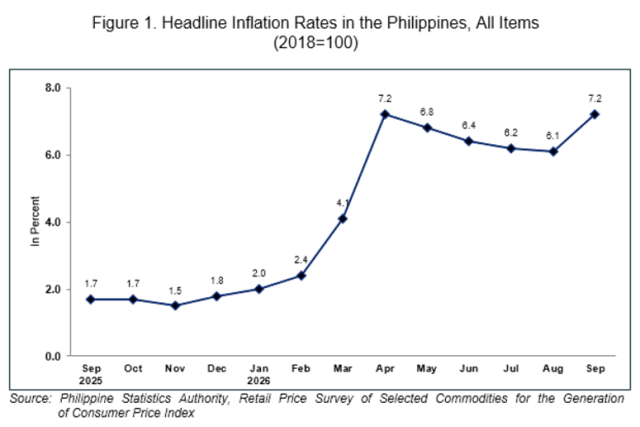
The Philippines’ inflation rate accelerated in September 2026, cutting short a four-month deceleration streak, due to faster increases in food and utilities costs during the period, the Philippine Statistics Authority (PSA) reported on Tuesday.
At a press briefing, National Statistician and PSA chief Claire Dennis Mapa reported that the inflation rate rose to 7.2% last month, from 6.1% in August 2026.
September’s inflation print was at the same level as last seen in April 2026 and also the fastest since March 2023, when it clocked in at 7.6%.
This brought the year-to-date average inflation rate to 5.4%, still above the government’s comfortable ceiling of 2% to 4%.
“Ang pangunahing dahilan ng mas mataas na antas ng inflation para sa buwan ng Setyembre 2026 kumpara noong buwan ng Agosto 2026 ay ang mas mabilis na pagtaas ng presyo ng Food and Non-Alcoholic Beverages na may 6.7% inflation rate,” Mapa said.
(The main reason for the faster inflation rate for the month of September 2026 compared to August 2026 was the faster increase in the prices of Food and Non-Alcoholic Beverages with an inflation rate of 6.7%.)
In August 2026, the Food and Non-Alcoholic Beverages index had an inflation rate of 4.6%.
The heavily weighted index also contributed a 73.4% share in September’s overall inflation rate increase.
The Housing, Water, Electricity, Gas and other Fuels index was the second contributor to the inflation rate acceleration during the month, with a rate of 8.4% from 7.9% and a 9.9% contribution to the overall increase.
Transport also increased to 14.6% from 13.5% month-on-month.
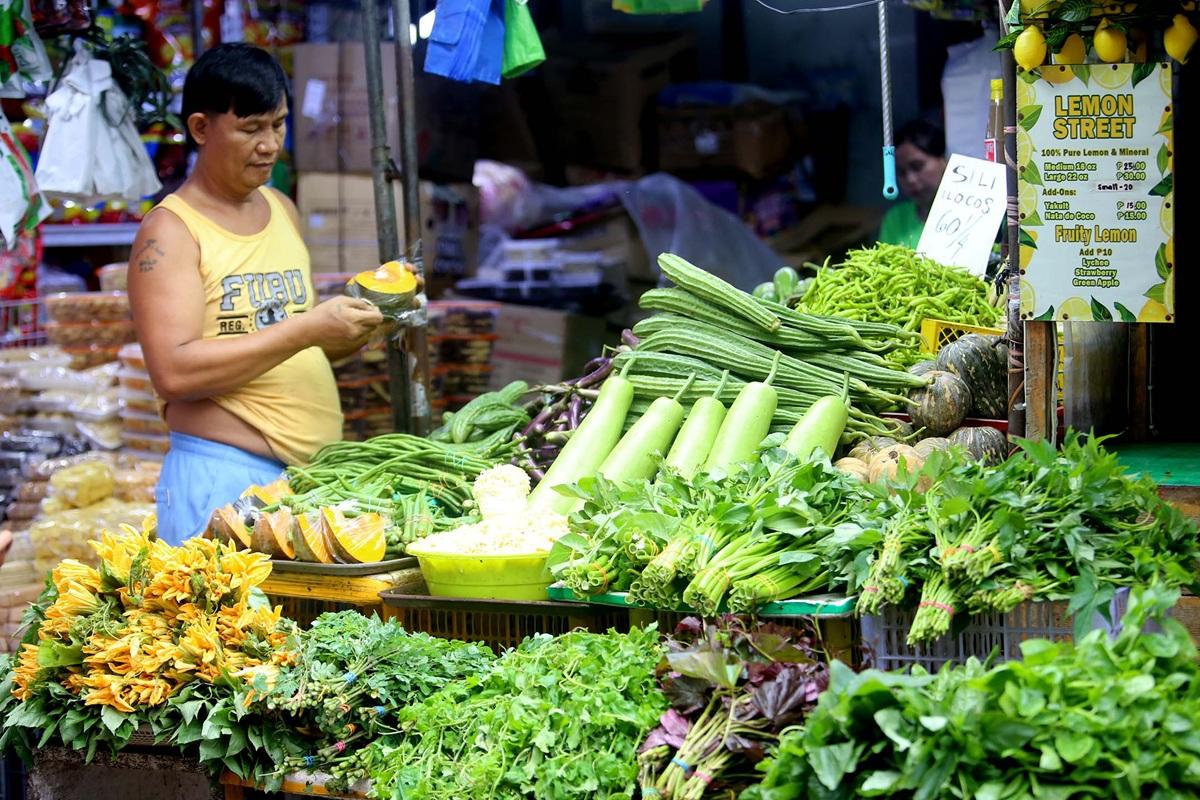
Food inflation, which tracks the price movements of food items in a “basket” commonly purchased by households, rose to 6.8% last month from 4.6% in the prior month.
The uptrend in food inflation in September 2026 was due to the 10.7% annual growth rate in the index of vegetables, tubers, plantains, cooking bananas and pulses during the month from an annual decrease of 3.4% in August 2026.
Faster year-on-year increments were also seen in the indices of the following food items:
- Rice: 20.3% from 19.4%
- Flour, bread and other bakery products, pasta products, and other cereals: 4.5% from 4.3%
- Fish and other seafood: 7.4% from 6.6%
- Fruits and nuts: 8.7% from 5.8%
- Ready-made food and other food products not elsewhere classified: 3.4% from 3%
In a statement, Department of Economy, Planning, and Development (DEPDev) Secretary Arsenio Balisacan said, “September’s inflation rise was driven mainly by disruptions in food supply caused by adverse weather and higher global oil prices.”
“These are significant supply-side pressures, but they are being met with targeted interventions to mitigate the impact on households,” said Balisacan.
The country’s chief economist said the government is ramping up efforts to strengthen food supply, temper energy costs, and protect households from rising prices.
To help temper price pressures, the government suspended excise taxes on LPG and kerosene, expanded the Secondary Price Cap to the Visayas and Mindanao grids to help lower electricity costs, and is pursuing a toll waiver on major highways for haulers of agricultural produce to reduce logistical expenses, according to the DEPDev chief.
To strengthen food security, Balisacan said the government is expanding palay storage capacity in Tarlac and is rolling out the country's first commercially approved African Swine Fever (ASF) vaccine to help stabilize pork supply, especially for the coming holiday season.
The country’s chief economist likewise cited an agreement for improved data sharing between the Department of Agriculture (DA) and the Philippine Atmospheric, Geophysical and Astronomical Services Administration (PAGASA) which would pave the way for more climate-resilient agricultural planning.
“The best response to supply-driven inflation is to strengthen supply itself. That is why we are expanding food production and storage, improving logistics, and building resilience against climate shocks,” Balisacan said.
“These investments address the root causes of price pressures and will deliver a more stable and affordable food supply in the years ahead,” the DEPDev chief said.
In preparation for a possible intensification of El Niño, Balisacan said the government is advancing the procurement of key agricultural inputs, expanding food and cold storage facilities, conducting cloud-seeding operations in drought-affected areas, and providing targeted interventions to vulnerable communities. —AOL, GMA News

