
 GMA Brandtalk
 Tracking
 Archives


BSP eyes in-house production of polymer banknotes in 2027
The Bangko Sentral ng Pilipinas (BSP) is eyeing the production of polymer banknotes in-house by next year, in a bid to ease dependence on outsourcing amid the high demand, a top official said Monday.
According to BSP deputy governor Mamerto Tangonan, the central bank is already preparing a line in its Security Plant Complex in Quezon City to be able to produce polymer banknotes, currently outsourced to Australia.
“To give you an answer, it’s within 2027… We will produce our own. You know, we have to learn, learn to operate the polymer lines so that we’re not forever just importing,” he told reporters in Quezon City.
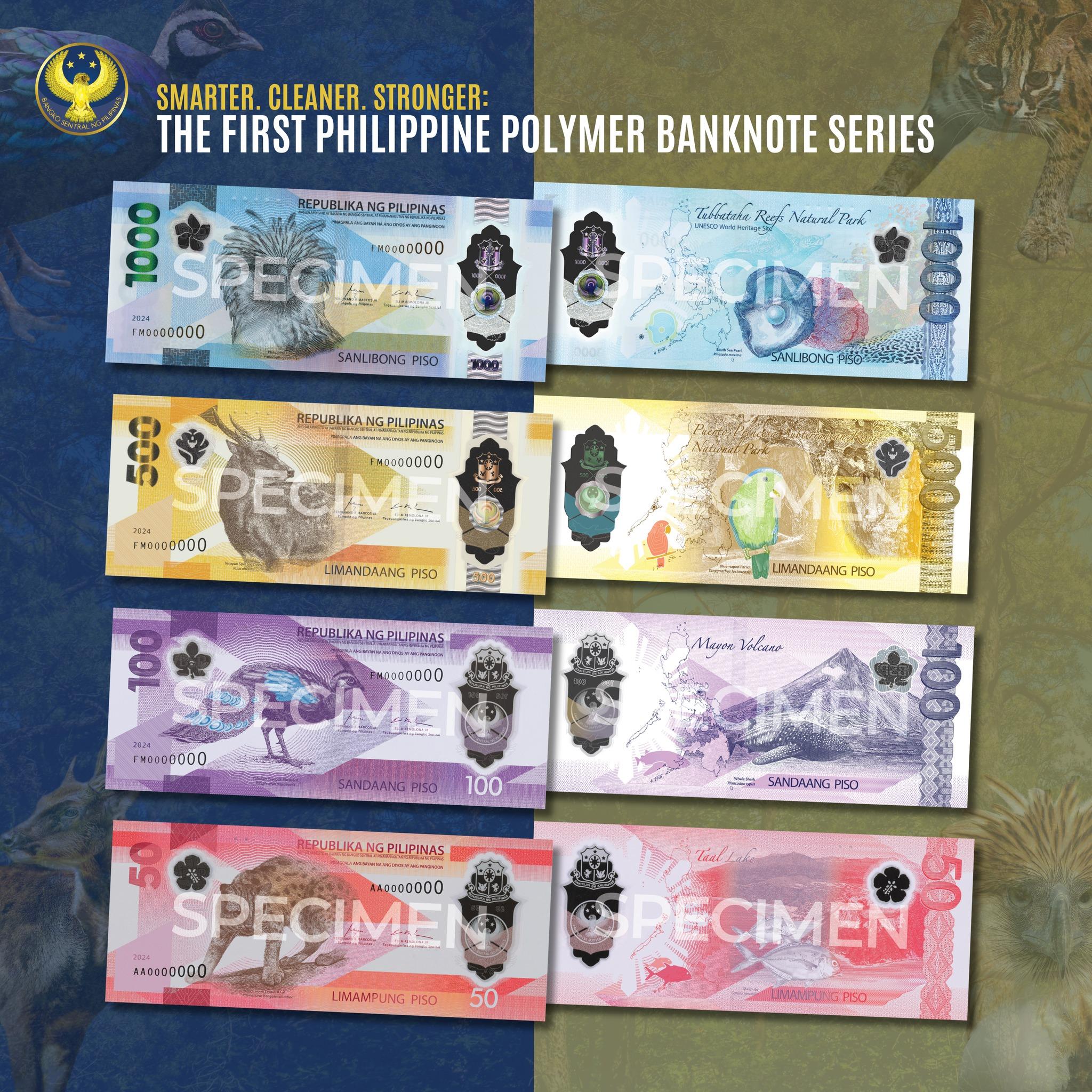
The country’s first polymer banknote was for the P1,000 denomination, whose design was revealed to the public in December 2021 and released into circulation in April 2022.
The BSP in 2024 then released the First Philippine Polymer Banknote Series (FPPBS), with denominations in P500, P100, and P50. The FPPBS was awarded the “Best New Banknote or Banknote Series” by the International Association of Currency Affairs (IACA) in 2025.
Tangonan said one initial line will be used to produce polymer banknotes, with a capacity to produce up to 500 million pieces yearly, as he cited high demand for the polymer banknotes. A 2024 survey found that 61.3% of Filipinos support the overall initiative of Philippine banknotes polymerization.
“We have a production plan for the whole year. It’s a good practice to run only one product at a time because when you change, you have to change the plate and bring the machines down; you have to clean it,” he said.
The central bank said polymer banknotes are “smarter” as these incorporate advanced security features and that counterfeits of such bills were harder to manufacture. It also said that its global warming potential is 38.36% lower than that of its paper counterpart.
The BSP also noted that the polymer banknotes are “cleaner” as they are less likely to get damaged or dirty due to water, oil, and dirt, and are “stronger” as they have a lifespan of as long as 7.5 years versus the paper banknotes’ 1.5 years.
“Very good ‘yung feedback that we get from the public, from the banks, on the polymers,” Tangonan said, as he said more polymer banknotes can be stored in automated teller machines (ATMs) compared to their paper banknote counterparts which are thicker.
Tangonan also said that demand for cash continues to grow even as electronic transfers have gained ground amid the growth of digital banks and e-wallets in the the country.
“You know what, it’s a paradox that both (cash and e-cash) continue to increase alongside each other,” he said, noting that cash has not been substituted by e-cash yet. —AOL, GMA News

