

 GMA Brandtalk
 Tracking
 Archives


Agri damage due to El Niño breaches P10B
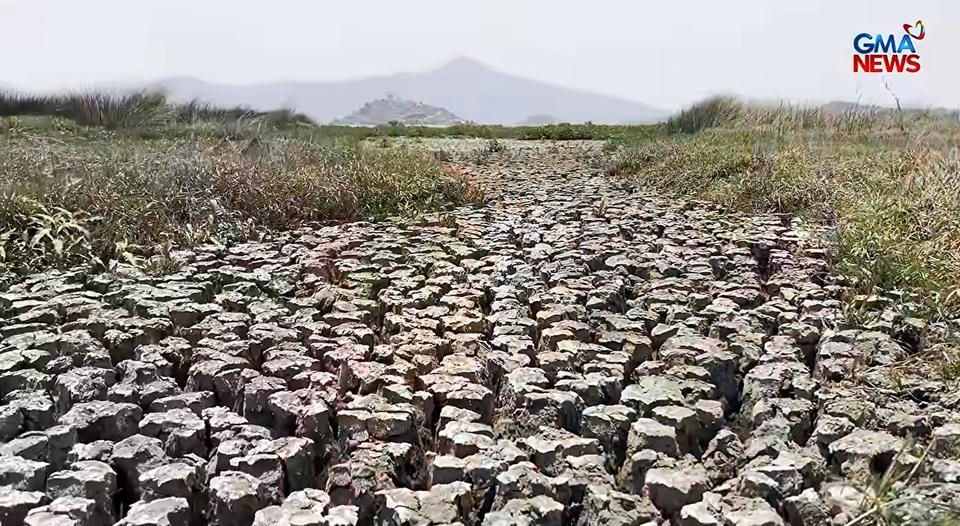
The damage and losses sustained by the country’s agricultural sector due to El Niño have breached P10 billion, according to latest data from the Department of Agriculture (DA).
Citing estimates of its regional offices, the DA said the value of losses resulting from the weather phenomenon amounted to P10.44 billion and affected 338,066 farmers and fisherfolk across 332,726 hectares of agricultural areas with a total of 311,289 metric tons (MT) of volume of production losses incurred.
The damage was recorded in Cordillera Administrative Region, Ilocos Region, Cagayan Valley, Central Luzon, CALABARZON, MIMAROPA, Bicol Region, Western Visayas, Negros Island Region, Central Visayas, Eastern Visayas, Zamboanga Peninsula, Northern Mindanao, Davao Region, SOCCSKSARGEN, and Caraga.
Moreover, the DA said rice production is projected at approximately 18.6 million MT, representing a decline of roughly one million MT from the 2025 level.
“The projected decrease is attributed to a combination of factors, including elevated fertilizer and fuel costs, El Niño impacts, severe flooding brought by the Habagat that damaged standing crops, and farmgate price volatility that affected farmers’ planting decisions and actual planted area,” it said.
“At present, the reported production losses due to El Niño have reached 129,757 MT, equivalent to 1.33% of the second-semester 2026 target production of 9.7 million MT,” it added.
For corn, production in 2026 is projected to decrease by approximately 500,000 metric tons (MT) compared with 2025, “as farmers face higher production costs, particularly inorganic fertilizers and fuel, alongside adverse weather conditions and El Niño.”
“To date, reported production losses have reached 162,750 MT, equivalent to around 1.85% of its target production of 8.8 million MT for 2026,” the Agriculture Department said.
Meanwhile, to address the adverse effects of El Niño in the agriculture sector, the DA said it has provided initial interventions worth P18.64 billion to affected farmers, broken down as follows:
- P10.82 billion worth of production support (agri-inputs such as seeds, fertilizers, soil conditioner, etc.) distributed by DA Regional Field Offices
- P6.26 billion worth of financial assistance through the Presidential Assistance for Farmers and Fisherfolk Program (PAFFP), benefiting 2,693,630 individuals
- P703.06 million worth of Philippine Crop Insurance Corporation (PCIC) indemnification for 77,522 affected farmers
- P520.66 million worth of 97,345 animal heads distributed to 365 groups of farmers and 742 farmer individuals, forage seeds, and zoological supplies
- P192.62 million tailor-fitted support services to 269 AMIA Villages that are adaptive to climate change for farmers and fisherfolk
- P98.63 million worth of 629 pump and engine sets and small-scale irrigation projects to enhance water supply in CAR, Regions I, II, III, IV-A, IV -B, V, VI, IX, XII
- PhP 31.08 million worth of financial assistance through the Agricultural Credit Policy Council (ACPC)-AgriRECOVER program for 1,127 borrowers
- P10.82 million for the cloud seeding operations conducted in collaboration with DOST-PAGASA and DND-PAF in agricultural and watershed areas in Region II (including Magat Dam), III (including Pantabangan Dam), VI, and Negros Island Region (NIR)
The DA added it is undertaking the following actions to mitigate the effects of the ongoing El Niño phenomenon:
- Continuous issuance and dissemination of press releases, agrometeorological advisories, and information, education, and communication (IEC) materials through the DA's official website and social media platforms. These include guidance on appropriate crop management practices, planting of drought-tolerant crop varieties, and water conservation measures
- Continuous monitoring of agriculture and fishery areas vulnerable to drought, to assess potential impacts on production and livelihoods, and to determine and implement appropriate, area-specific interventions
- Conduct of/participation in Kadiwa activities to make safe, fresh, and affordable fish and fishery products available and accessible to affected communities.
--VAL, GMA News

