

 GMA Brandtalk
 Tracking
 Archives

ADVERTISEMENT
Filtered By: Money
Money
PHL gets latest investment grade rating from Korea's NICE Ratings
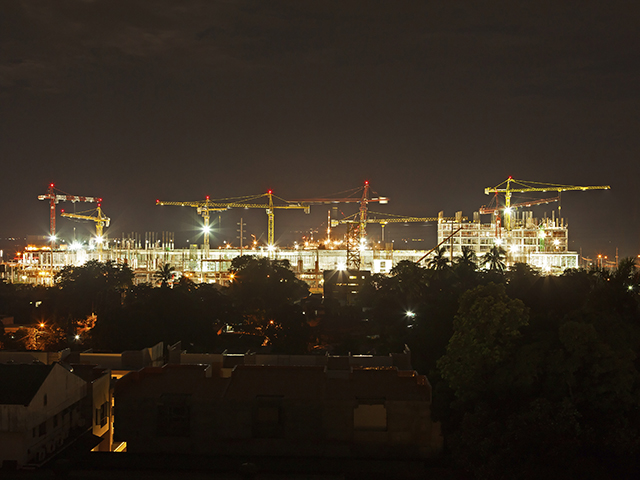
The Philippines has secured another investment grade rating for the significant economic gains it has achieved over the last few years, Bangko Sentral ng Pilipinas announced on Tuesday.
"National Information and Credit Evaluation (NICE) Ratings Inc. for the first time placed the Philippines in the investment status, raising the country’s long-term, foreign-currency rating by a notch from junk to the minimum investment grade of BBB-," the central bank's Investor Relations Office said in an emailed statement.
The new rating is assigned a “positive” outlook, which indicates the probability of another upgrade within the short-term.
“The outlook is positive. It reflects the improved growth potential backed by institutional reforms and greater investment in infrastructure,” NICE Ratings said in its latest report on the Philippines.
With its decision, the South Korean institution joins major international ratings firms Fitch Ratings, Japan Credit Rating Agency, Moody’s Investors Service, R&I, and Standard & Poor’s in saying the Philippines is an investment grade destination.
Vote of confidence
Bangko Sentral Governor Amando Tetangco Jr. and Finance Secretary Cesar Purisima noted in the statement the latest upgrade showed that the Philippines' economic strengths have become difficult to ignore by the international community.
Bangko Sentral Governor Amando Tetangco Jr. and Finance Secretary Cesar Purisima noted in the statement the latest upgrade showed that the Philippines' economic strengths have become difficult to ignore by the international community.
“This vote of confidence acknowledges efforts to ensure the country is able to sustain improvements in the economy over the long haul,” Purisima said.
“As far as the BSP is concerned, the latest investment grade is another acknowledgment of efforts to maintain an inflation environment and a financial system conducive for business and supportive of sustainable growth,” Tetangco said.
Citing government efforts to boost the manufacturing sector and to invest heavily in infrastructure NICE Ratings expressed the belief in the ability of the Philippines – which grew by 6 percent in gross domestic product terms in the first semester – to sustain robust economic growth.
“In order to break away from the private consumption-led growth and pursue a new growth model, jointly led by investment and consumption, the government promoted manufacturing while making it a priority to enhance public governance and infrastructure,” it said.
Infra devt agenda
Manufacturing, said to have a high multiplier effect on the economy, grew by an average of 7.9 percent from 2010 to 2013. This outpaced the 6.7-percent growth of the services sector, NICE Ratings noted.
Manufacturing, said to have a high multiplier effect on the economy, grew by an average of 7.9 percent from 2010 to 2013. This outpaced the 6.7-percent growth of the services sector, NICE Ratings noted.
It also highlighted the government’s infrastructure-development agenda, under which public spending for infrastructure is targeted to grow from an equivalent of 3 percent of GDP this year to 4 percent next year and 5 percent in 2016.
NICE Ratings also cited the Philippines for its strong external liquidity, stable financial markets, and much improved fiscal situation.
“In the face of the sell-off of financial assets in emerging markets since May 2013, the Philippines’ financial market remained relatively stable, thanks to the strong current account position and abundant liquidity in the financial market,” it said.
NICE Ratings said debt management was sound, with the central government’s outstanding debt having declined from a peak of 74.4 percent of GDP in 2004 to 49.2 percent last year. – VS, GMA News

