

 GMA Brandtalk
 Tracking
 Archives

DA-BFAR: Galunggong prices dropping as supply stabilizes
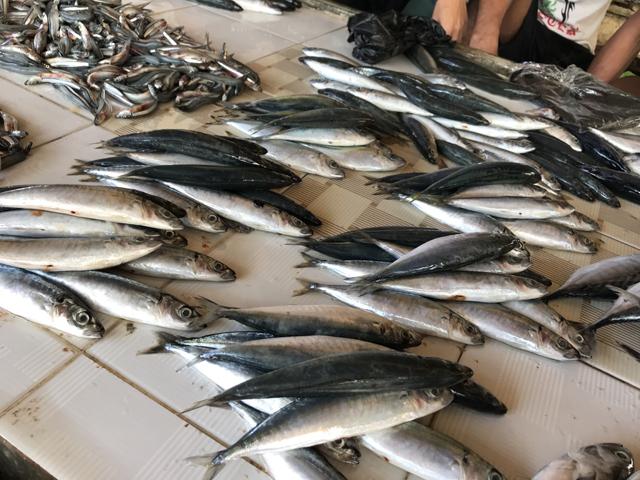
Department of Agriculture-Bureau of Fisheries and Aquatic Resources (DA-BFAR) said Saturday that prices of galunggong or round scad in Metro Manila has already gone down amid the increase in the supply of the commodity.
Citing its daily market price monitoring conducted in Metro Manila markets, DA-BFAR said galunggong currently sells for P180 per kilo from its price peak of P260 to 280 per kilo, “making the price more affordable.”
DA-BFAR attributed the price decline to the increase in fish unloaded at the Navotas Fish Port Complex (NFPC) —the largest fish port in Southeast Asia.
“The price of local-fresh marine fish commodities in the NCR has begun to stabilize,” it said.
“This is also attributed to the lifting of the three-month closed fishing seasons in the country’s major fishing grounds,” it added.
Also, the Philippine Fisheries Development Authority reported that a significant amount of fish supply totaling 9,506.81 metric tons (MT) had been unloaded from March 1 to 15, of which 5,743.44 MT are marine commodities, 1,480.88 MT are from aquaculture, and 2,282.49 MT are frozen fish products.
Galunggong comprised the largest percentage in the supply, followed by bangus, tilapia, tulingan, and tamban.
With the increasing supply this month, NFPC is looking forward to surpass its own record of 12,404.4 MT in January and 15,384.9 MT in February.
“With the resumption of large supplies of fresh marine commodities in the market, our consumers now have more affordable fish to choose from and put on their tables. We had continuous aquaculture production in the past months and this helped us augment supply during our lean months,” said DA Undersecretary for Fisheries Cheryl Marie Natividad-Caballero.
Prices of tilapia and bangus, meanwhile, remain stable at P120 per kilo and P180. per kilo, respectively, as production and delivery of supply from major aquaculture production areas remain unhampered.
“Our abundance of supply now is perfectly in time with our urgent need to ramp up efforts to ensure the nation’s food security as we battle an even stronger challenge of the COVID-19 pandemic,” Caballero said. —LBG, GMA News

