

 GMA Brandtalk
 Tracking
 Archives

Six of 11 financial stability risk under control — Diokno
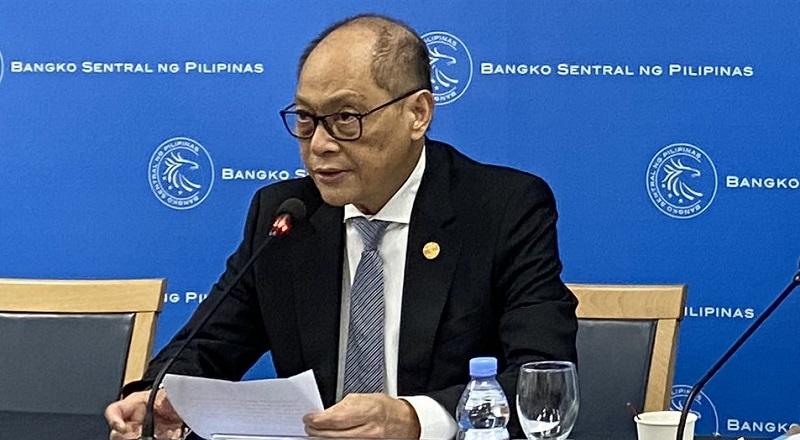
The Financial Stability Coordination Council (FSCC), chaired by Bangko Sentral ng Pilipinas (BSP) Governor Benjamin Diokno, on Friday released its assessment on the country’s financial stability.
At a virtual press conference, Diokno said six of the 11 risk areas of financial stability being monitored have been classified as “under control.”
“These are risks to monetary policy, risks to fiscal policy, contagion risk, concentration risk, liquidity risk and geo-political risk,” he said.
“They are, however, being continuously monitored and will be re-assessed as updated information becomes available,” he added.
The statement came after the May 18 meeting of the FSCC.
However, servicing debts and credit-related risks are the primary concerns in the financial market today.
“COVID-19 has created similar problems throughout the world and the loss of incomes is the most common scar from this pandemic-cum-recession,” Diokno said.
“This has left borrowers vulnerable because their capacity to service their debts has been put at risk,” the central bank chief said.
Early into the pandemic, financial authorities intervened to ensure adequate liquidity in the financial system, and back-stopped this with other regulatory relief measures.
“This is a different crisis and the authorities will not hesitate to think out-of-the-box in order to sustain a well-functioning market,” Diokno said.
The FSCC risk statement also highlighted the risks that Emerging Markets and Developing Economies (EMDEs) such as the Philippines are facing from the Advanced Economies (AEs).
The BSP chief and FSCC chairman noted that “while every jurisdiction has a scar from COVID-19, the scars differ from jurisdiction to jurisdiction. While all forecasts point to a better year in 2021, the world economy is recovering at multiple speeds and this itself is unfortunately creating spillover risks from the AEs and into EMDEs.”
Diokno also underscored the importance of policy communication.
“Regulators may look at many indicators but we act with the public on top of our mind. To ensure that our stakeholders make well-informed decisions, it is incumbent on us regulators to continue our dialogue with our publics,” Diokno said.
“This is where the Council steps in and offers a cross-cutting view of risks. We have a unique vantage point of seeing how all the elements interact and affect the welfare of the system. Everyone is eventually better off with this transparency in place,” he said. — RSJ, GMA News

