

 GMA Brandtalk
 Tracking
 Archives

World Bank: Philippines made significant progress in cutting poverty, but inequality remains high
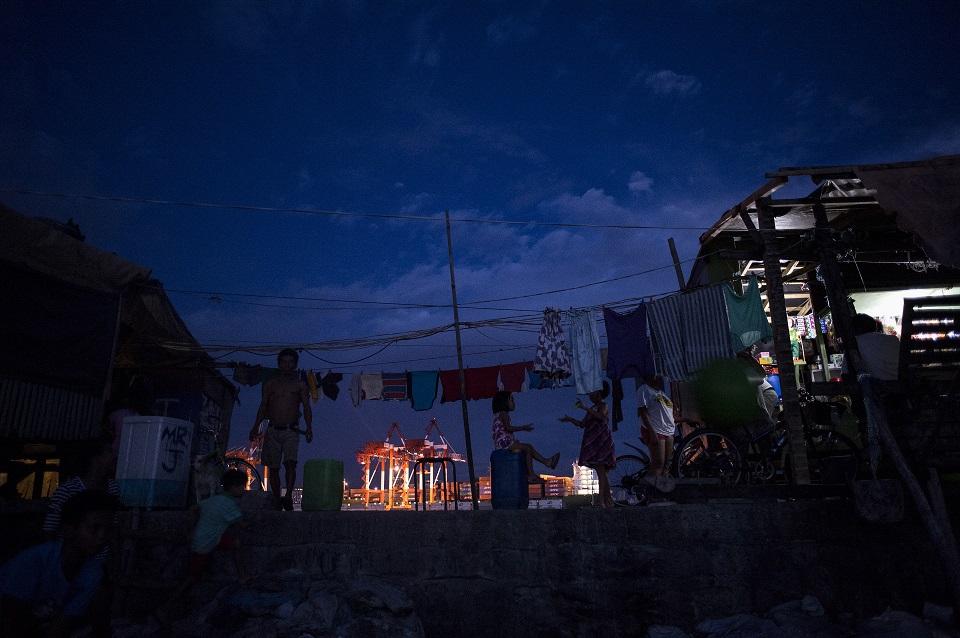
The Philippines has made significant gains in reducing poverty, but income inequality remains with the super-rich capturing a substantial portion of the national income, multilateral lender World Bank said in its latest report.
In its report “Overcoming Poverty and Inequality in the Philippines: Past, Present, and Prospects for the Future” released Thursday, the World Bank said that poverty rate in the Philippines fell by two-thirds in the past three decades —from 49.2% in 1985 to 16.7% in 2018— “driven by high growth rates and the expansion of jobs outside agriculture.”
The multilateral lender also said that by 2018, the middle class had expanded to nearly 12 million and the economically secure population had risen to 44 million.
In his keynote address during the report’s launch, National Economic and Development Authority (NEDA) chief Arsenio Balisacan said that as Socioeconomic Planning Secretary of two administrations and “having served in other capacities, I can say with conviction that our efforts to reduce poverty and inequality have come a long way.”
The World Bank report, however, said that inequality is still high in the country despite the gains in poverty reduction.
“Yet inequality remains high: the top 1% of earners together capture 17% of national income, with only 14% being shared by the bottom 50%,” the World Bank said.
With an income Gini coefficient —a measure of distribution of income among the population—42.3% in 2018, “the Philippines had one of the highest rates of income inequality in East Asia,” it said.
Balisacan said the World Bank report is a welcome analytical piece that is both timely and relevant.
He said the findings in the report will be useful as inputs and references to the strategies the government is going to implement through the upcoming Philippine Development Plan or PDP 2023-2028.
“The Philippines aims to become a middle-class society free of poverty by 2040, but we know from global experience that no country has managed to make this transition while maintaining high levels of inequality,” said Ndiamé Diop, World Bank Country Director for Brunei, Malaysia, Philippines, and Thailand.
“Inequality of opportunity and low mobility across generations wastes human potential and slowdown innovation, which is crucial for building a competitive and prosperous economy that will in turn improve the well-being and quality of life of all Filipinos,” said Diop.
GMA News Online has reached out to the Office of the Press Secretary for its comments on the matter, but it has yet to reply as of posting time.
At a separate Palace briefing, Balisacan said the 8-point socioeconomic agenda and the upcoming Philippine Development Plan, PDP 2023-2028 is intended to address the issues like that “and that is to accelerate poverty reduction while ensuring that the rapid growth, that the plan for the medium-term will also be very inclusive.”
“Inclusive, meaning that the economic opportunities will not only for the upper income groups but even more importantly for the lower and middle income groups,” he said.
“So it’s ‘everybody’s boat is lifted by the rising tide’ as they say. And that way, again, inequality will be reduced in a significant way and we’ll support the poverty reduction thrust of the government,” he added.
The Philippine Development Plan (PDP) 2023-2028 contains targets and strategic actions of government agencies in the next six years.
On the other hand, the administration's 8-Point Socioeconomic Agenda contains policies that promote social justice, ensure food security, accelerate progress, protect our environment, and address climate change.
The World Bank report also highlighted that the expansion of secondary education, mobility to better-paying jobs, access to basic services, and government social assistance have started to reduce inequality since the mid-2000s.
However, unequal opportunities, slow access to tertiary education among low-income households, inequality in returns to college education, and social norms putting the heavier burden of childcare on women has slowed down the narrowing of inequality in the Philippines, the report said.
For his part, Balisacan described the report as providing a picture of how inequality and poverty are embedded over a person’s life cycle — from maternal health that impacts mother and child, to children’s access to education and health services, and to employment and income opportunities.
“Inequality shapes outcomes later in life, such as employment opportunities and income, which in turn influence how much support adult Filipinos are able to provide for their children to help maximize their potential,” said Nadia Belhaj Hassine Belghith, Senior Economist with the East Asia Poverty Global Practice covering Thailand and the Philippines who led the study.
COVID-19 pandemic
Meanwhile, the report noted the COVID-19 pandemic has partly reversed decades-long gains in reducing poverty and inequality in the Philippines.
“In 2021, poverty rose to 18.1% despite large government assistance. The economy has begun to rebound but signs are emerging that the recovery will be uneven. Prolonged loss of income has taken a heavy toll on the poorest households. With food prices going up and a reliance on adverse coping strategies, among them eating less, there is a risk of serious consequences for the health and nutrition of children in vulnerable households,” the World Bank said.
The report said that policy priorities to reduce inequality in the Philippines can be structured around three themes, including healing the pandemic’s scars and building resilience, setting the stage for a vibrant and inclusive recovery, and promoting greater equality of opportunity.
Healing pandemic’s scars will require promoting greater vaccine booster uptake, overcoming the learning loss due to COVID-19, strengthening social assistance, unemployment insurance programs for the informal sector, and taming inflation, the World Bank said.
Setting the stage for vibrant recovery entails reskilling of workers, promoting entrepreneurship, increasing the participation of women in the labor force, and raising the productivity of agriculture.
Promoting greater equality of opportunity entails increasing access to quality health care, increasing equality of opportunity in education, and improving access to quality housing, among others, the lender said.
Equality of opportunity needs to target the lagging regions and other people disadvantaged in accessing these because of the circumstances of their birth, it said.
Baliscan said the World Bank report will provide analytical support to the Eight-point Socioeconomic Agenda of the Marcos Administration which underscores the importance of protecting households.
“The path towards a prosperous society where opportunities are available for all is certainly challenging, but our resolve to reach this goal remains strong and our commitment, firm,” Balisacan said.
“It will take everyone – from government agencies to members of the private sector and civil society – to do our share in shaping the policies and actions that will lift the lives of our fellow countrymen now and in the future,” the he added. — with Anna Felicia Bajo/RSJ/KBK, GMA Integrated News

